
Understanding Manual vs Automatic Cement Block Machines
Selecting the right cement block machine determines your facility’s production efficiency, daily output, and long-term profitability. Whether you are launching a startup yard or expanding an industrial manufacturing plant, understanding the mechanical differences between manual and automated systems is the first critical step toward smart capital investment.
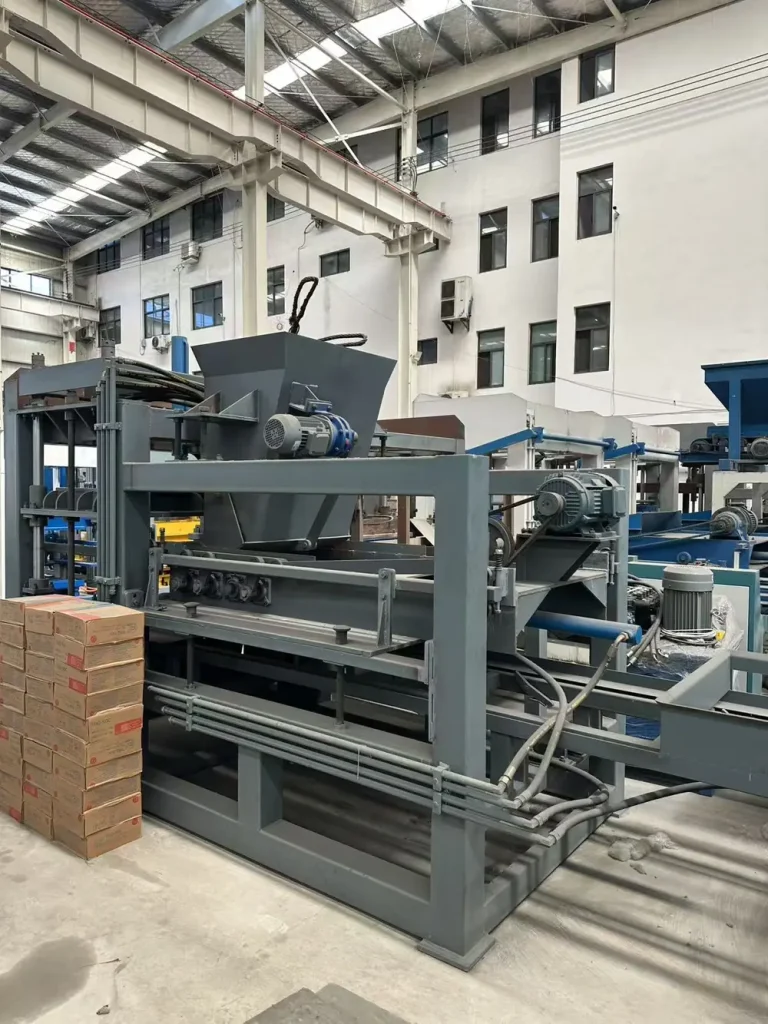
What Is a Manual Cement Block Machine?
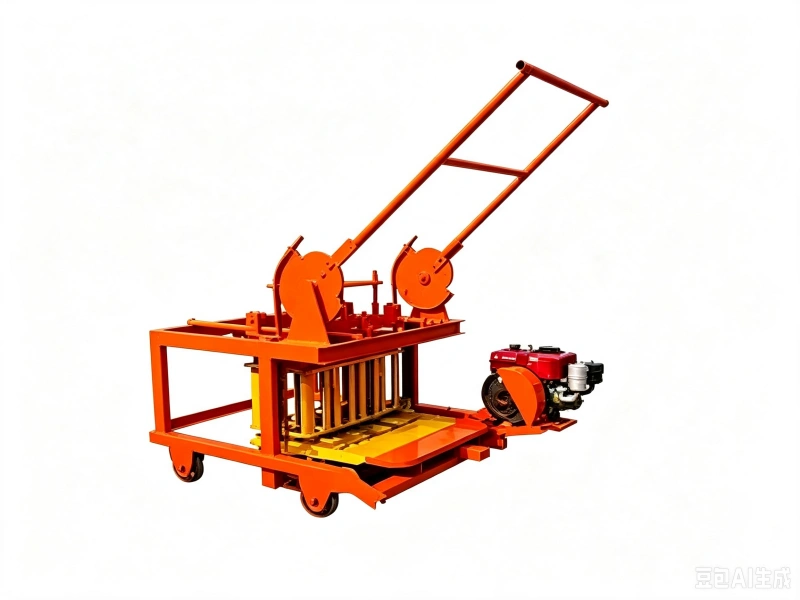
A manual cement block machine is an entry-level production unit that relies entirely or primarily on human labor for operation. Operators manually mix raw materials, fill the mold boxes, pull mechanical levers to compress the concrete mix, and physically demold the finished blocks.
- Operation Mode: 100% mechanical levers and human force.
- Power Requirement: Zero to minimal electrical needs (optional small vibrator motor).
- Best Suited For: Micro-enterprises, small-scale brick production, rural setups, and on-site DIY construction jobs.
- Core Benefit: Lowest initial capital outlay and total mechanical independence from grid power.
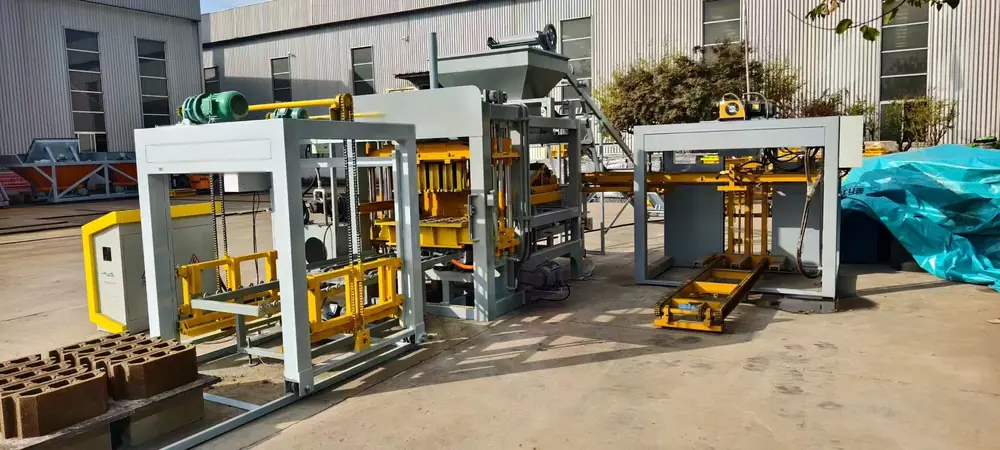
What Is an Automatic Cement Block Machine?
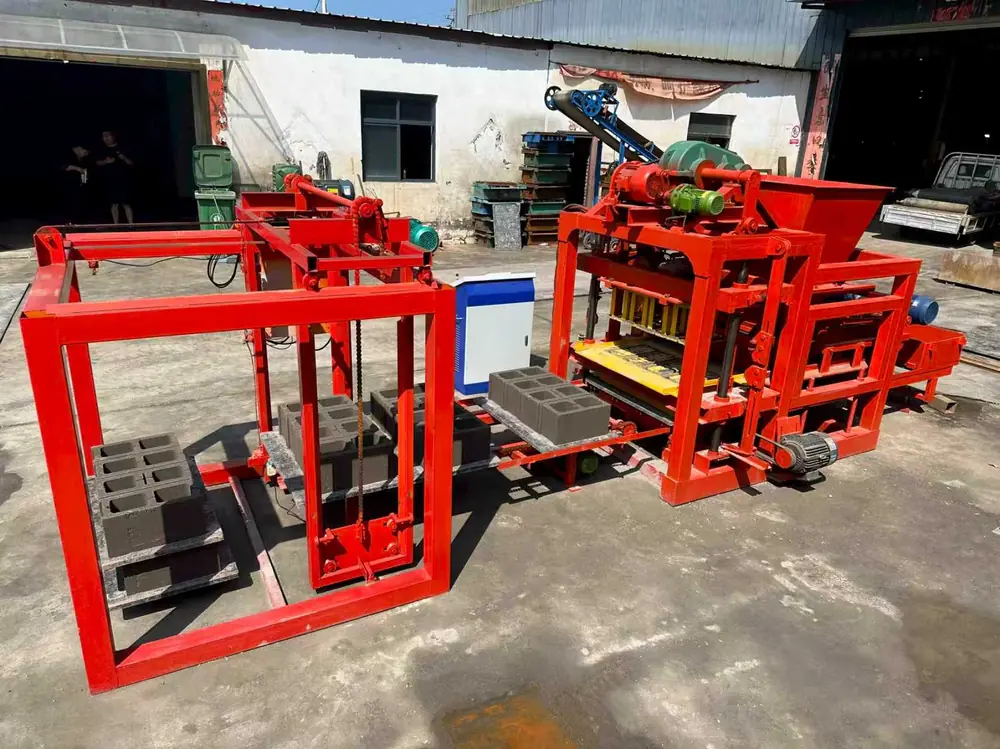
A fully automatic concrete block machine integrates advanced hydraulic pressing, high-frequency core vibration, and intelligent PLC control systems to handle the entire production cycle without manual intervention. From raw aggregate batching and mixing to hydraulic compression, pallet feeding, and finished product stacking, every stage is precisely automated.
- Operation Mode: Integrated PLC touchscreen control with automated sensor feedback.
- Power System: Heavy-duty hydraulic compression paired with synchronized multi-axis vibration.
- Best Suited For: Medium-to-large-scale commercial block yards and municipal infrastructure suppliers.
- Core Benefit: High-volume output, pinpoint dimensional accuracy, and minimal labor overhead.
The Role of Semi-Automatic and Mobile Block Machines
For producers seeking a middle ground between low-cost manual units and high-output automated lines, intermediary designs offer versatile operational paths:
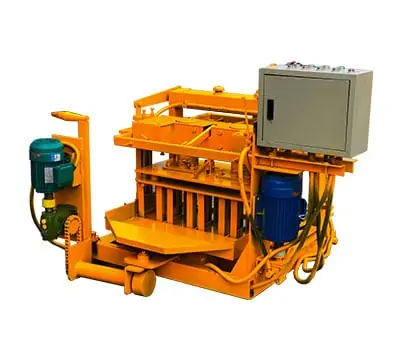
- Semi-Automatic Block Making Machine: Uses manual or loader-assisted material feeding while utilizing electric or hydraulic power for compaction and block ejection. It delivers significantly higher compression force than manual levers without requiring a multi-million-dollar investment.
- Mobile Block Machine (Egg-Layer Type): A self-propelled mobile unit that moves across a flat concrete slab, depositing formed blocks directly onto the floor. It eliminates the need for production pallets and simplifies handling logistics for mid-scale regional suppliers.
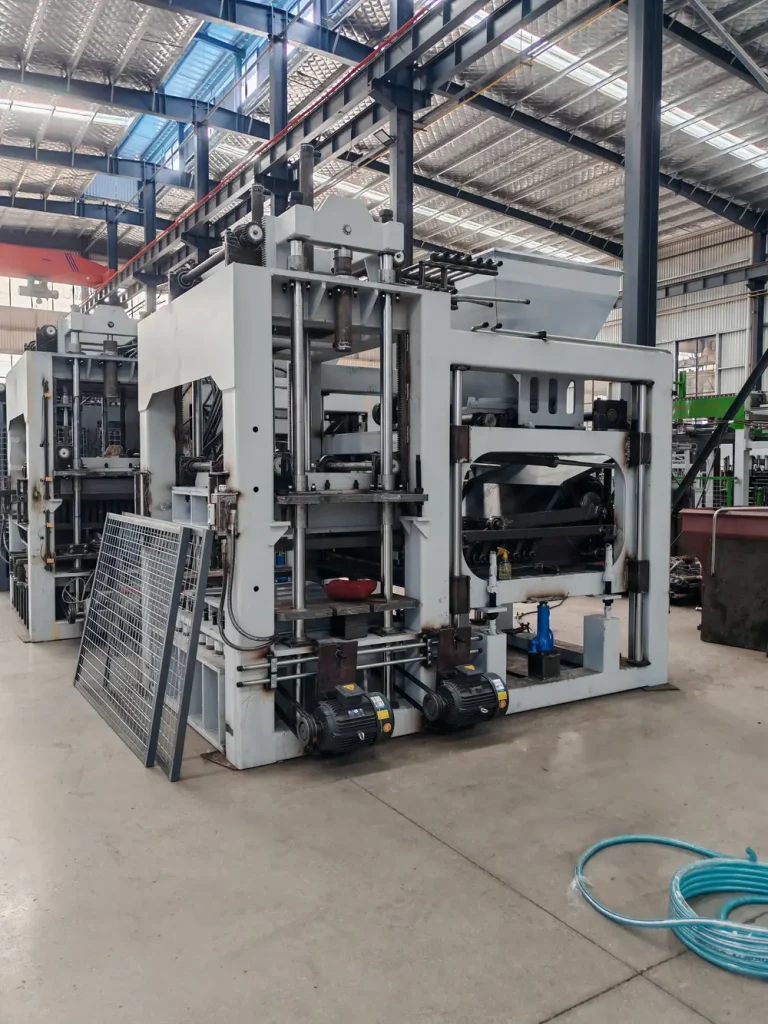
1. Production Capacity and Output Speed
Production output is often the deciding factor when choosing between manual and automatic setups. The speed at which you produce blocks directly dictates how fast you can fulfill orders and scale your business operations.
Output Capabilities of Manual Block Makers
Manual cement block machines rely entirely on human effort for feeding aggregate, compressing the mix, and demolding. Because physical fatigue inevitably sets in throughout a work shift, output rates fluctuate.
- Daily Output: Typically yields 500 to 1,500 standard blocks per 8-hour shift.
- Cycle Time: Ranges from 40 to 90 seconds per drop, depending heavily on operator experience and crew coordination.
- Best Suited For: Perfect for DIY builds, small rural projects, and small-scale brick production where local demand is modest and turnaround time is flexible.
High-Volume Output in Automatic Block Systems
A fully automatic concrete block machine removes human pacing from the equation by automating raw material batching, vibration, hydraulic pressing, and pallet conveying.
- Daily Output: Easily delivers 5,000 to over 25,000 blocks per 8-hour shift, making it essential for commercial supply chains.
- Cycle Time: Operates at a rapid 15 to 25 seconds per cycle with continuous precision.
- Production Stability: Delivers consistent operational efficiency 24/7 without output dips caused by worker exhaustion.
For high-demand operations, investing in high-capacity equipment—such as models highlighted in our review of the best QT concrete block making machines rated by output—ensures your facility keeps pace with heavy commercial contracts.
| Feature | Manual Block Machine | Automatic Block Machine |
|---|---|---|
| Shift Output (8 Hours) | 500 – 1,500 blocks | 5,000 – 25,000+ blocks |
| Molding Cycle Time | 40 – 90 seconds | 15 – 25 seconds |
| Pace Consistency | Declines over shift | Fully constant |
| Production Scale | Small / Localized | Medium to Large Commercial |
2. Labor Requirements and Operational Costs
Labor is one of the highest ongoing operational costs in concrete block manufacturing. The gap between manual and automated systems becomes obvious the moment you look at daily payroll, physical fatigue, and overall plant efficiency.
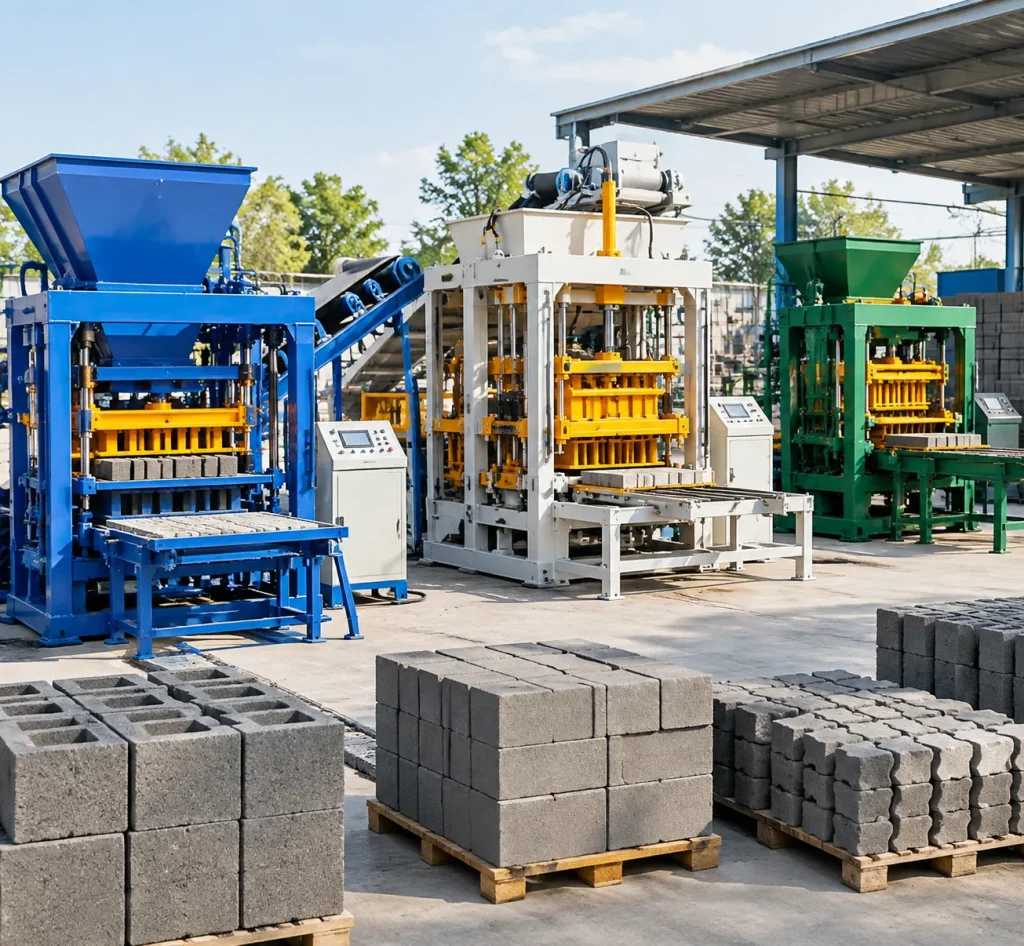
Manpower Dependency in Manual Operations
Manual block setups rely almost entirely on physical strength for every stage of the cycle. When analyzing handmade vs machine-made bricks in modern construction, manual methods consistently demand heavy physical commitment:
- High Staffing Needs: A standard manual unit requires 4 to 8 workers per shift to handle raw material shoveling, mold feeding, lever pulling, and moving wet blocks.
- Worker Fatigue: Production speed drops steadily throughout the work shift as physical stamina declines.
- Higher Injury Risks: Repetitive heavy lifting and manual demolding increase workplace accidents and absenteeism.
- Unpredictable Labor Costs: Hiring and managing large crews in regions with rising minimum wages quickly cuts into your profit margins.
Automated Workflow and Reduced Labor Expenses
A fully automatic concrete block machine integrates raw material batching, mixing, feeding, vibration pressing, and pallet stacking into a continuous, self-regulated cycle.
- Minimal Crew Size: The entire system runs smoothly with just 1 to 3 operators—typically one PLC console operator and one forklift driver.
- Consistent Shift Performance: Automation maintains the exact same cycle time from the first minute to the last, eliminating fatigue-related slowdowns.
- Optimized Operational Efficiency: Workers focus on quality control and site logistics rather than grueling manual labor.
| Feature | Manual Cement Block Machine | Automatic Cement Block Machine |
|---|---|---|
| Typical Crew Size | 4 – 8 workers per machine | 1 – 3 operators per line |
| Primary Tasks | Shoveling, lever pressing, manual pallet carrying | Monitoring PLC, forklift loading, maintenance |
| Fatigue Impact | High (Output slows down during shifts) | Zero (Continuous mechanical cycle) |
| Labor Cost per Block | High | Low |
| Safety Risk Level | Moderate to High | Low (Safety guards & automated handling) |
3. Block Quality, Strength, and Consistency
When we look at structural integrity, the gap between manual and automated equipment is significant. In modern concrete block manufacturing, density and compressive strength determine whether a block meets commercial construction standards or remains limited to basic boundary walls.
Vibration and Compaction Differences
Compaction directly controls the load-bearing capacity of your finished blocks.
- Manual Units: Rely on hand levers and low-frequency vibration. This leaves microscopic air pockets inside the mix, leading to lower compressive strength and higher water absorption rates.
- Fully Automatic Concrete Block Machines: Combine high-pressure hydraulic ramming (often exceeding 15 to 20 MPa) with high-frequency directional vibration. This dual-force mechanism locks aggregates tightly together, maximizing strength while reducing cement usage.
Poor compaction remains one of the primary triggers for edge breakage, which we cover in detail within our breakdown of common cement block machine problems and fixes.
| Feature | Manual Block Maker | Automatic Block Machine |
|---|---|---|
| Compaction Force | Low (Manual / Basic Vibration) | High (Hydraulic + Dual Vibration) |
| Average Strength | 3.5 – 5.0 MPa | 10.0 – 25.0+ MPa |
| Porosity & Voids | Moderate to High | Extremely Low |
| Curing Breakage Rate | 5% – 10% | Below 1% |
Standardized Dimensions and Structural Uniformity
Consistency defines the commercial value of your product on the job site:
- Dimensional Precision: An automated cement block machine maintains strict tolerances within ±1 mm. Manual production varies by ±3 mm to 5 mm because tamping pressure shifts as operators tire throughout a shift.
- Uniform Material Distribution: Automated feeder boxes deliver an exact volume of concrete into every mold cavity. This prevents uneven density spots across multi-cavity molds.
- Crisp Edges and Smooth Faces: Consistent hydraulic ejection creates clean edges and flat surfaces, which contractors prefer because it drastically cuts mortar consumption during wall construction.
4. Initial Investment Cost and Return on Investment (ROI)
Balancing capital expenditure against operational payback is one of the most critical decisions in concrete block manufacturing. The price difference between manual and automatic setups is substantial, but so is their earning potential over time.
Affordable Startup Costs for Manual Equipment
A manual cement block machine is the most accessible entry point for new entrepreneurs, small-scale operations, and localized projects.
- Minimal Capital Requirement: You can launch a small-scale brick production line with a fraction of the budget needed for automated plants.
- Low Installation Costs: Manual units require simple site preparation, avoiding the need for deep reinforced foundations or dedicated electrical substations.
- Low Financial Risk: Lower entry barriers make it easier to test market demand before committing significant capital.
While manual machines protect your upfront cash flow, your revenue ceiling remains limited by low daily output and steady labor overhead.
Long-Term Financial Payback of Automatic Machinery
A fully automatic concrete block machine requires a higher initial investment for the main machine, batching systems, and material conveyors. However, the financial return is driven by scale and efficiency.
| Financial Factor | Manual Block Machine | Automatic Block Machine |
|---|---|---|
| Initial Capital (CapEx) | Very Low | Moderate to High |
| Labor Cost per Block | High | Extremely Low |
| Daily Revenue Potential | Capped / Limited | High Scalability |
| Break-Even Timeline | Fast, but with a low profit ceiling | 6 to 18 months at steady volume |
When scaling up, evaluating detailed performance models like the QT10-15 block machine capacity and ROI demonstrates how massive output rapidly offsets machine purchase costs. To calculate an accurate payback schedule, examine the true per-unit cost to make a concrete block—including raw materials, curing time, and minimized labor. Automation lowers the cost per block, giving you higher profit margins on every pallet sold.
5. Energy Consumption and Infrastructure Needs
Utility access and ground preparation directly determine whether an operational site can support heavy concrete manufacturing. Comparing energy consumption and site requirements highlights a stark contrast between entry-level manual units and industrial setups.
Off-Grid Flexibility of Manual Equipment
Manual block-making setups provide unmatched versatility for remote, developing, or off-grid locations where electrical access is unstable or nonexistent.
- Zero to Minimal Power Draw: Purely manual units rely solely on physical mechanical leverage, while basic semi-manual units require only a small single-phase motor or compact diesel engine for vibration.
- Simple Ground Preparation: You do not need reinforced industrial flooring. A level, compacted dirt surface or thin concrete slab is sufficient to begin small-scale brick production.
- Location Mobility: These machines are easy to relocate directly to construction sites, eliminating long raw material and finished product transport routes.
Electrical and Hydraulic Demands for Automation
Running a fully automatic concrete block machine requires substantial industrial infrastructure to sustain continuous production and hydraulic pressure.
- High-Voltage Industrial Power: Automated plants require a dedicated 3-phase power grid (typically 380V–415V) to drive the main vibration motors, hydraulic stations, feed systems, and PLC panels. When evaluating plant options such as QT4-15 vs QT6-15 vs QT8-15 block machines, matching your available transformer capacity or generator output to the equipment’s total kilowatt rating is essential.
- Engineered Concrete Foundations: High-frequency vibration and heavy compaction cycles demand thick, steel-reinforced concrete foundation footings to absorb dynamic shock and maintain precise mechanical alignment.
- Water and Hydraulic Infrastructure: Continuous concrete block manufacturing requires dedicated water supply pipelines for the batching plant alongside cooling mechanisms to manage hydraulic oil temperatures during non-stop shifts.
6. Mold Flexibility and Block Variety
A key factor in scaling any masonry business is the ability to adapt to changing market demands. The versatility of a cement block machine largely depends on its mold flexibility and how quickly you can switch between different product lines.
Types of Blocks Produced (Hollow, Solid, Pavers)
Both manual and automatic setups can produce standard masonry units, but their scope and surface finishing capabilities differ significantly:
- Manual Cement Block Machines: Best suited for core, standard construction units like 2-core or 3-core hollow blocks, standard solid bricks, and basic boundary wall blocks. While they can produce simple interlocking pavers, achieving multi-colored surfaces or specialized high-density paving finishes is difficult without automated feeding systems.
- Automatic Block Machines: Offer superior product versatility. They handle high-density hollow blocks, lightweight aggregate blocks, fly-ash bricks, solid bricks, and heavy-duty road pavers. Advanced automatic units can also be integrated with a secondary face-mix (color feeder) system to manufacture high-end decorative paving stones and curb stones on a single platform.
To get the most out of your investment, understanding how to choose the right mold for your block making machine is essential for maximizing block diversity, product precision, and mold lifespan.
Ease and Speed of Mold Replacement
Production downtime directly affects profitability. The process and time required to switch molds vary drastically between manual and automated equipment:
- Manual Systems: Changing a mold involves manually unbolting the tamper head and mold box, physically lifting the tooling, and re-aligning everything by hand. This process usually requires 1 to 3 hours and depends heavily on the mechanical skill of the operator to ensure proper alignment.
- Automatic Systems: Modern automatic concrete block machines feature rapid mold-clamping systems with hydraulic locks and precision guide columns. Operators can complete a full mold swap in 15 to 30 minutes with minimal manual labor, allowing you to transition between hollow blocks and pavers within the same work shift while maintaining continuous production output.
7. Maintenance, Durability, and Technical Complexity
Keeping your production line running requires a clear understanding of the upkeep demands for different machine types. In our experience, maintenance requirements diverge sharply between manual gear and fully automated plants.
Routine Mechanical Care for Manual Units
A manual cement block machine features simple, robust mechanical assemblies with zero sensitive electronics. Because there are no hydraulic circuits or software to calibrate, daily upkeep remains straightforward and low-cost.
- Daily Cleaning: Scrape excess concrete mix off the tamper head, mold boxes, and guide shafts before the mortar sets.
- Basic Lubrication: Apply grease to mechanical pivot points, release levers, and slide rails every morning.
- Structural Checks: Regularly inspect weld points and tighten structural fasteners loosened by vibration.
Local mechanics can easily manage these repairs with basic tools. Following a consistent cement block machine maintenance guide ensures these manual workhorses deliver dependable performance for years with minimal downtime.
PLC Systems, Spare Parts, and Technical Support
A fully automated production line relies on integrated electrical, hydraulic, and pneumatic systems managed by a centralized PLC control system. While automation dramatically boosts daily efficiency, it demands structured preventive maintenance and specialized technical skill.
| Feature | Manual Block Machine | Automatic Block Machine |
|---|---|---|
| Technical Skill Level | Basic site labor / local mechanic | Certified electrician / hydraulic technician |
| Daily Upkeep Focus | Lubrication, cleaning, bolt tightening | Sensor alignment, hydraulic oil checks, filter cleaning |
| Control Architecture | Pure mechanical levers / basic switch | Advanced PLC touch-screen with automated diagnostics |
| Critical Spare Parts | Standard springs, bearings, basic bolts | Proximity sensors, solenoid valves, hydraulic seals, relays |
| Downtime Risk | Low complexity, rapid field fixes | Higher complexity, requires immediate technical support |
To maintain seamless concrete block manufacturing on automated lines, we recommend keeping essential electrical relays, proximity switches, and hydraulic seal kits in your on-site inventory. Working with an equipment supplier that provides reliable remote diagnostics, fast spare parts delivery, and ongoing technical support prevents costly production halts.
How to Choose the Right Cement Block Machine for Your Business
Choosing between a manual and an automatic block maker comes down to matching your equipment to your exact operational reality. When we help producers set up their yards, we focus on three core pillars: capital, utilities, and market scale. Following a structured guide on how to choose a block making machine saves you from costly miscalculations.
Assessing Budget and Production Goals
Your choice begins with your daily output target and available upfront capital.
- Daily Target Under 1,500 Blocks: A manual or basic semi-automatic unit keeps your capital expenditure low while fulfilling localized, small-scale demand.
- Daily Target Over 5,000 Blocks: A fully automatic concrete block machine is necessary to meet commercial volume, maintain dimensional uniformity, and secure large supply contracts.
- Cash Flow Strategy: Manual machines offer immediate break-even points with minimal debt, while automated plants yield lower unit costs and higher profit margins over time.
Evaluating Local Labor and Power Supply
Site infrastructure dictates what machinery you can realistically support on the ground.
- Electricity Stability: Automatic plants require reliable three-phase power or a dedicated heavy-duty industrial generator. If your site has unstable electrical access, manual or diesel-driven machines prevent costly production downtime.
- Labor Dynamics: In regions with low labor rates, manual operations remain financially competitive. In areas where wages are high or skilled labor is scarce, automated machinery drastically reduces your payroll and management overhead.
Matching Machine Type to Business Scale
| Business Scale | Recommended Machine Type | Daily Output Target | Primary Advantage |
|---|---|---|---|
| Startup / Rural Yard | Manual / Mobile Layer | 500 – 1,500 blocks | Lowest startup cost, zero electrical dependence |
| Growing Supplier | Semi-Automatic Hydraulic | 2,000 – 4,500 blocks | Balanced cost, higher compaction, moderate labor |
| Commercial Producer | Fully Automatic PLC Plant | 5,000 – 15,000+ blocks | Maximum efficiency, minimal labor, superior quality |
Selecting the right setup ensures your operation remains profitable from day one. If you are building a new enterprise from scratch, learning how to start a block machine business successfully will help you align your machinery choice with long-term commercial growth.