
What is QT Concrete Block Making Machines
A QT concrete block making machine is an industrial-grade, automatic production system engineered to manufacture high-density concrete bricks, paving stones, hollow blocks, and curbstones. The “QT” designation stands for standardized universal block-forming machinery. In the model naming convention (e.g., QT8-15), the first digit indicates the output quantity of standard hollow blocks per mold cycle (8 blocks), while the second digit represents the average molding cycle time in seconds (15 seconds).
Definition and Core Functionality
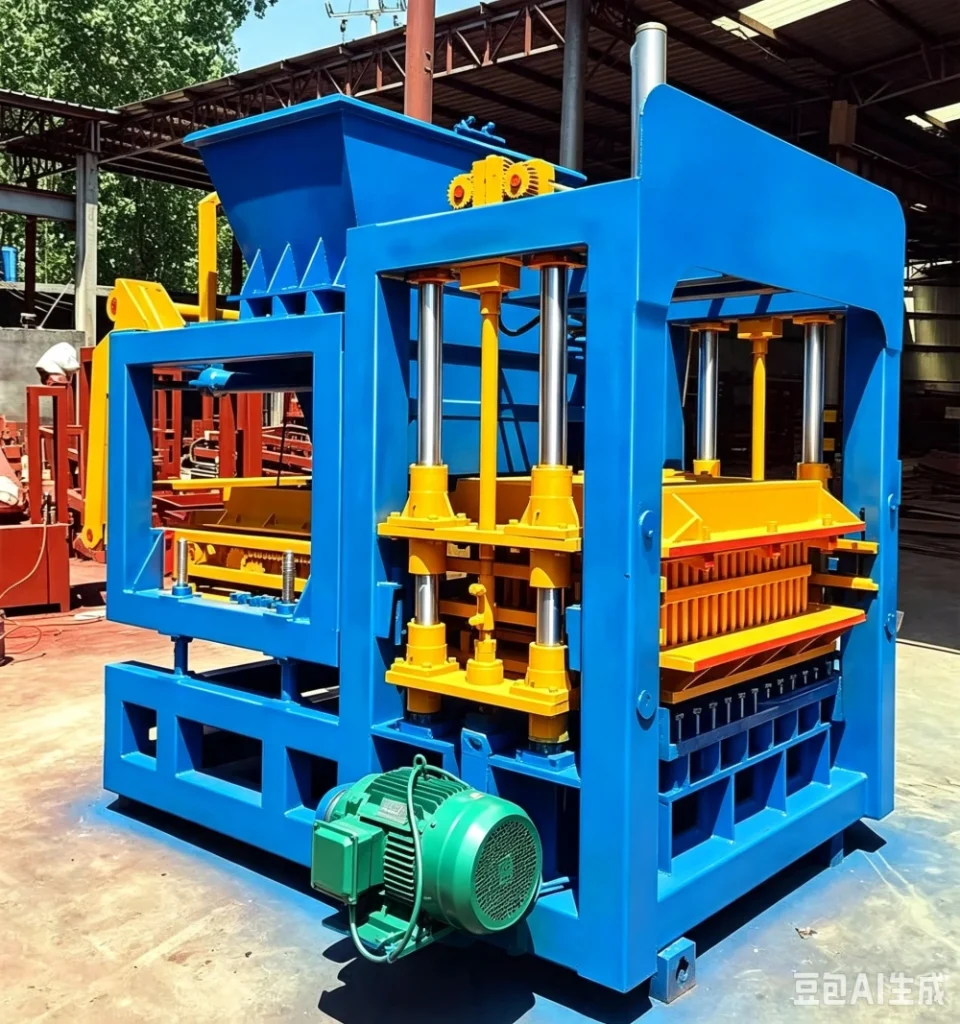
The machine automates block production through heavy-duty mechanical compression and high-frequency vibration. It transforms raw materials into uniform construction units with exceptional load-bearing capacity.
- Raw Material Feed: Doses cement, aggregate, sand, fly ash, and water slurry into mold cavities.
- Compaction & Molding: Combines top hydraulic compression with dynamic table vibration to remove air pockets.
- Automated Demolding: Synchronously elevates the tamper head and mold box to release finished blocks onto pallets.
- Pallet Transport: Transfers green blocks to automatic stackers for thermal or air curing.
Key Technical Features and Advantages
- High Production Capacity: Delivers continuous high-output manufacturing with automated molding cycles lasting 12 to 20 seconds.
- Superior Compression Strength: Multi-directional vibration achieves optimal structural compaction, producing blocks with high crushing resistance.
- Versatile Mold Interchangeability: Easily swaps specialized molds to produce hollow block machine outputs, solid bricks, interlocking pavers, and road kerbs on a single production line.
- Resource Optimization: Utilizes industrial waste products including fly ash, slag, crushed stone, and recycled concrete aggregates to reduce material costs.
Hydraulic and Vibration Molding Systems
The core engineering of an automatic concrete brick machine in the QT line rests on the synchronized action of a high-pressure hydraulic block machine press and an intense excitation vibration table.
| Operational Subsystem | Key Specifications & Mechanism | Industrial Performance Benefit |
|---|---|---|
| Hydraulic Press System | Proportional pressure valves operating between 16 to 21 MPa | Delivers uniform top pressing force for precise unit height and smooth finish. |
| Vibration System | Multi-shaft synchronous frequency excitation (3,000–4,800 r/min) | Settles aggregates rapidly to ensure maximum density and structural integrity. |
| Four-Guide Column System | Heavy-duty chrome-plated solid steel guide columns | Guarantees exact parallel movement between mold box and press head. |
8 Best QT Concrete Block Making Machines Rated by Output
Selecting the right cement block making machinery comes down to matching your daily production targets with hydraulic power and cycle efficiency. We have broken down the best QT concrete block making machine options based on total output capacity to help you select the exact setup for your operations.
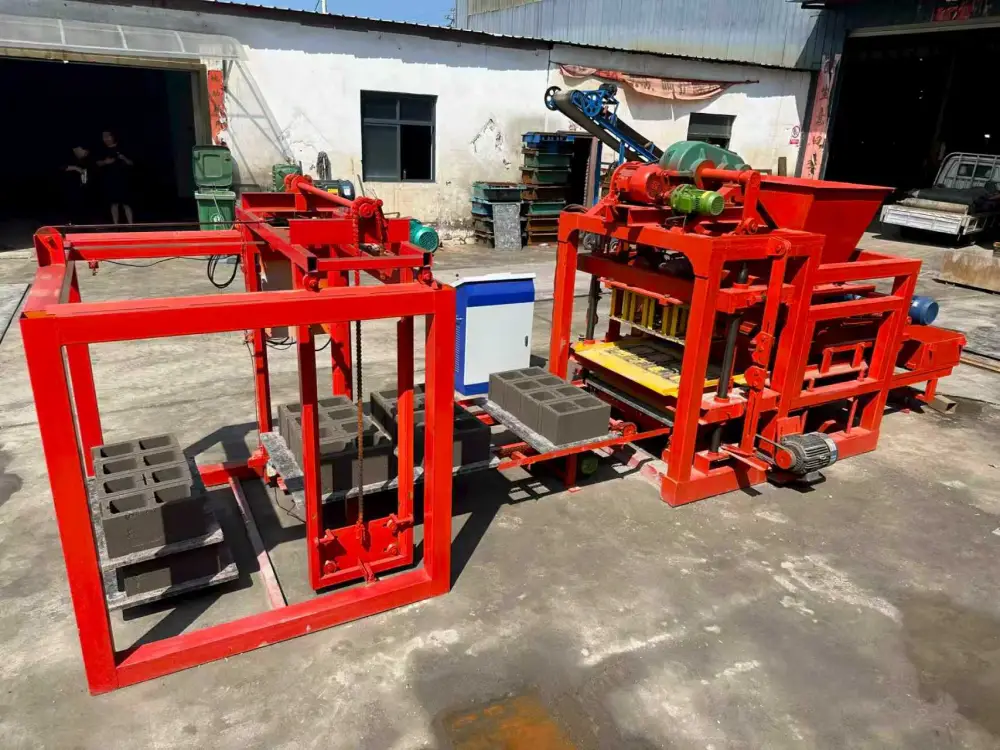
Ultra High-Output Models: QT12-15 & QT10-15
Built for large-scale industrial operations, these ultra high-output units deliver maximum volume and top-tier block compression strength around the clock.
- QT12-15: Produces 12 standard hollow blocks per mold (400x200x200mm) with a fast 15-second cycle time, yielding up to 23,000+ hollow blocks per 8-hour shift.
- QT10-15: Yields 10 hollow blocks per mold, achieving a high production capacity of roughly 19,000 to 20,000 blocks per shift.
- Key Strengths: Heavy-duty hydraulic pressing stations, twin-shaft mixers, and PLC automated batching for continuous, full-scale plant production.
Medium-to-Large Capacity Models: QT8-15 & QT6-15
These models hit the sweet spot for commercial manufacturers who need substantial daily output without requiring the massive footprint of ultra-heavy industrial plants.
- QT8-15: A top-selling hydraulic block machine producing 8 hollow blocks per cycle (~15,300 blocks per 8-hour shift), making it an industry benchmark for mid-sized plants.
- QT6-15: Delivers 6 hollow blocks per mold (~11,500 blocks per shift) with consistent density across all product batches.
- Key Strengths: Seamless integration with automated stackers, green-block conveyors, and multiple mold configurations for solid bricks, pavers, and curbstones.
Standard Commercial Models: QT5-15 & QT4-15
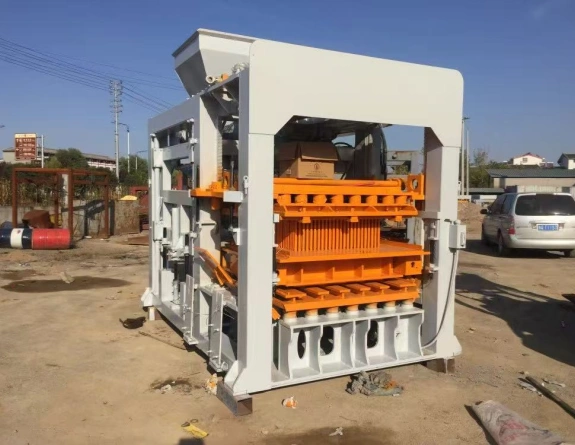
Ideal for regional suppliers and growing block plants, these standard commercial units balance initial investment with dependable daily volume.
- QT5-15: Produces 5 standard hollow blocks per molding cycle, reaching around 9,600 blocks per 8-hour shift. Our QT5-15 automatic cement brick making machine combines compact site placement with robust hydraulic pressure for dense, clean-edged units.
- QT4-15: Forms 4 blocks per mold, yielding approximately 7,600 hollow blocks per shift. The QT4-15 automatic brick making machine remains one of the most reliable entry-level automatic concrete brick machine options on the market.
- Key Strengths: Low operational overhead, simple maintenance routines, and rapid mold changeovers for versatile product lines.
Compact & Small-Scale Models: QT4-18 & QT3-20
Designed for start-ups, localized construction projects, or operations with limited factory space and power infrastructure.
- QT4-18: Features an 18-second molding cycle, generating 4 blocks per mold for an average output of 6,400 hollow blocks per shift.
- QT3-20: Produces 3 blocks per mold on a 20-second cycle time, yielding approximately 4,300 to 4,800 blocks per shift.
- Key Strengths: Lower power consumption, straightforward controls, and minimal upfront capital expenditure.
Technical Parameters and Production Output Comparison
Understanding technical parameters helps you match machine capabilities with your actual site output requirements. We compare performance across the entire QT lineup to help you evaluate daily production targets, molding cycle speeds, and system power requirements.
Daily Output Capacity Across Block Types
Daily output varies based on block dimensions, mold configuration, and raw material mixes. The standard reference measurement is based on an 8-hour work shift using standard 400×200×200mm hollow blocks, solid bricks, and color paver units. For mid-to-large operations, check our detailed breakdown of QT6-15 block machine specifications, features, and capacity.
| Machine Model | Standard Hollow Blocks (400x200x200mm) / 8 Hours | Solid Bricks (240x115x53mm) / 8 Hours | Color Pavers (200x100x60mm) / 8 Hours |
|---|---|---|---|
| QT12-15 | 17,280 – 23,040 pcs | 120,000 pcs | 2,800 – 3,200 sq.m |
| QT10-15 | 14,400 – 19,200 pcs | 96,000 pcs | 2,200 – 2,500 sq.m |
| QT8-15 | 11,520 – 15,360 pcs | 76,800 pcs | 1,800 – 2,000 sq.m |
| QT6-15 | 8,640 – 11,520 pcs | 57,600 pcs | 1,300 – 1,500 sq.m |
| QT5-15 | 7,200 – 9,600 pcs | 48,000 pcs | 1,000 – 1,200 sq.m |
| QT4-15 | 5,760 – 7,680 pcs | 38,400 pcs | 800 – 1,000 sq.m |
| QT4-18 | 4,600 – 6,000 pcs | 30,000 pcs | 600 – 800 sq.m |
| QT3-20 | 3,200 – 4,500 pcs | 22,000 pcs | 450 – 600 sq.m |
Molding Cycle Time and Vibration Frequency
Molding cycle time directly determines your ultimate daily yield, while vibration frequency determines structural density and compression strength.
- Cycle Time Efficiency: High-capacity units (QT12-15 to QT6-15) achieve fast molding cycles between 15 to 20 seconds, while compact models operate between 18 to 25 seconds.
- Vibration Frequency Range: Standard operational frequencies range from 3,800 to 4,800 r/min. Higher frequencies ensure rapid air expulsion from aggregate mixes.
- Compression Strength: Multi-directional dynamic table vibration achieves superior block density, enabling high load-bearing compression strength exceeding 15 to 25 MPa for structural hollow block machine applications.
Hydraulic Pressure and Power Specifications
A high-performance hydraulic block machine relies on balanced system pressure and electrical power to handle continuous heavy-duty operation. To see how these systems integrate across production lines, read our automatic block making machine guide.
- Hydraulic System Pressure: Ranges from 16 MPa to 31.5 MPa. Higher system pressure provides stronger downward compaction during the main molding stroke.
- Total Installed Power: Heavy commercial units require 45 kW to 90 kW total installed power, while compact models operate efficiently between 15 kW and 30 kW.
- Power Optimization: Smart PLC control systems synchronize hydraulic valving with electric motor drive cycles, reducing idling power consumption by up to 25%.
Raw Material Requirements and Supported Block Types
Compatible Raw Materials for Concrete Blocks
Our QT series machines work with a broad spectrum of local aggregates and industrial byproducts, cutting aggregate costs while maintaining high compression strength. Check our detailed cement brick making machine raw materials guide to optimize your batch ratios based on available supplies.
| Material Type | Common Sources & Fillers | Primary Benefits |
|---|---|---|
| Standard Aggregates | Sand, gravel, crushed stone, stone dust | Provides high structural density and core strength |
| Industrial Byproducts | Fly ash, blast furnace slag, coal gangue | Reduces material costs and overall eco-footprint |
| Recycled Content | Crushed construction waste, volcanic ash | Lowers raw material procurement costs locally |
- Cement Binder: Standard Portland cement (32.5 or 42.5 grade) serves as the core binding agent across all mix ratios.
- Water Ratio: Precise moisture content (typically 8–10%) ensures optimal compaction under high hydraulic pressure.
Types of Bricks and Blocks Produced
By swapping mold attachments on a single hydraulic block machine, you can manufacture virtually any masonry unit required for residential, commercial, or municipal construction. Refer to our fly ash brick machine guide for specific performance metrics on eco-friendly brick units.
- Hollow Blocks: Standard 2-core and 3-core units for load-bearing and partition wall structures.
- Solid Bricks: High-density structural units for foundations and heavy masonry projects.
- Interlocking Pavers: I-shape, zigzag, and rectangular pavers for driveways, sidewalks, and plazas.
- Curbstones & Edgers: Heavy-duty municipal road edge barriers and landscaping features.
- Permeable Grass Pavers: Open-grid blocks for eco-parking lots and soil erosion control.
Custom Mold Capabilities for Specialized Blocks
Every QT machine features quick-change mold clamping systems, letting operators switch product lines in under an hour. We engineer custom molds using CNC wire cutting and carburizing heat treatment, boosting mold operational life up to 100,000 production cycles.
- Dimensional Precision: Micro-tolerance engineering ensures exact block dimensions and tight interlocking fits.
- Custom Geometries: Tailored mold configurations for retaining wall blocks, acoustic blocks, and cable trench covers.
- Surface Customization: Optional face-mix feeder units allow two-layer color paver production on a single automatic concrete brick machine.
Working Principle of Automatic QT Block Machines
Our automatic block machine systems convert raw aggregates into high-density construction units through a continuous, three-stage workflow: precise batching, high-pressure molding, and automated stacking.
Raw Material Batching and Mixing System
The production sequence begins at the batching plant, where raw aggregates—such as sand, crushed stone, fly ash, and cement—are weighed with load-cell precision.
- PLD Aggregate Batching: Load-cell sensors weigh raw aggregates according to exact mix recipes to guarantee uniform density.
- Twin-Shaft Mixing: A JS-series twin-shaft concrete mixer thoroughly blends materials with controlled water volume, creating a semi-dry concrete slurry that prevents aggregate segregation.
- Conveyor Transfer: Enclosed belt conveyors deliver the blended material directly into the QT block machine’s feed hopper without material loss.
Hydraulic Pressing and Vibration Molding
Once concrete enters the feed box, the shaping process combines high-frequency directional vibration with proportional hydraulic pressure.
- Forced Feeding: Multi-shaft rotating feeder arms distribute the mix evenly across the heat-treated mold cavity.
- Synchronized Compaction: Dual vibration motors activate on the table while overhead hydraulic cylinders (16–21 MPa) drive out trapped air pockets.
- Rapid Demolding: The lower mold lifts while the press head holds the newly formed block, releasing fresh green blocks onto pallets in a fast 15-to-25-second cycle time.
For smaller operations prioritizing lower initial capital, a semi-automatic block machine utilizes a similar hydraulic pressing mechanism with manual or semi-automated material transfer options.
Automatic Stacking and Curing Stage
After demolding, green blocks transition through an automated handling circuit to preserve crisp edges and prevent structural damage before curing.
- Hydraulic Block Stacker: Automatic stackers lift block-laden pallets 4 to 5 tiers high, saving floor space and protecting wet edges from damage.
- Curing Transit: Forklifts or automated transfer cars move stacked pallets directly to humid curing chambers or drying racks.
- Pallet Return System: Once blocks reach target compressive strength, an automated depalletizer separates cured blocks and routes empty pallets back into the main machine loop.
How to Choose the Right QT Concrete Block Machine
Selecting the right equipment comes down to balancing your daily production goals, site labor costs, and overall budget. Reviewing a comprehensive guide on choosing a block making machine helps align your plant setup with local market demand.
Evaluating Required Daily Production Output
Your target daily block volume determines which machine tier you need. Undersizing leads to missed delivery deadlines, while oversizing leaves expensive machinery idle.
| Target Daily Volume (8-Hour Shift) | Recommended QT Model Tier | Typical Applications |
|---|---|---|
| 2,500 – 4,500 blocks | QT3-20 / QT4-18 | Small local supply, startups, remote sites |
| 5,000 – 9,000 blocks | QT4-15 / QT5-15 | Medium commercial production, urban building suppliers |
| 10,000 – 14,000 blocks | QT6-15 / QT8-15 | High-capacity regional distribution |
| 15,000 – 22,000+ blocks | QT10-15 / QT12-15 | Industrial-scale operations, major infrastructure projects |
Selecting Automation Levels: Fully Automatic vs. Semi-Automatic
Choosing between a semi-automatic and a fully automatic plant directly impacts your labor costs and output consistency.
- Semi-Automatic Lines: Lower initial investment, suitable for regions with low labor costs. Operators manually handle pallet loading, batching, and block transport.
- Fully Automatic Lines: Integrated PLC systems manage batching, mixing, feeding, pressing, and stacking. Investing in a fully automatic hydraulic block machine reduces labor requirements to 3–4 operators while maintaining faster cycle times and consistent block density.
Assessing Manufacturer Reputation and After-Sales Support
A block machine is an industrial workhorse that operates under high vibration and heavy pressure. Beyond machine specs, evaluate the manufacturer on key operational benchmarks:
- Core Component Quality: Ensure the hydraulic system uses reliable valves (such as Yuken) and the electrical system runs on proven PLC units (like Siemens) for long-term stability.
- Spare Parts Availability: Confirm quick access to wear parts, hydraulic seals, and mold replacements to avoid costly downtime.
- Technical Assistance: Look for suppliers offering on-site installation, operator training, and remote diagnostic support.
- Structural Durability: Heavy-duty steel frames and heat-treated molds ensure the machine handles continuous daily duty cycles without deformation.