
Are you looking to maximize your block manufacturing profits while producing bricks that stand the test of time? Success in concrete block production isn’t just about buying the right equipment—it starts with mastering your cement brick making machine raw materials.
Whether you are utilizing traditional aggregates like sand, gravel, and crushed stone, integrating eco-friendly options like fly ash and slag, or fine-tuning your raw material mix ratios to boost block strength, getting your material selection right is the key to cutting costs and producing high-quality concrete products.
In this complete guide, you’ll learn everything about choosing the right raw materials for cement brick production, understanding different types of cement brick making machines, and selecting the perfect setup for your operational goals and budget.
Let’s dive right in!
Introduction to Cement Brick Machines
What is a Cement Brick Machine?
A cement brick making machine is essential industrial equipment designed to process and mold concrete mixtures into high-strength bricks, hollow blocks, and interlocking paving stones. By efficiently consolidating core cement brick making machine raw materials—including cement, sand, gravel, and industrial waste—these machines produce uniform building blocks engineered for modern construction demands. We specialize in manufacturing concrete brick making machines that deliver exceptional structural integrity, operational efficiency, and long-term performance for international markets.
Working Principle of Concrete Brick Machines
Modern concrete block machines utilize a automated compaction and molding process to ensure consistent block quality:
- Batching & Mixing: Precise proportions of cement, water, and aggregates are thoroughly blended.
- Material Feeding: The homogenized mixture is automatically fed into the heavy-duty mold cavity.
- Hydraulic & Vibration Pressing: High-frequency vibration combined with heavy hydraulic pressure eliminates air pockets, ensuring high density.
- Demolding & Transfer: Formed green bricks are safely ejected onto pallets and moved to the curing station.
Key Advantages of Cement Brick Machines
Investing in advanced block-making technology provides strategic operational benefits:
- High Output Efficiency: Rapid molding cycles significantly boost daily production capacity.
- Versatile Material Processing: Seamlessly handles diverse aggregates, crushed stone, fly ash, and recycled materials.
- Exceptional Compressive Strength: Delivers dense, highly durable blocks that meet stringent global building codes.
- Lower Operational Costs: Reduced labor dependency and optimized raw material consumption lower overall unit costs.
Main Raw Materials for Cement Brick Production
Choosing the right cement brick making machine raw materials directly impacts your final product’s density, load-bearing capacity, and overall production costs. We specialize in manufacturing concrete brick making machines engineered to handle a wide range of aggregate mixes seamlessly.
Cement, Water, and Admixtures
- Cement: Ordinary Portland Cement (OPC) acts as the primary binder that fuses all materials together.
- Water: Fresh, clean water triggers the chemical hydration process required for maximum curing strength.
- Admixtures: Specialty chemical additives improve mix workability, reduce water absorption, and accelerate setting times.
Aggregates: Sand, Gravel, and Crushed Stone
- Fine Aggregates: River sand or manufactured sand fills micro-voids to deliver smooth block finishes and tight edges.
- Coarse Aggregates: Small crushed stone and gravel (typically 3mm to 10mm) form the rigid backbone of load-bearing blocks.
- A balanced aggregate ratio minimizes binder consumption while optimizing performance in a high-efficiency cement brick making machine.
Industrial Waste: Fly Ash, Slag, and Cinder
- Fly Ash: Thermal power plant by-products replace a portion of cement, lowering material costs and boosting long-term strength.
- Slag & Cinder: Blast furnace slag enhances thermal insulation and chemical resistance.
- Incorporating industrial waste significantly cuts unit costs without compromising structural standards.
Eco-Friendly Materials: Construction Waste and Tailings
- Recycled Aggregates: Crushed concrete and brick rubble from demolition sites replace virgin quarry materials.
- Mine Tailings: Processed mineral residues serve as reliable, low-cost fillers.
- Converting construction waste into solid blocks supports green building initiatives while securing higher profit margins.
Raw Material Mix Ratios and Quality Criteria
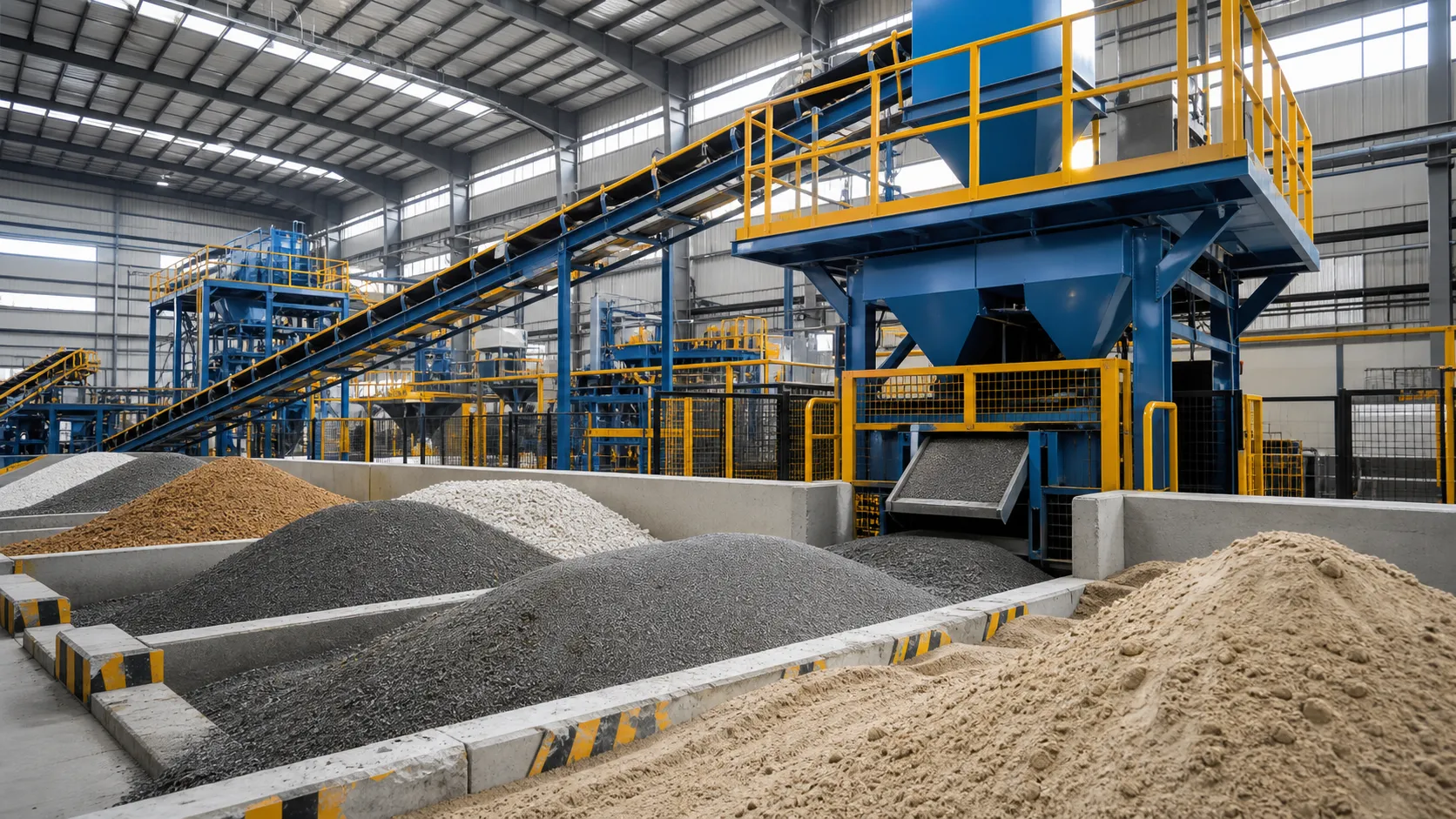
Getting the right balance of ingredients is the key to producing high-strength, durable blocks while keeping operational costs low. The performance of your cement brick making machine raw materials directly determines the density, load-bearing capacity, and finish of your final products.
Recommended Raw Material Proportions
The ideal mix ratio depends on your target product, local standards, and available ingredients. Below are two industry-standard baseline formulas commonly used in block production:
| Material Type | Standard Concrete Brick Mix | Fly Ash Brick Mix |
|---|---|---|
| Cement | 10% – 15% | 8% – 12% |
| Sand / Fine Aggregate | 30% – 40% | 20% – 25% |
| Crushed Stone / Gravel | 45% – 50% | — |
| Fly Ash / Slag | — | 55% – 60% |
| Lime / Gypsum | — | 10% – 15% |
Note: Water content should typically stay between 3% to 5% of the total dry weight for semi-dry vibration molding systems.
How Raw Material Quality Impacts Brick Strength
We specialize in manufacturing concrete brick making machines, and we know firsthand that equipment performance goes hand-in-hand with material quality. Even the highest-pressure molding systems cannot compensate for poor ingredients.
- Cement Grade: Using standard Portland Cement (grade 42.5) ensures faster curing times and higher initial compressive strength.
- Silt and Mud Content: Sand containing more than 3% silt weakens the bond between cement particles, causing blocks to crumble under stress.
- Particle Grading: Mixing coarse and fine aggregates fills internal voids, increasing density and reducing water absorption.
- Moisture Balance: When processing materials in a high-efficiency automatic brick making machine, excess water causes blocks to deform after ejection, while a dry mix leads to internal cracks.
Criteria for Selecting Raw Materials
To maximize profit margins without sacrificing block quality, follow these core selection guidelines:
- Local Availability: Choose materials abundant within a short radius to minimize transportation costs.
- Purity and Cleanliness: Ensure aggregates are free from organic debris, clay lumps, and salts that cause efflorescence.
- Consistency: Maintain uniform moisture and grain size distributions across batches to avoid frequent machine recalibration.
- Cost-Benefit Ratio: Replace a portion of expensive cement with reactive mineral additives like fly ash or granulated blast furnace slag where local building codes allow.
Types of Cement Brick Making Machines
Choosing the right equipment depends directly on your daily production goals, labor budget, and raw material processing setup. We specialize in manufacturing high-performance units that fit every scale of operation. You can explore our modern concrete block machine line designed to process various mix formulations with maximum efficiency.
Fully Automatic Brick Making Machines
Fully automatic systems offer top-tier efficiency for large-scale industrial operations. Controlled by advanced PLC systems, these units handle the entire workflow—from batching raw materials to molding and stacking finished products—with minimal human intervention.
- High Output: Continuous operation ensures massive daily production volumes.
- Consistent Quality: Automated hydraulic pressure and vibration deliver uniform density and precise dimensions.
- Labor Savings: Reduces manual labor needs significantly, cutting operational costs over time.
Semi-Automatic Brick Making Machines
Semi-automatic models hit the sweet spot between performance and initial investment. They work exceptionally well for medium-sized plants looking for solid output without the full price tag of complete automation.
- Flexible Control: Operators manage specific stages, such as raw material feeding or pallet unloading, while molding remains automated.
- Cost-Effective: Lower upfront costs with dependable structural strength and output consistency.
- Easy Maintenance: Simpler electrical and mechanical setups make daily maintenance straightforward.
Manual and Mobile Block Making Machines
Manual and mobile block machines are engineered for small business startups, specialized projects, or remote job sites where mobility is essential.
- Low Initial Investment: Ideal for quick setups with minimal capital risk.
- High Mobility: Mobile “egg-laying” models drop blocks directly onto the concrete floor, eliminating the need for pallets.
- Simple Operation: Requires no complex technical training to operate or service on site.
Applications of Cement Bricks and Concrete Blocks
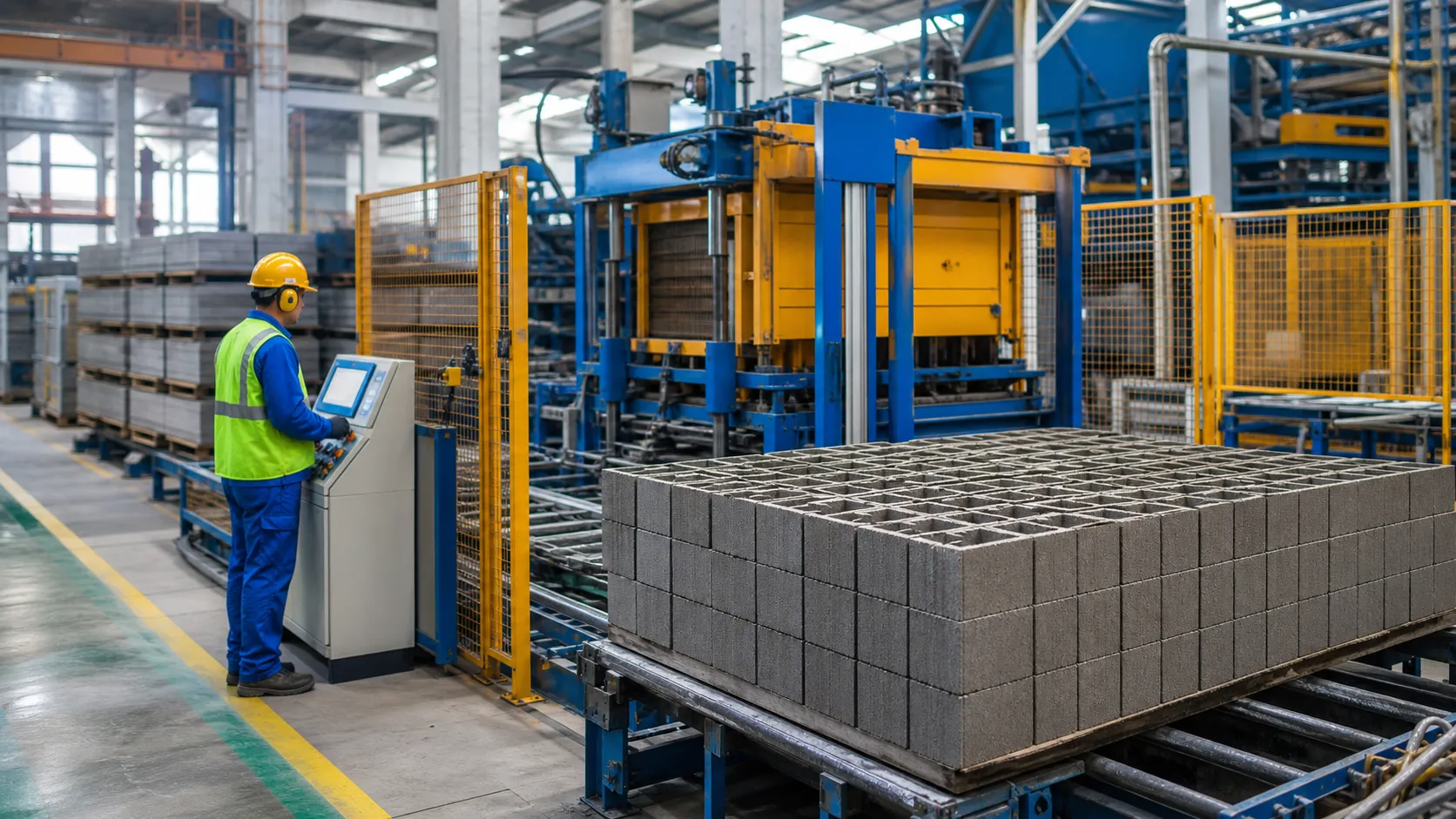
Concrete Hollow Block Manufacturing
Concrete hollow blocks are essential in modern construction, offering high thermal insulation, acoustic control, and a lighter structural load for high-rise buildings. By feeding a precise mix of cement brick making machine raw materials—including cement, sand, fly ash, and fine aggregates—into our equipment, producers manufacture dense, uniform blocks built for load-bearing and partition walls. As industry leaders, we specialize in manufacturing concrete brick making machines engineered to optimize material efficiency while achieving maximum compressive strength for global commercial and residential projects.
Solid Bricks and Interlocking Paving Blocks
Versatile production capabilities allow operators to switch molds and raw material proportions easily, meeting diverse civil engineering demands:
- Solid Bricks: High-density blocks built for heavy load-bearing walls, foundations, and severe weathering conditions.
- Interlocking Paving Blocks: Custom-shaped pavers for sidewalks, driveways, parking lots, and public plazas that withstand heavy traffic.
- Curbstones and Landscaping Blocks: Heavy-duty municipal products crafted using coarse aggregate mixes to ensure long-term wear resistance.
How to Choose the Suitable Cement Brick Making Machine
Matching Machine Type with Available Raw Materials
Selecting the right equipment starts with analyzing your local feedstocks. We specialize in manufacturing concrete brick making machines tailored to specific aggregate profiles, ensuring long-term durability and efficiency.
- Fly Ash & Industrial Slag: Requires high hydraulic pressure and strong vertical vibration to achieve proper compaction.
- Sand & Crushed Stone: Demands wear-resistant mold liners to withstand abrasive cement brick making machine raw materials.
- Construction Waste & Tailings: Needs robust feeding systems capable of processing variable aggregate sizes without clogging.
Evaluating Production Capacity and Automation Levels
Choosing between fully automatic, semi-automatic, and manual equipment comes down to your target daily output and local labor costs.
| Machine Type | Daily Production | Labor Required | Ideal Use Case |
|---|---|---|---|
| Fully Automatic | 10,000–30,000+ blocks | 2–3 operators | Large-scale commercial plants |
| Semi-Automatic | 4,000–10,000 blocks | 4–6 operators | Medium-sized regional suppliers |
| Manual / Mobile | 1,000–4,000 blocks | 3–5 operators | Small startups & remote sites |
Considering Technical Parameters and Budget
Look beyond the initial purchase price and evaluate core technical specifications that drive daily profitability:
- Hydraulic Pressure: Higher tonnage yields denser, stronger bricks with lower cement ratios.
- Molding Cycle Time: Fast cycle speeds (15–20 seconds) maximize output per shift.
- Mold Interchangeability: Quick-change mold designs allow seamless switching between hollow blocks, solid bricks, and pavers.
- Power Requirements: Verify total wattage compatibility with your local power grid or generator capacity before purchasing.