
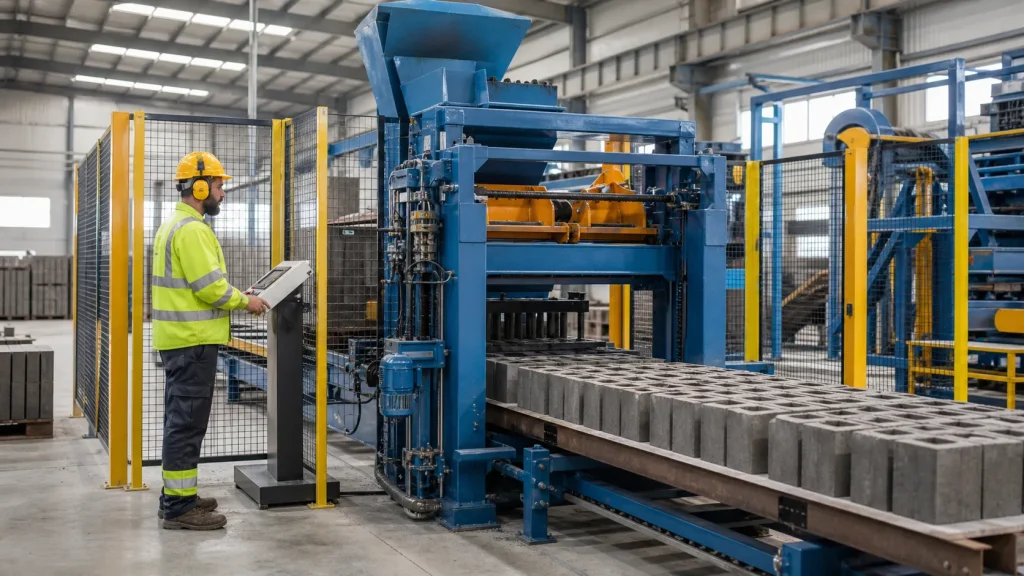
What is a Cinder Block Machine?
A cinder block machine is industrial manufacturing equipment designed to mold concrete, cinder, and aggregate mixtures into uniform masonry units using heavy hydraulic compression and high-frequency vibration. We specialize in manufacturing high-efficiency cinder block machines engineered to meet the rigorous demands of the global construction market, delivering exceptional block density and reliable long-term performance.
How Concrete Block Making Machines Work
The automated manufacturing process transforms raw materials into ready-to-cure blocks in four key stages:
| Stage | Action | Description |
|---|---|---|
| 1. Batching & Mixing | Raw Material Prep | Combines cement, water, sand, and cinder into a uniform aggregate mixture. |
| 2. Feeding | Mold Filling | The material feeder evenly distributes the mixture into the block mold cavity. |
| 3. Molding | Pressing & Vibration | Hydraulic pressure combined with vertical vibration compacts the material. |
| 4. Demolding | Ejection | Finished blocks are ejected onto pallets for transfer to the curing area. |
Key Benefits of Block Production Equipment
- High Production Efficiency: Automates labor-intensive processes to maximize hourly output.
- Superior Block Strength: Ensures precise dimensional consistency and high compressive strength.
- Low Operational Costs: Optimizes raw material usage and reduces manual energy waste.
- Eco-Friendly Manufacturing: Utilizes industrial by-products like coal cinder, fly ash, and slag.
Common Applications in Construction
Cinder blocks produced by modern machinery provide essential structural solutions across residential, commercial, and industrial developments:
- Structural Walling: Exterior load-bearing walls, foundations, and retaining structures.
- Interior Partitioning: Fire-rated, soundproof divider walls for multi-story buildings.
- Infrastructure Projects: Municipal drainage channels, boundary walls, and paving units.
Types of Cinder Block Machines
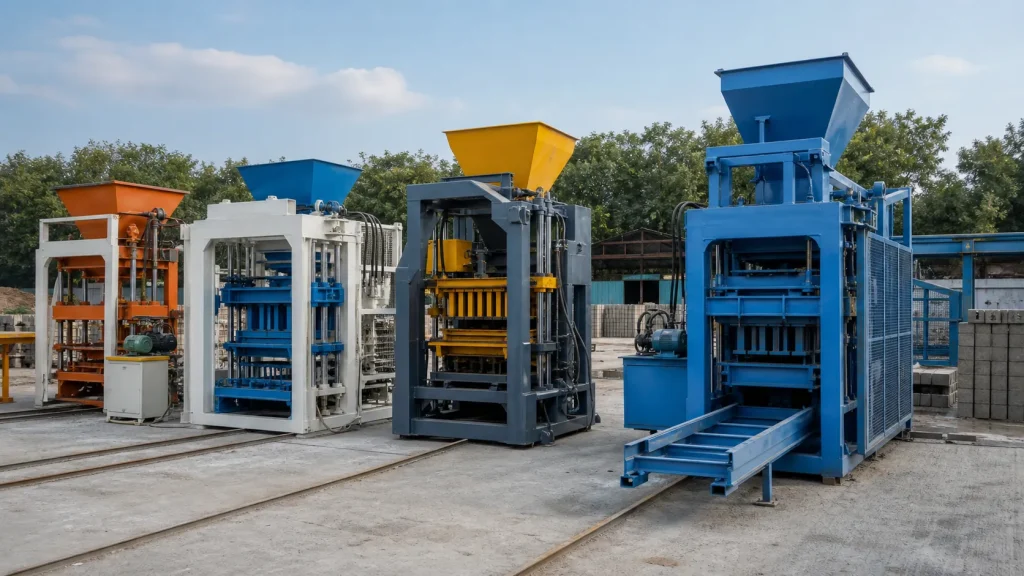
We specialize in manufacturing Cinder Block Machines engineered to match any production capacity, site layout, and budget. Choosing the right machinery type is the first step toward building an efficient production line—check out our comprehensive concrete block machines guide to evaluate how different setups impact operational costs and ROI.
Fully Automatic Concrete Block Machines
Fully automated plants deliver maximum output with minimal manual labor. Managed through centralized PLC control panels, these systems handle raw material batching, mixing, molding, and pallet stacking seamlessly.
- Key Advantage: Mass production capacity with consistent block density and precise dimensions.
- Operation: Fully automated PLC control system requiring minimal operator oversight.
- Best Suited For: Large-scale commercial block manufacturers and high-volume industrial projects.
Semi-Automatic Cinder Block Machines
Semi-automatic setups offer an ideal balance between automated pressing power and manual material handling. Operators control material feeding and block discharge, while heavy-duty hydraulic vibration systems handle the molding process.
- Key Advantage: Lower upfront capital investment while maintaining high block quality.
- Operation: Requires 2 to 4 operators for feeding and pallet transfer.
- Best Suited For: Growing block yards and mid-sized construction contractors.
Manual Block Making Machines
Manual units rely on mechanical leverage and basic vibration motors to compact concrete mixtures into blocks. They offer an accessible, reliable entry point for localized production.
- Key Advantage: Ultra-low starting cost and simple, easy-to-maintain mechanical design.
- Operation: Hand-operated levers for feeding, pressing, and demolding.
- Best Suited For: Small job sites, entry-level startups, and areas with limited power infrastructure.
Mobile Concrete Block Machines
Popularly referred to as egg-laying block machines, these mobile units move across a flat concrete floor, molding and depositing finished blocks directly onto the slab.
- Key Advantage: Completely eliminates the need for expensive production pallets.
- Operation: Self-propelled or hand-guided unit moving along a slab yard.
- Best Suited For: On-site project manufacturing and flexible outdoor block yards.
Product Categories and Machine Configurations
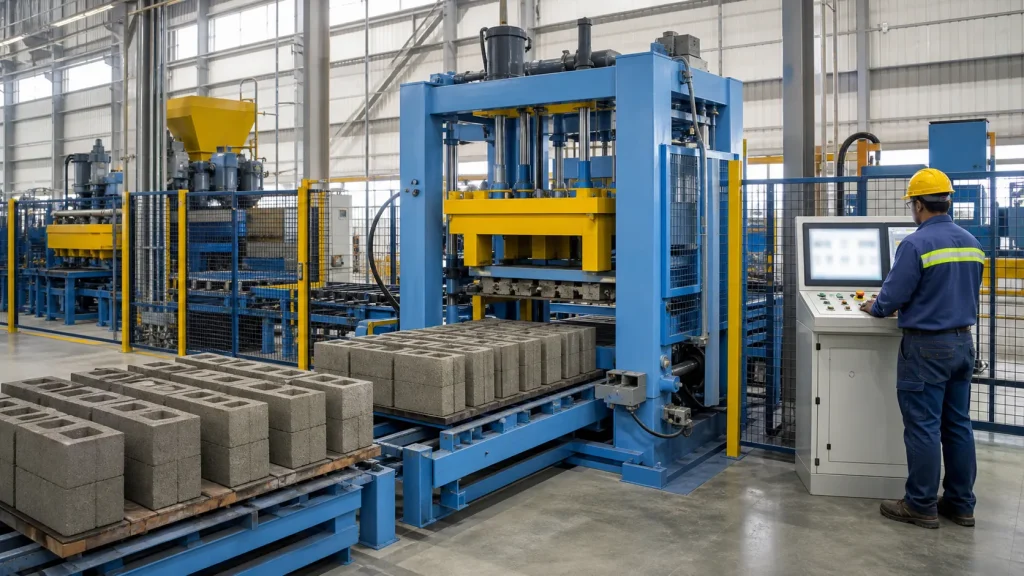
We build our equipment to fit specific production needs, offering diverse configurations tailored to different commercial applications and project sizes.
Hydraulic Concrete Block Machines
Hydraulic systems deliver intense pressure combined with high-frequency vibration to guarantee dense, heavy-duty blocks. These setups excel in high-capacity manufacturing, delivering consistent output and tight dimensional tolerances for modern construction demands.
Hollow and Solid Brick Machines
Versatility is critical for growing operations. Our multi-purpose equipment allows quick mold swaps to seamlessly switch between lightweight hollow cinder blocks, solid load-bearing blocks, and custom shapes. Understanding the efficiency of machine-made bricks in modern construction helps producers optimize production runs for maximum profit.
Paving Block Making Machines
Engineered for high-wear surface materials, these configurations specialize in producing interlocking pavers, curb-stones, and decorative landscaping products. Reviewing various cement brick making machine applications ensures you select the right face-color feeder and compaction system for your target market.
| Category | Primary Block Types | Key Advantage |
|---|---|---|
| Hydraulic Machines | High-density structural blocks | Maximum load capacity & precision |
| Hollow & Solid Machines | Partition blocks, foundation units | Fast mold changes & high versatility |
| Paving Machines | Interlocking pavers, curb-stones | High abrasion resistance & custom finishes |
Key Features of Modern Cinder Block Machinery
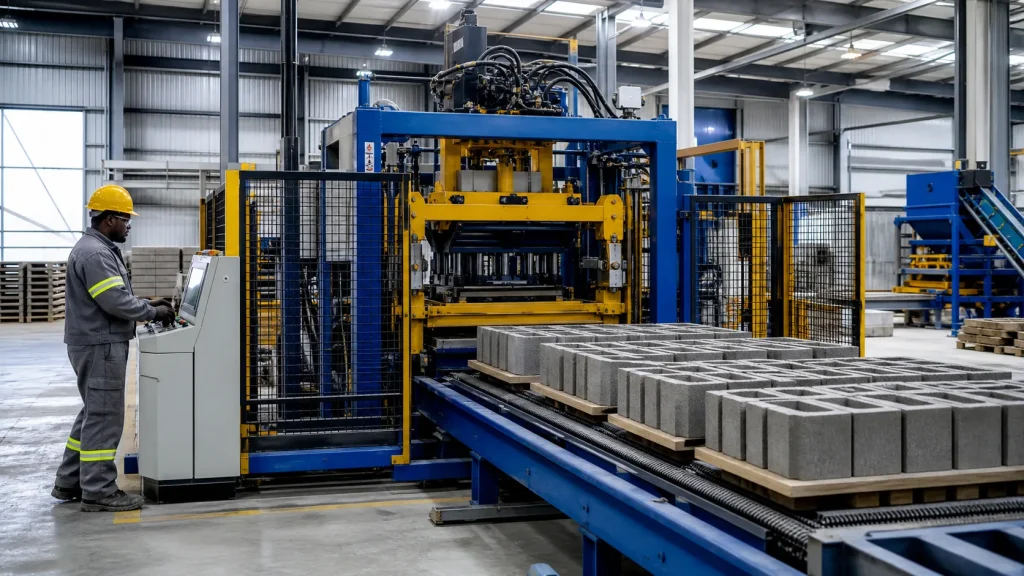
We design modern cinder block machines to maximize output while keeping operational complexity low. By integrating advanced molding, heavy hydraulic power, and smart electric controls, our equipment helps producers reach target strength requirements with minimal downtime.
High Output and Efficient Molding Systems
Speed and precision drive everyday profitability. Our molding systems feature quick-change attachments, allowing operators to switch between hollow, solid, and custom blocks seamlessly across various cinder block machinery applications.
- Rapid Cycle Times: Achieve fast 15–25 second forming cycles to boost daily unit counts.
- Precision Fabrication: Heavy-duty, heat-treated steel molds reduce wear and maintain tight dimensional tolerances.
- Versatile Block Shapes: Produce standard cinder blocks, pavers, and specialized masonry units on a single platform.
Heavy-Duty Hydraulic and Vibration Technology
Block density directly dictates load-bearing capacity. By combining high-pressure hydraulic compaction with synchronized multi-directional vibration, every unit produced meets strict structural standards.
| Feature | Standard Systems | Our Advanced Technology |
|---|---|---|
| Vibration System | Single-frequency vibration | Synchronized multi-directional vibration |
| Hydraulic Pressure | Basic single-stage pump | Variable proportional hydraulic pressure |
| Block Density | Moderate variance | High uniform density across all units |
Energy Efficiency and Automation Controls
Operating costs stay manageable thanks to intelligent energy management and reliable automated controls developed through our equipment manufacturing standards.
- PLC Control Panels: Intuitive touchscreen interfaces for real-time monitoring and simple system adjustments.
- Smart Energy Usage: Variable frequency drives reduce power consumption during idle cycles.
- Integrated Diagnostics: Built-in troubleshooting tools identify issues early to minimize unexpected maintenance delays.
Cinder Block Machine Price and Cost Guide
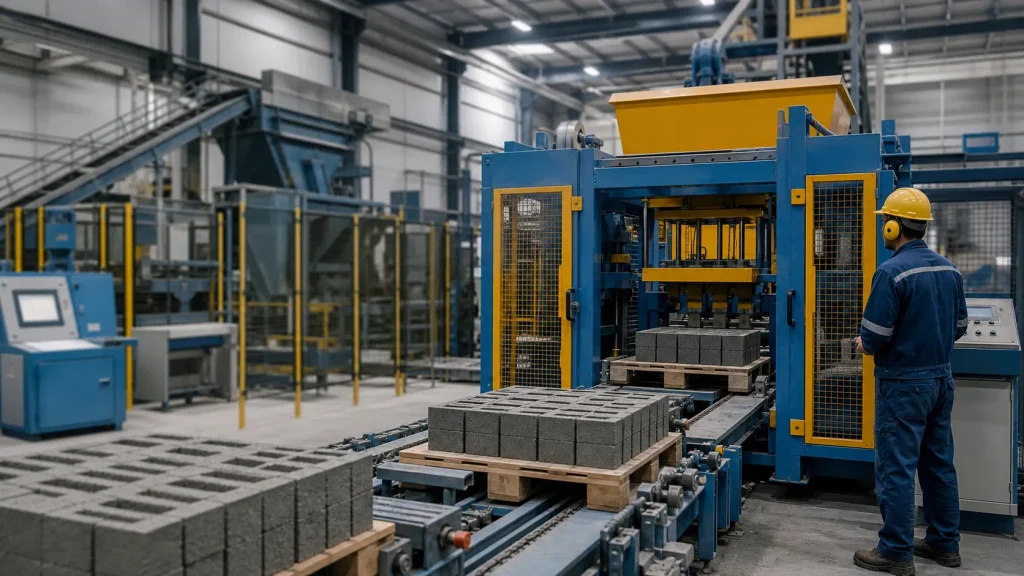
Understanding the full cost of a cinder block machine involves looking beyond the upfront price tag. As a dedicated cinder block machine manufacturer, we design equipment tailored to different budgets, output targets, and operational needs to maximize your return on investment.
Factors Influencing Equipment Prices
Several key specifications determine the baseline cost of block production machinery:
- Automation Level: Fully automated PLC systems cost more initially than manual models but drastically reduce ongoing labor expenses.
- Production Capacity: Machines engineered for high-volume daily output require heavier steel frames and larger motors, increasing the machinery cost.
- Hydraulic and Vibration Tech: High-pressure hydraulic systems ensure superior block density, which impacts overall machine pricing.
- Raw Material Systems: Integrated batching and mixing equipment for handling concrete block raw materials add to the complete production line cost.
- Mold Customization: Custom molds for specialized hollow bricks, interlocking pavers, or solid blocks add minor tooling costs.
Manual vs Automatic Machine Cost Comparison
| Feature | Manual Machine | Semi-Automatic Machine | Fully Automatic Machine |
|---|---|---|---|
| Initial Investment | Low | Moderate | High |
| Production Speed | Slow (500–1,500 blocks/day) | Medium (2,000–5,000 blocks/day) | High (6,000–15,000+ blocks/day) |
| Labor Needed | High (3–5 workers) | Moderate (2–3 workers) | Minimal (1–2 operators) |
| Block Quality | Depends on operator skill | Consistent hydraulic pressure | Perfect density and uniformity |
| Best For | Small startups & local projects | Growing mid-sized plants | High-volume commercial supply |
Long-Term Maintenance and Operating Expenses
Evaluating the total cost of ownership requires accounting for ongoing operational expenses:
- Power and Energy: Fully automated systems require steady power supplies, though energy-efficient motors minimize daily electricity bills.
- Mold Replacement: Molds experience friction and require routine replacement or re-lining after extended production runs.
- Routine Servicing: Regular lubrication, clearing concrete buildup, and changing hydraulic oil prevent costly downtime.
- Labor Payroll: Automated lines significantly cut monthly labor expenses, quickly offsetting higher initial equipment purchase prices.
How to Choose and Buy the Right Cinder Block Machine
We specialize in manufacturing Cinder Block Machines engineered to match diverse production scales and construction demands worldwide. Selecting the right equipment comes down to balancing production output, machine specifications, and supplier support.
Evaluating Production Capacity and Project Needs
Assess your required daily block output and concrete product variety to determine the right machine footprint and force capacity.
| Project Scale | Recommended Machine Type | Daily Output Target | Target Application |
|---|---|---|---|
| Small / Startup | Manual / Small Mobile Machine | 500 – 2,000 blocks | Small local builds, basic masonry projects |
| Medium Commercial | Semi-Automatic Hydraulic Machine | 3,000 – 7,000 blocks | Regional suppliers, custom block production |
| Large Industrial | Fully Automatic Stationary Line | 8,000 – 15,000+ blocks | High-volume commercial concrete plants |
Selecting Reliable Manufacturers and Suppliers
Choosing an experienced manufacturer protects your investment and minimizes operational downtime over time.
- Structural Build Quality: Prioritize heavy-duty structural steel frames and high-grade vibration motors designed for continuous operation.
- Mold Flexibility: Ensure quick-change mold capabilities for hollow blocks, solid bricks, pavers, and interlocking wall systems.
- Component Availability: Choose suppliers utilizing standard hydraulic and electrical components for quick local replacement.
- Global Certifications: Verify international quality standards such as ISO 9001 and CE certifications.
Ordering, Shipping, and Setup Process
We streamline purchasing to get your plant operational as quickly as possible.
- Customization & Quote: Select machine capacity, mold types, and auxiliary tools (mixers, conveyor belts, stackers).
- Factory Quality Testing: Every cinder block machine completes full dry-run tests and hydraulic stress testing before dispatch.
- Packaging & Global Freight: Secure ocean freight packing in standard container sizes to protect components during transit.
- Site Setup & Commissioning: Clear foundation plans, remote installation support, and on-site engineer deployment for smooth commissioning.