
Are you trying to maximize efficiency and cut labor costs in your brick production line, but feeling overwhelmed by equipment choices? Selecting the right machinery can mean the difference between a high-margin construction venture and a plant plagued by constant downtime.
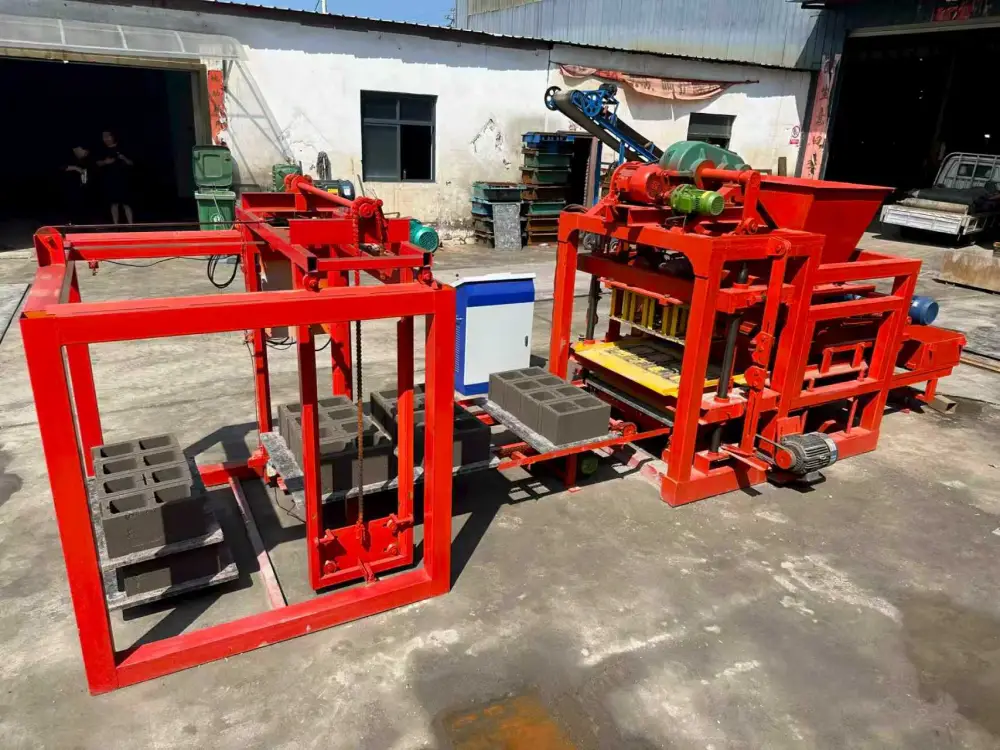
As an industrial plant consultant, I know that investing in heavy-duty machinery requires more than just skimming a spec sheet. You need a setup that delivers consistent compressive strength, rapid cycle times, and the versatility to handle mold customization for brick machines without halting production.
Whether you are launching an entry-level startup or upgrading to a fully automatic block making machine, this guide breaks down the raw engineering and ROI metrics you need to know. We will look at exactly how high-frequency hydraulic compression pressure eliminates structural defects, how to optimize aggregate mixes with a heavy-duty concrete mixer, and how leading brands like Wojin Block Making Machine Manufacturer design systems built to endure millions of intense vibration cycles.
Let’s dive right into the mechanics of building a highly profitable concrete block production line.
Core Classifications of Concrete Block Machines: Which Level Fits Your Operation?
Choosing the right equipment determines your daily output, labor costs, and overall profitability. We break down the primary configurations of concrete block machines to help you identify the exact match for your production scale and market demand.
Fully Automatic Concrete Block Production Lines
For high-volume manufacturing, a fully automatic concrete block production line is the industry standard. These systems integrate raw material batching, mixing, hydraulic compression, and automatic stacking into a seamless, continuous loop.
- Labor Efficiency: Requires minimal manual intervention, usually managed by 2–3 technicians via a central PLC control panel.
- Consistency: Delivers uniform hydraulic compression pressure, ensuring every block meets strict commercial compressive strength standards.
- Best For: Large-scale commercial suppliers targeting infrastructure projects and high-volume wholesale markets.
Semi-Automatic Cement Brick Machines
A semi-automatic cement brick machine balances capital investment with reliable output. These systems utilize electronic controls for material feeding and mold pressing but rely on manual labor for pallet transport and green block handling.
- Flexibility: Fast mold changes allow you to switch production between hollow blocks, solid bricks, and pavers.
- Cost-Benefit: Lowers initial setup costs while maintaining high vibration and compaction quality.
- Best For: Growing mid-sized brick factories expanding their footprint in regional construction markets.
Manual and Small-Scale Block Makers
Manual machinery relies on mechanical levers and basic vibrator motors rather than heavy hydraulic systems.
- Simplicity: No complex electronics or advanced hydraulics, making maintenance straightforward in remote areas.
- Mobility: Light frames allow these units to be moved directly to construction sites.
- Best For: Small startup businesses, DIY projects, or localized operations with low daily volume targets.
Stationary vs. Mobile (Egg-Laying) Block Machines
Your plant layout and logistics strategy dictate whether you need a stationary pallet block machine or a mobile unit.
| Machine Type | Operation Method | Pallet Requirement | Best Used For |
|---|---|---|---|
| Stationary Pallet Block Machine | Functions in a fixed position; blocks are pressed onto heavy-duty pallets and moved to a curing zone. | High (Requires a continuous supply of production pallets) | High-precision interlocking paver machine setups, multi-tier automated factories. |
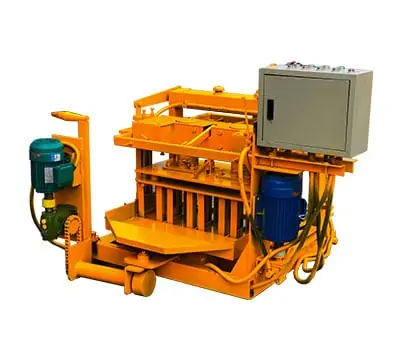
| Mobile (Egg-Laying) Machine | Moves across a flat concrete floor, molding blocks directly on the ground and leaving them behind as it advances. | None (Eliminates pallet purchasing costs entirely) | High-volume production of standard hollow blocks where yard space is abundant. |
The Mechanical Engineering: How a Concrete Block Machine Works
Understanding the inner workings of a high-performance concrete block machine reveals why it is the backbone of any productive brick plant. The transformation of raw aggregate into high-strength wall materials relies on heavy-duty engineering and synchronized cycles. Here is how our production machinery handles the process from start to finish.
Stage 1: Material Batching & Continuous Mixing
Everything begins with precision dosing. Automated batching plants weigh out cement, sand, gravel, and industrial byproducts like fly ash or slag. These materials enter a heavy-duty concrete mixer, where water is introduced under strict monitoring. A uniform, low-moisture semi-dry mix is essential; too much water destroys structural integrity during immediate demolding.
Stage 2: Precision Material Feeding
Once mixed, the concrete travels via conveyor belt to the machine’s storage hopper. From there, a specialized feeding box moves rapidly over the mold box. Utilizing internal rotating paddles, the machine evenly distributes the stiff mix into every corner of the mold cavities, ensuring no air pockets or thin spots exist before pressing.
Stage 3: High-Frequency Vibration & Hydraulic Compaction
This is the core forming phase where the blocks gain their durability. The concrete block machine utilizes a dual-force system:
- High-Frequency Vibration: Powerful twin vibrators attached to the bottom table liquefy the stiff concrete mix, causing the particles to pack together tightly.
- Hydraulic Compression Pressure: Simultaneously, a heavy top tamper head slams down with massive hydraulic force.
This combination of intense shaking and heavy pressing forces out all trapped air, instantly elevating the compressive strength of concrete blocks.
Stage 4: Mold Demolding and Auto-Stacking
Thanks to the extreme compaction and low water content, the green blocks hold their shape immediately. The hydraulic cylinders lift the mold box upward while the tamper head holds the blocks down against the pallet.
Once the mold clears the blocks, the wet products move forward on a stationary pallet block machine setup toward the automatic stacker, freeing up the forming area to begin the next cycle immediately.
Raw Materials and Mix Optimization for Maximum Compressive Strength in Concrete Block Machines
Achieving the highest compressive strength of concrete blocks starts long before the hydraulic compression pressure is applied. It comes down to the exact science of your recipe. As plant owners, we know that optimizing the raw material mix design directly impacts both product quality and your bottom line. Balancing aggregate sizing, cement content, and moisture ensures your concrete block production line runs at peak efficiency while meeting global building standards.
Standard Aggregate Configurations
A flawed aggregate ratio is the primary reason blocks crumble. To build high-density, load-bearing blocks, your mix requires a graded blend of coarse and fine aggregates.
- Fine Aggregates (0–3mm): Sharp manufactured sand or river sand fills the micro-voids between larger particles.
- Coarse Aggregates (3mm–10mm): Crushed stone, gravel, or pea gravel forms the structural backbone of the block.
- The Golden Ratio: A standard starting point for an automatic block making machine is 1 part Cement : 3 parts Fine Aggregates : 5 parts Coarse Aggregates, though this fluctuates based on target PSI requirements.
Eco-Friendly Fillers and Byproducts
Industrial byproducts dramatically lower production costs while improving material properties. Substituting a portion of standard sand or cement with these materials is highly effective:
- Fly Ash: A byproduct of coal power plants that improves workability and long-term strength through pozzolanic reactions. A specialized fly ash brick making machine utilizes up to 70% industrial waste in its mix.
- Bottom Ash & Slag: Excellent lightweight aggregate alternatives that reduce the dead weight of hollow blocks without sacrificing structural integrity.
- Construction Demolition Waste (CDW): Recycled concrete aggregates can replace up to 20% of virgin aggregates in non-load-bearing applications, satisfying green building certifications worldwide.
Water-to-Cement Ratio Dynamics
Concrete block production lines use a semi-dry mix (zero-slump concrete), which behaves very differently from ready-mix concrete.
- The Sweet Spot: The ideal water-to-cement ratio hovers strictly between 0.25 and 0.35.
- Too Much Water: The mix becomes muddy. Blocks will sag, deform during demolding, and lose their dimensional accuracy.
- Too Little Water: The cement fails to hydrate fully. The mix won’t bond under vibration, causing low compressive strength and brittle edges that break on the conveyor.
The Hand Test: Squeeze a handful of the mixed material. It should hold its shape like damp soil without staining your palm with water or crumbling apart instantly.
One Machine, Infinite Profiles: The Power of Mold Customization
The true value of a modern concrete block machine lies in its versatility. You do not need multiple machines to produce different product lines; instead, you simply change the mold. By utilizing precision-engineered molds, a single concrete block production line transforms to meet shifting market demands, allowing factory owners to maximize their return on investment.
To explore the full range of production capabilities and see these profiles in action, you can view our concrete block machine applications to find the right fit for your market.
Hollow Concrete Blocks
Hollow blocks are the backbone of modern construction, highly sought after for their lightweight properties and excellent thermal insulation. A high-performance hollow block manufacturing equipment setup produces standard two-core or three-core structural blocks with precise wall thickness and exceptional load-bearing capacity.
Solid Bricks and Cinder Blocks
For high-load foundation walls and traditional masonry work, solid bricks and cinder blocks remain a market staple. Utilizing a fly ash brick making machine configuration with customized molds allows plants to utilize industrial byproducts to press dense, high-strength solid bricks at a rapid cycle rate.
Interlocking Pavers and Permeable Blocks
The demand for municipal landscaping and sustainable urban drainage is booming. Swapping to an interlocking paver machine mold allows you to produce:
- Standard wave and rectangular interlocking pavers
- High-density heavy-duty dock pavers
- Eco-friendly permeable blocks for rainwater management
Kerbstones and Water Gutters
Expanding into infrastructure projects requires larger, specialized profiles. With heavy-duty mold customization, your brick machine can easily transition to manufacturing roadside kerbstones, drainage channels, and water gutters, securing lucrative municipal and highway construction contracts.
Key Purchasing Parameters for Concrete Block Machines
When investing in a concrete block machine, making the wrong call on specs can stall your ROI for years. As plant owners, we look past the marketing fluff and focus strictly on the engineering and economic metrics that drive profitability.
Here is the exact checklist we use to evaluate a concrete block production line before signing off on a purchase.
Production Volume and Daily Output Targets
Your target volume dictates the size and cycle speed of the automatic block making machine. Calculate your needs based on an 8-hour shift, factoring in a 15% buffer for daily operational variables.
| Block Type | Standard Size | Cycle Time | Estimated Output (8-Hour Shift) |
|---|---|---|---|
| Hollow Block | 400x200x200 mm | 15–20 seconds | 8,000 – 12,000 pcs |
| Solid Brick | 240x115x53 mm | 15–20 seconds | 40,000 – 50,000 pcs |
| Interlocking Paver | 200x100x60 mm | 20–25 seconds | 25,000 – 30,000 pcs |
Hydraulic and Vibration System Power Specs
The compressive strength of concrete blocks relies entirely on the machine’s ability to force air pockets out of the mix. Weak systems yield crumbly blocks that fail local compliance tests.
- Hydraulic Compression Pressure: Look for heavy-duty setups delivering at least 16–21 MPa. High pressure ensures quick cycle times and immediate structural integrity before curing.
- Vibration Frequency: Opt for multi-source vibration systems reaching 3,000–4,500 rpm. Combined top and bottom vibration ensures uniform density throughout the entire mold profile.
Automation Level vs. Local Labor Economics
The choice between a semi-automatic cement brick machine and a fully automated setup comes down to your local operating costs and labor availability.
[Manual/Semi-Auto] ───► High Labor Dependency + Lower Upfront Capex ───► Best for Cheap Labor Markets
[Fully Automatic] ───► Low Labor Dependency + Higher Upfront Capex ───► Best for High-Wage Markets
- Fully Automatic Lines: Best if local wages are high or reliable labor is scarce. These setups use PLC systems to control everything from the heavy-duty concrete mixer to the final product stacker, requiring only 2–3 operators.
- Semi-Automatic Setups: Highly practical for regions with affordable labor. They cut down initial concrete block machine price tags while keeping output relatively high by using manual pallet transport.
Long-Term Durability and Structural Steel Grade
A cheap frame will warp under continuous hydraulic pounding, ruining your mold customization for brick machine alignments.
- Steel Frame: Insist on Q345B high-strength structural steel or better. The main frame must be welded using carbon-dioxide arc welding to withstand millions of vibration cycles without cracking.
- Guide Columns: Look for oversized, chrome-plated guide pillars paired with wear-resistant materials. This keeps the mold moving perfectly straight, preventing uneven block walls and premature mold wear.
Operational Maintenance, Fault Diagnosis, and Longevity of Concrete Block Machines
Keeping your concrete block machines running at peak performance requires a disciplined approach to shop-floor care. In high-volume production, a single component failure can stall your entire line, eating into daily margins. Maximizing the lifespan of a hydraulic brick machine or automatic block making machine comes down to three operational pillars: structured daily care, rapid troubleshooting, and strict safety protocols.
Daily Preventative Maintenance Routines
To prevent premature wear on a heavy-duty concrete block production line, operators must execute specific checks before, during, and after every shift.
- Lubrication Management: Lubric
Setting Up a Complete Concrete Block Plant Layout
Designing an efficient concrete block factory layout requires a strategic balance between material flow, machinery footprint, and dedicated curing zones. A well-planned footprint minimizes internal transport bottle-necks and maximizes daily output.
Space Requirements
A standard commercial concrete block production line requires designated zones to operate safely and efficiently. Total land requirements typically scale based on automation levels and storage needs.
| Plant Zone | Space Requirement (Sq. Meters) | Key Considerations |
|---|---|---|
| Raw Material Storage | 500 – 1,500 | Open or covered bins for aggregates, sand, and cement silos. |
| Mixing & Batching Area | 150 – 300 | Vertical clearance for a heavy-duty concrete mixer and skip hoists. |
| Molding & Production | 200 – 500 | Reinforced foundation for the main concrete block machines. |
| Curing Kilns / Yards | 1,000 – 3,000 | Max space allocation; must accommodate 24-48 hours of peak production. |
| Finished Product Storage | 1,500 – 5,000 | Organized stacking lanes accessible by heavy forklifts. |
Curing Methods
The curing setup directly dictates the final compressive strength of concrete blocks. Choosing the right method depends on your local climate, budget, and target production velocity.
- Natural Air Curing: The blocks are stacked in a shaded area and continuously misted with water for 7 to 14 days. This method requires low initial investment but demands a massive land footprint.
- Steam Curing Chambers: Enclosed kilns utilize controlled steam to accelerate hydration. This system cures blocks within 12 to 24 hours, drastically reducing inventory holding time and freeing up factory floor space.
To achieve maximum efficiency from day one, we design tailored factory setups. You can explore our specialized layout engineering services on the Wangong Machinery about us page to see how we optimize production flows for global producers. Proper spacing and specialized curing infrastructure ensure your plant operates at peak profitability.
FAQs About Concrete Block Machines
What is the difference between a stationary and a mobile block machine?
A stationary pallet block machine operates in a fixed location and requires wooden, plastic, or PVC pallets to deposit the finished blocks. It is ideal for high-volume, automated production lines. A mobile machine, often called an egg-layer, moves across a flat concrete floor and drops the molded blocks directly onto the ground as it moves, eliminating the need for production pallets but requiring a much larger floor area.
Can one machine make both hollow blocks and interlocking pavers?
Yes. With our versatile concrete block machines, you only need to change the mold to switch production. Mold customization for brick machine systems allows a single hydraulic press to produce hollow blocks, solid bricks, interlocking pavers, and kerbstones on the same production line.
How long do concrete blocks need to cure before they can be sold?
Blocks typically need to cure for 28 days to reach their maximum compressive strength of concrete blocks. However, with proper initial steam curing or plastic wrapping to retain moisture, they can often be moved and transported after 7 to 14 days, depending on local climate conditions and the mix design.
What causes concrete blocks to crack or crumble right out of the mold?
This issue usually stems from three main factors:
- Incorrect water-to-cement ratio: The mix is either too dry to bind or too wet to hold its shape.
- Insufficient hydraulic compression pressure: The machine is not applying enough force during the compaction cycle.
- Poor aggregate grading: Lack of fine materials like fly ash or fine sand to fill the voids between larger aggregates.
How many people are needed to operate an automatic block making machine?
A fully automatic block making machine line is highly efficient and typically requires only 3 to 5 workers.
| Role | Staff Required |
|---|---|
| Batching Plant & Mixer Operator | 1 person |
| Main Machine Console Operator | 1 person |
| Wheel Loader Driver (Raw Materials) | 1 person |
| Forklift Driver / Curing Yard Hand | 1-2 people |