
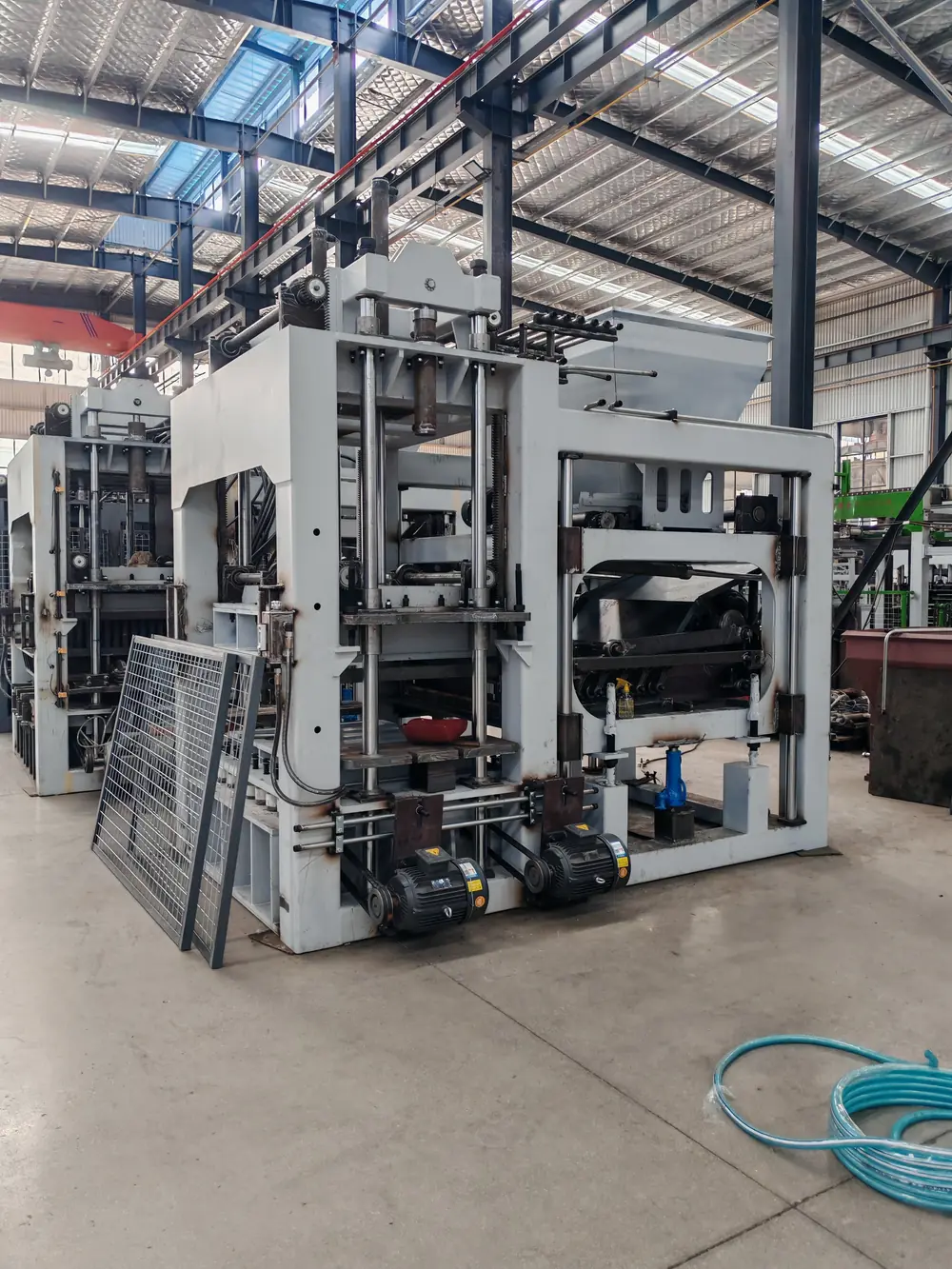
QT10-15 fully automatic hydraulic block making machine — one of the highest-capacity single-machine models for large-scale block factories
The QT10-15 block machine is one of the most powerful fully automatic concrete block making machines on the market today. If you run a large-scale block manufacturing business or plan to upgrade your production capacity, you have likely considered investing in this heavy-duty hydraulic model.
But a QT10-15 fully automatic block machine is a serious financial commitment — a complete line can cost $50,000 to $100,000+. Before you invest, you need a clear picture of real production output, total setup cost, and how long it will take to earn your money back. In this guide, we break it all down with real numbers and a customer case study from Ghana.
- The QT10-15 produces 15,000–20,000 hollow blocks per 8-hour shift (real factory output)
- A complete production line costs $50,000–$85,000 from a direct manufacturer like Wojin
- Payback period ranges from 2 months (best case) to 8.5 months (conservative 50% capacity)
- Only 3–4 workers needed — dramatic labor savings vs. semi-automatic machines
- Best for established factories with proven demand, not first-time investors
- Can produce hollow blocks, solid bricks, paving stones, curb stones, and interlocking bricks
What Is the QT10-15 Block Machine?
The QT10-15 block machine is a heavy-duty, fully automatic hydraulic concrete block making machine. It sits at the top of the standard QT series range — larger and more powerful than the QT8-15 block machine and significantly bigger than the mid-range QT6-15 automatic block machine.
It combines high-pressure hydraulics (20–25 MPa) with powerful multi-directional vibration to form dense, high-quality concrete blocks, pavers, and curb stones. The “10” in the model name refers to the number of standard hollow blocks (400×200×200mm) produced per mold cycle, and the “15” represents the approximate molding cycle time of 15 seconds.
Because the QT10-15 runs on a PLC control system with fully automatic material feeding, molding, demolding, and stacking, it needs very few workers to operate. This makes it especially valuable in countries where labor costs are high and finding skilled factory workers is challenging.
As a fully automatic block production line, the QT10-15 can be configured to produce a wide range of concrete products — not just standard hollow blocks. With quick mold changeovers (typically 30–60 minutes), you can switch between producing hollow concrete blocks, solid bricks, interlocking pavers, curb stones, and more.
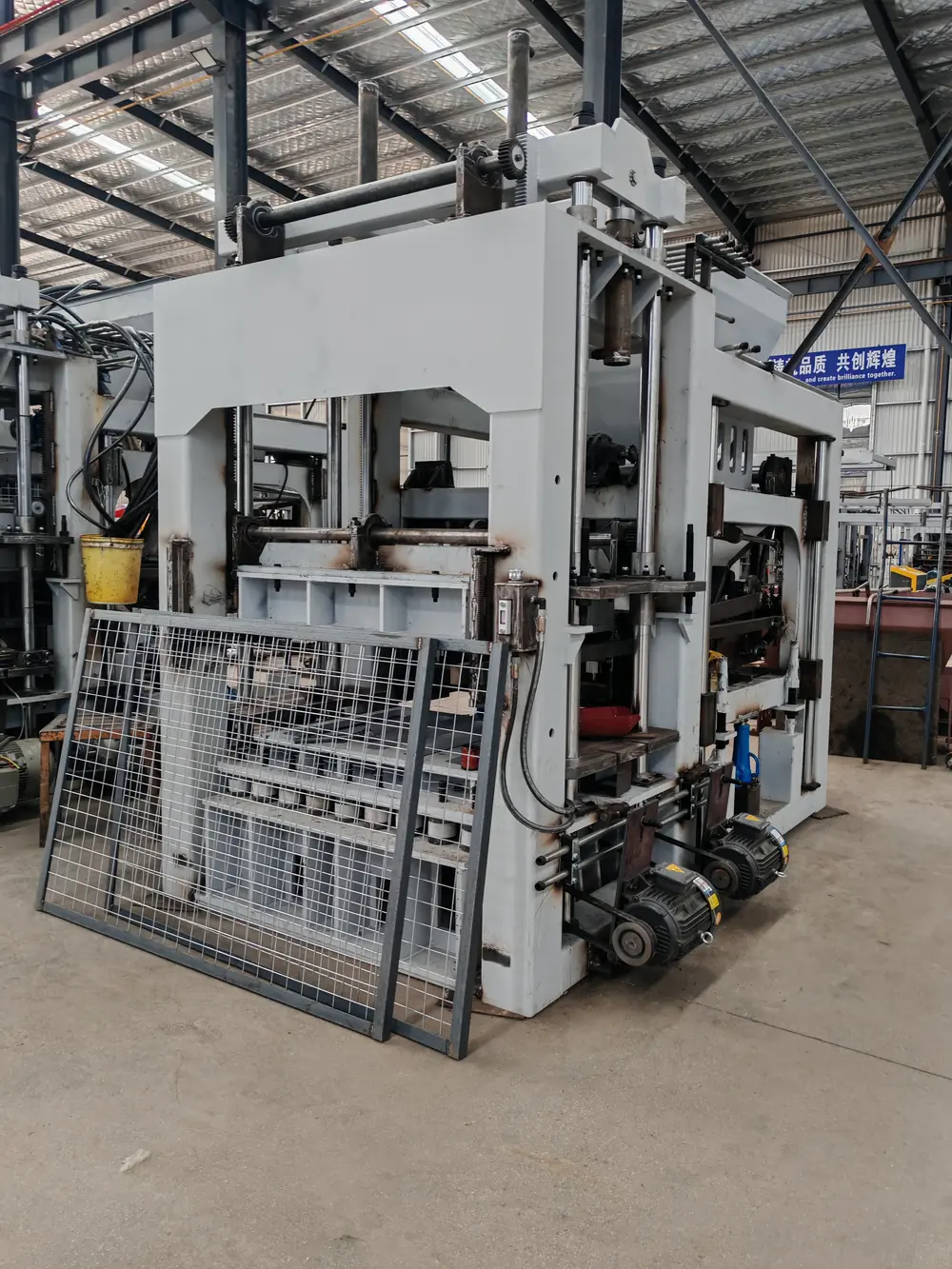
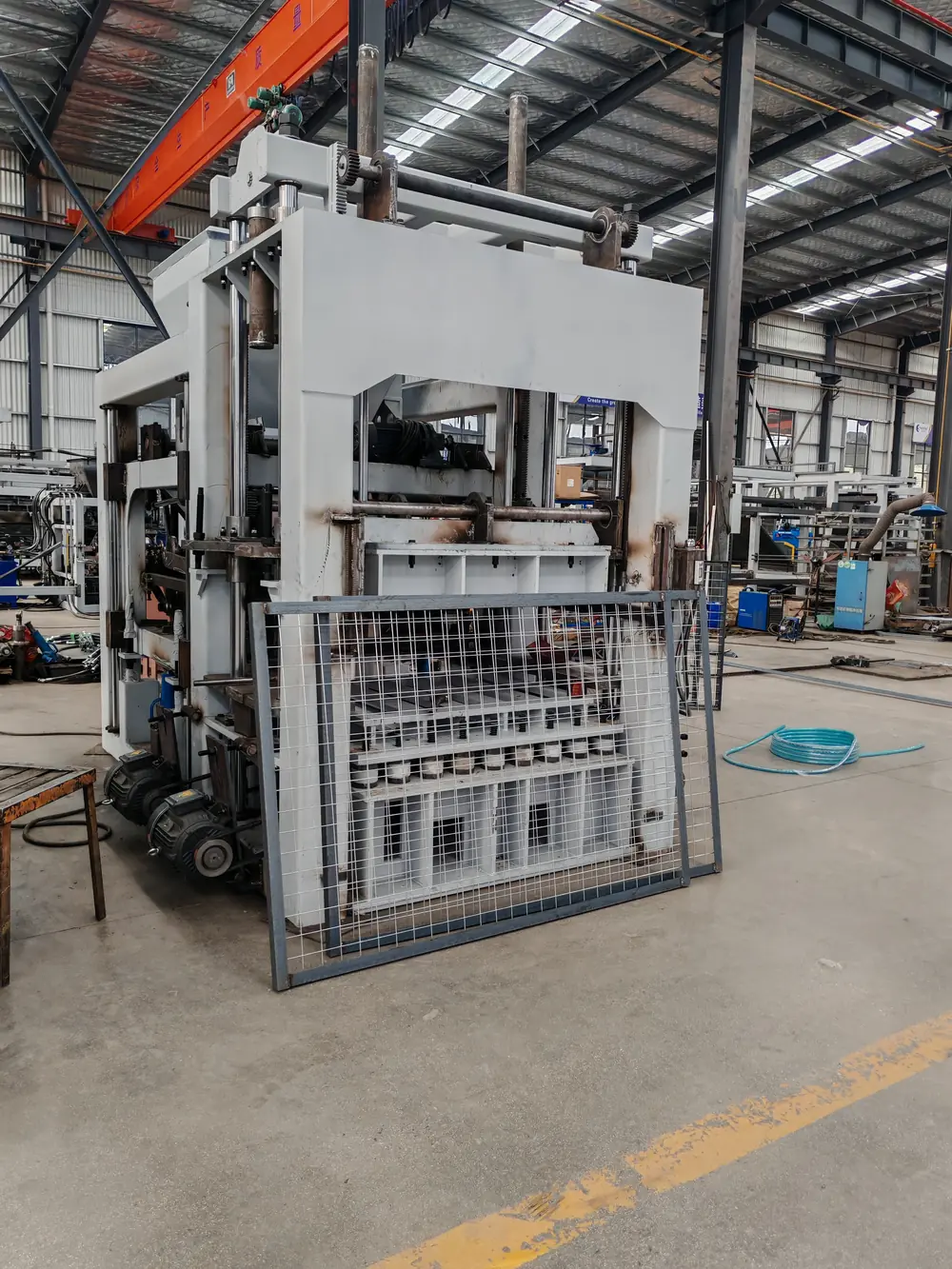
Side and front views of the QT10-15 fully automatic hydraulic block machine — reinforced steel frame for high-pressure operation
Who Should Invest in a QT10-15 Block Machine?
The QT10-15 is not a beginner machine. It is designed for businesses that already have experience in the block manufacturing industry and need to scale up significantly. It is a particularly good fit for:
- Established block factories that have outgrown their current machines and cannot meet customer demand
- Large construction companies with ongoing housing projects or government road infrastructure contracts
- Serious investors with $80,000 or more in available capital who want to enter the building materials market at scale
- Businesses supplying multiple cities or fulfilling large government and commercial contracts
- Factories in high-labor-cost regions — the QT10-15 dramatically reduces payroll expenses compared to manual or semi-automatic production
If you are just entering the industry or serve a smaller local market, a QT4-25 semi-automatic block machine or mid-range QT6-15 might be a better starting point. You can always upgrade to a larger model as your business grows.
QT10-15 Technical Specifications
Full Technical Specs at a Glance
Before we dive into capacity and cost analysis, here are the full technical specifications for a standard QT10-15 fully automatic block making machine from a quality manufacturer like Wojin Machinery:
| Model | QT10-15 Fully Automatic |
| Automation Level | Fully Automatic (PLC Control) |
| Forming Method | Hydraulic Pressure + Multi-Direction Vibration |
| Molding Cycle Time | 12 – 18 seconds |
| Blocks per Mold (hollow 400×200×200mm) | 10 pieces |
| Pallet Size | 1,100 × 850 mm |
| Output per 8 Hours (hollow blocks) | 15,000 – 20,000 pieces |
| Output per 8 Hours (solid bricks) | 40,000 – 50,000 pieces |
| Output per 8 Hours (paving blocks) | 25,000 – 30,000 pieces |
| Maximum Hydraulic Pressure | 20 – 25 MPa |
| Total Installed Power | 65 – 80 kW |
| Vibration Motor Power | 4 × 5.5 kW |
| Machine Weight (main unit only) | Approximately 16,000 kg |
| Machine Dimensions (L×W×H) | 6,500 × 3,200 × 3,800 mm |
| Voltage | 380V / 3 Phase / 50Hz (customizable) |
| Workers Required | 3 – 4 people |
| Control System | PLC (Siemens recommended) |
| Recommended Factory Space | 800 – 1,500 m² |
| Machine Life Expectancy | 8 – 12 years (with proper maintenance) |
How to Spot a Low-Quality Supplier
⚠️ Watch Out for Low-Quality Suppliers
Not every machine sold as a “QT10-15” actually meets these specifications. Some companies use the model name as a marketing label but install weaker hydraulic systems, smaller vibration motors, or thinner steel frames. Always ask for detailed technical drawings, confirm the actual number of blocks per mold, and check the hydraulic pump brand before you buy. A genuine heavy-duty QT10-15 should weigh at least 14,000 kg and use reputable hydraulic components.
QT10-15 Production Capacity: How Many Blocks Per Day?
Production capacity is usually the first question people ask about the QT10-15 block machine. Understanding the real output — not just the theoretical maximum — is critical for planning your business, setting sales targets, and calculating your return on investment accurately.
Theoretical Output vs. Actual Real-World Output
Every manufacturer advertises a “theoretical output” number. This figure assumes the machine runs perfectly non-stop for 8 hours with no pauses, no adjustments, and no material delays. In actual factory conditions, real output is typically 70–85% of the theoretical number.
Here is what you can actually expect from a well-maintained QT10-15 with an experienced operator and consistent raw material supply:
| Product Type | Theoretical (8h) | Actual Output (8h) | Per Month (26 days) |
| Hollow block 400×200×200mm | 20,000 pcs | 15,000 – 18,000 pcs | 390,000 – 468,000 pcs |
| Solid brick 240×115×53mm | 50,000 pcs | 40,000 – 45,000 pcs | 1,040,000 – 1,170,000 pcs |
| Paving block 200×100×60mm | 30,000 pcs | 25,000 – 28,000 pcs | 650,000 – 728,000 pcs |
| Curb stone 500×150×250mm | 3,000 pcs | 2,400 – 2,600 pcs | 62,400 – 67,600 pcs |
| Interlocking brick | 35,000 pcs | 28,000 – 32,000 pcs | 728,000 – 832,000 pcs |
Why Actual Production Is Lower Than Advertised
Several factors reduce real-world output compared to the theoretical maximum number. Understanding these factors helps you plan your production schedule more accurately and identify areas where you can improve efficiency:
- Material batching and mixing time — even fully automatic lines need time to prepare the concrete mix and deliver it to the machine hopper
- Mold changeovers — switching to a different block type or product size takes 30 to 60 minutes including adjustment and testing
- Parameter adjustments — fine-tuning vibration time, hydraulic pressure, and feed amount for different raw materials or weather conditions
- Worker breaks and shift changes — the machine cannot run safely if no one is monitoring the control panel and production quality
- Regular maintenance tasks — cleaning, lubricating, and routine inspections during the workday to prevent breakdowns
- Raw material supply interruptions — occasional delays in cement, sand, or aggregate delivery
- Quality control checks — periodic testing of block strength, dimensions, and appearance
To maximize your QT10-15 production capacity, we recommend running at least two 8-hour shifts per day when market demand allows. Many successful Wojin customers run 16 hours daily, and some even run 24-hour operations with three shifts. The machine is designed for continuous use, so multi-shift production is both practical and highly profitable.
QT10-15 vs. Other QT Series Models: Output Comparison
Here is how the QT10-15 stacks up against other popular models in the QT series concrete block making machine range:
| Machine Model | Hollow Blocks / 8h | Workers Needed | Price Range |
| QT4-25 (semi-automatic) | 4,500 – 5,200 | 4 – 6 | $5K – $8K |
| QT4-15 (fully automatic) | 5,760 – 9,600 | 2 – 3 | $10K – $15K |
| QT6-15 (fully automatic) | 8,000 – 12,000 | 2 – 3 | $18K – $30K |
| QT8-15 (fully automatic) | 12,000 – 16,000 | 3 | $28K – $48K |
| QT10-15 (heavy-duty automatic) | 15,000 – 20,000 | 3 – 4 | $35K – $60K |
For a more detailed comparison of different models, check out our complete guide comparing the QT4-15, QT6-15, and QT8-15 block machines. And for an overview of the entire product range, see our article on the 8 best QT concrete block machines rated by output.
Total Investment Cost for a QT10-15 Production Line
The machine itself is only one piece of the puzzle. A complete QT10-15 production line includes several pieces of auxiliary equipment. Understanding the full cost upfront helps you budget properly and avoid financial surprises later.
Equipment Cost Breakdown
The following table shows the equipment cost breakdown for both a budget configuration and a standard premium configuration. All prices are based on direct factory pricing from Wojin Machinery — buying through trading companies or middlemen typically adds 30–50% to these figures.
| Equipment Item | Budget Option (USD) | Standard Config (USD) |
| QT10-15 Main Machine Unit | $35,000 | $50,000 |
| Concrete Mixer (JS750 / JS1000) | $4,000 | $7,000 |
| Batching Machine (2-bin / 3-bin) | $3,000 | $5,000 |
| Conveyor Belt System | $2,000 | $4,000 |
| Automatic Stacker / Palletizer | $5,000 | $10,000 |
| Hydraulic System (pump + valves) | Included | Included |
| PLC Control Panel | Included | Included |
| Pallets (500 pieces) | $2,000 | $4,000 |
| Standard Mold Set (hollow block) | Included | Included |
| Additional Molds (2 sets) | $2,000 | $5,000 |
| Spare Parts Starter Package | $1,000 | $2,000 |
| Equipment Subtotal | $52,000 | $87,000 |
| Sea Freight to Africa | $5,000 | $8,000 |
| Installation & Operator Training | $3,000 | $5,000 |
| Total Equipment Investment | $60,000 | $100,000 |
🏭 Factory Space Requirements
A full QT10-15 block making machine production line needs approximately 800 to 1,500 square meters of factory floor space. This includes the production area (300–400 m²), raw material storage (200–300 m²), curing space (200–400 m²), and finished block storage (100–400 m²). Land acquisition and building construction costs are not included above since they vary dramatically by location.
Additional Startup Costs to Budget For
Beyond the equipment itself, you also need to budget for several other startup expenses that many first-time investors overlook:
- Raw material inventory — cement, sand, aggregate, and possibly fly ash for 1–2 months of production ($5,000–$15,000)
- Working capital — funds to cover operating costs until customers pay their invoices, which often take 30–60 days ($10,000–$20,000)
- Electrical infrastructure — 3-phase power connection, distribution panels, and possibly a step-down transformer ($2,000–$10,000)
- Water supply system — for concrete mixing and block curing, including storage tanks if municipal supply is unreliable ($500–$2,000)
- Business registration and permits — company setup, environmental permits, and quality certification ($500–$3,000)
- Initial marketing and sales — finding your first customers, printing brochures, and setting up a basic website ($1,000–$5,000)
- Weighing scale and testing equipment — for quality control and block strength testing ($500–$2,000)
- Forklift or pallet jack — for moving pallets of finished blocks around the factory yard ($2,000–$8,000)
In total, you should plan for a total startup budget of $80,000 to $150,000 to get a QT10-15 factory fully operational and producing blocks for sale. This includes everything from the equipment itself to working capital and facility preparation.
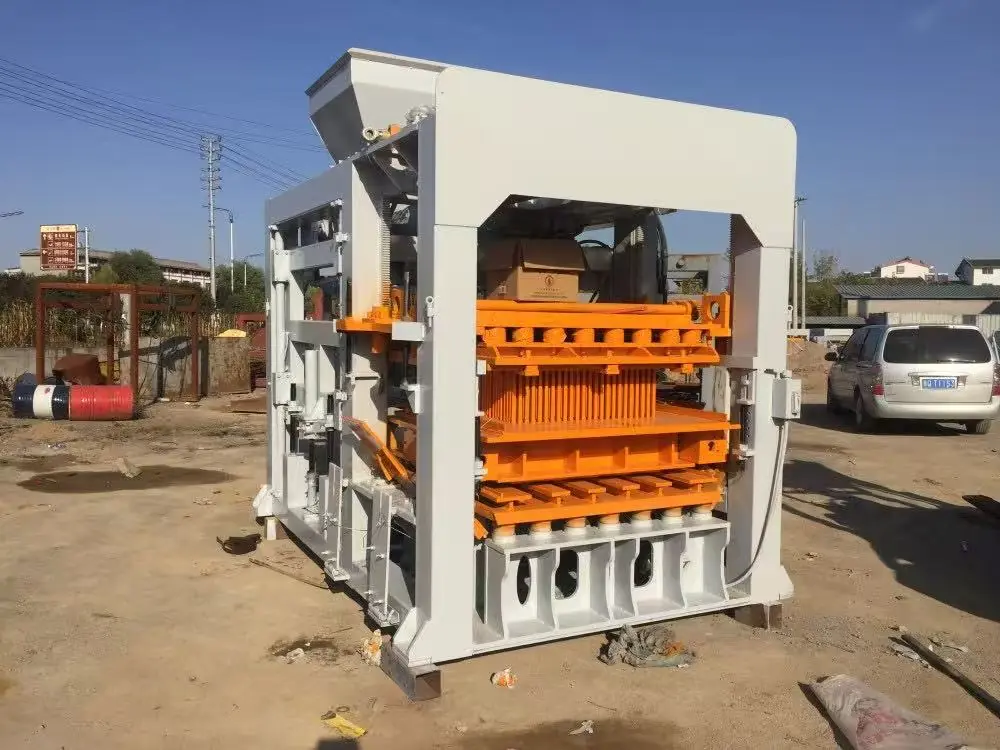
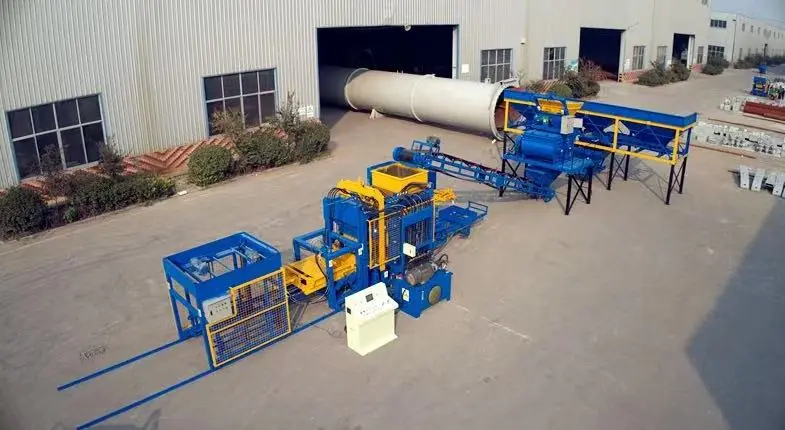
QT10-15 fully automatic production line with automatic material feeding system and block stacking machine
Revenue and Profit Calculation for the QT10-15
Now let us get to the most important question: how much money can you actually make with a QT10-15 block making machine? We will use realistic numbers based on average market conditions in sub-Saharan Africa, drawing from our experience with over 200 factory installations across the continent.
Monthly Revenue Calculation (Hollow Block Production)
For this calculation, we focus on standard hollow concrete blocks (400×200×200mm), which is the most common product for this machine size. Your actual product mix may vary based on local demand.
| Calculation Item | Figure |
| Daily production (realistic actual) | 16,000 hollow blocks |
| Production days per month | 26 days |
| Total monthly production | 416,000 hollow blocks |
| Average selling price per block | $0.22 |
| Total Monthly Revenue | $91,520 |
Production Cost Breakdown Per Block
Understanding your cost structure is just as important as knowing your revenue. The table below shows a detailed cost breakdown per hollow block based on typical input costs in West and East Africa:
| Cost Item | Per Block | Per Month | % of Total |
| Cement (≈25% of block weight) | $0.055 | $22,880 | 44% |
| Sand & Coarse Aggregate | $0.025 | $10,400 | 20% |
| Labor (4 workers) | $0.010 | $4,160 | 8% |
| Electricity | $0.008 | $3,328 | 6% |
| Equipment Depreciation | $0.008 | $3,328 | 6% |
| Maintenance & Spare Parts | $0.005 | $2,080 | 4% |
| Pallet Replacement | $0.003 | $1,248 | 2% |
| Other (water, transport, admin) | $0.011 | $4,576 | 10% |
| Total Production Cost | $0.125 | $52,000 | 100% |
Monthly Net Profit Calculation
Monthly Net Profit (Best Case)
Monthly Revenue $91,520 − Total Costs $52,000
Based on 16,000 blocks/day × 26 days/month × $0.22 per block
Using a mid-range total investment figure of $80,000 (standard equipment plus working capital and startup costs), the simple payback period would be:
Estimated Payback Period (Best Case)
$80,000 total investment ÷ $39,520 monthly profit = ~2 months
⚠️ Keep Your Expectations Realistic
The 2-month payback figure is a theoretical best-case scenario. In actual practice, it almost always takes longer. For a well-managed factory with good market demand, a 6 to 12 month payback period is more realistic. Here is why:
- It takes 1–3 months just to install the machine, commission the line, and train your operators properly
- You probably will not sell 100% of your production in the first few months of operation
- Many customers ask for 30–60 day credit terms, which delays your cash flow significantly
- Seasonal factors affect sales — rainy seasons and holiday periods slow down construction activity
- New businesses often need to price competitively to build their customer base and enter the market
Conservative ROI Scenario (50% Production Capacity)
Let us also calculate a more conservative scenario where the machine runs at 50% capacity and you sell at a lower price point. This is closer to what many new factories experience in their first 3–6 months while they build their customer base:
| Metric | Best Case Scenario | Conservative Scenario |
| Daily output | 16,000 blocks | 8,000 blocks |
| Average selling price | $0.22 | $0.18 |
| Monthly revenue | $91,520 | $37,440 |
| Monthly operating cost | $52,000 | $28,000 |
| Monthly net profit | $39,520 | $9,440 |
| Payback period | ~2 months | ~8.5 months |
Even in the conservative scenario, the QT10-15 still pays for itself in less than a year. This strong return on investment is why heavy-duty automatic machines like the QT10-15 are so popular with serious investors in the block manufacturing industry.
Real-World Case Study: Ghana Factory
Customer Profile & Setup
To make these numbers more concrete, let us look at an actual Wojin customer who installed a QT10-15 production line in Accra, Ghana in early 2025.
📊 Case Study: Kumasi Blocks Ltd. — Accra, Ghana
Installation date: March 2025
Configuration: QT10-15 standard line with JS1000 mixer, 3-bin batcher, and automatic stacker
Total investment: ~$92,000 (equipment + freight + installation)
Current production: 14,000–16,000 hollow blocks/day, 2 shifts (16 hours)
Average selling price: $0.24 per hollow block (6-inch)
Monthly net profit: ~$32,000
Payback achieved: Month 8 of operation
Current status: Planning to add a second QT10-15 line in Q4 2026
Results & Key Takeaways
This customer had previous experience running a smaller semi-automatic machine for three years before upgrading. They already had established relationships with local contractors and hardware stores, which meant they could ramp up sales quickly after installation. The factory now supplies blocks to several major housing development projects in the Greater Accra region.
If you would like to hear more customer success stories or get contact information for Wojin customers in your country, reach out to our sales team. We have customers in over 30 countries across Africa, the Middle East, and Southeast Asia.
5 Key Factors That Determine Your QT10-15 Profitability
Not every QT10-15 owner makes the same profit. Five factors have the biggest impact on your bottom line and should be carefully evaluated before you invest:
1. Local Hollow Block Market Prices
Selling prices vary a lot by country and city. Strong demand + limited competition = premium prices. Too many small producers = thin margins.
What to do: Research your local market before investing. Visit 5–10 block yards and hardware stores. Compare prices, quality, and delivery times to get a realistic picture.
2. Cement and Raw Material Costs
Cement makes up 40–50% of total production cost. High cement prices = thinner profit margins.
How to save:
- Use fly ash or slag to reduce cement usage (while maintaining block strength)
- Buy cement in bulk directly from the factory (saves 10–15% vs. local distributors)
- Negotiate long-term supply contracts
3. Machine Quality and Reliability
A cheap machine that breaks down often costs more in lost production than it saves on price.
Example: On a QT10-15 making 16,000 blocks per day, one day of downtime = $3,000+ in lost profit.
Investing in a quality machine from a reliable manufacturer like Wojin pays off through fewer breakdowns, longer life, and better after-sales support.
4. Local Labor Costs
Fully automatic machines cut labor requirements dramatically. This is a big advantage where labor is expensive.
Rule of thumb:
- If labor costs more than $200/month per worker → automatic machines are better value
- If labor costs less than $100/month per worker → semi-automatic may be smarter
5. Sales Volume and Market Demand
A high-capacity machine is expensive to leave idle. You need enough demand to keep it running 70–80% of the time.
Check before you buy: Can you reliably sell 8,000 to 10,000 blocks per day? If not, a smaller model may actually be more profitable overall.
Look for confirmed orders, signed contracts, or strong market indicators before upgrading to a QT10-15.
QT10-15 main frame being assembled at the Wojin factory — heavy-duty construction ensures 8–12 years of reliable service
Is the QT10-15 Block Machine Worth the Investment?
Whether the QT10-15 is worth buying depends entirely on your specific situation, business goals, and market conditions. Let us break it down by scenario to help you decide.
When the QT10-15 Is an Excellent Investment
The QT10-15 is a great choice if you can check most of these boxes:
- You already struggle to meet customer demand with your current machine
- You have signed contracts or firm purchase commitments from major buyers
- Labor costs are high in your country — automation pays for itself fast
- You have $80K+ capital available without straining cash flow
- You plan to run at least two shifts per day
- You want to make large products like curb stones and landscape blocks
When a Smaller Machine Is the Smarter Choice
A smaller model is probably better if any of these apply:
- You are new to the block business — gain experience first, then scale
- Your local market is small — you may not sell 15,000+ blocks daily
- Your budget is tight — start smaller, grow organically
- Labor is very cheap — semi-automatic may give better ROI
- You lack reliable 3-phase power (65–80 kW required)
If you are still deciding which size machine fits your needs, our complete guide on how to choose a block making machine walks you through the decision process step by step. We also recommend reading about how to start a successful block machine business for a complete overview of what it takes to run a profitable operation.
7 Tips to Maximize Your QT10-15 ROI
If you decide to move forward with a QT10-15, here are seven proven strategies to get the fastest possible return on your investment, based on our experience with hundreds of factory installations worldwide.
1. Buy Directly From the Manufacturer
Trading companies and middlemen typically add 30–50% to the final price. Buying directly from a factory like Wojin saves you tens of thousands of dollars on the same equipment quality. You also get better technical support and faster spare parts delivery, which reduces downtime risk.
2. Negotiate a Complete Package Deal
Ask for extra molds, spare parts, and pallets to be included in the price. Manufacturers often discount bundles because they prefer selling complete solutions and building long-term customer relationships. A well-negotiated package can add $3,000–$5,000 in extra value at no additional cost.
3. Start Marketing Before the Machine Arrives
Line up customers and take pre-orders so you can start generating revenue on day one. Do not wait for installation to begin your sales efforts. Visit construction sites, hardware stores, and contractors months in advance to build relationships and communicate your upcoming production capacity.
4. Produce Multiple Product Types
Use different molds to make hollow blocks, solid bricks, paving stones, curb stones, and interlocking bricks. This diversifies your customer base and keeps the machine running more consistently throughout the year, even when demand for one product type is low. Most factories find that offering 3–5 product types significantly improves overall equipment utilization.
5. Run Multiple Daily Shifts
The QT10-15 is designed for continuous operation. Adding a second shift nearly doubles your revenue without doubling your fixed costs like rent, administration, and equipment depreciation. Many successful Wojin customers run 16–24 hours per day, which dramatically shortens their payback period.
6. Follow a Strict Maintenance Schedule
Unplanned downtime is extremely expensive on a high-capacity machine. On a QT10-15 producing 16,000 blocks per day, even one day of downtime can cost $3,000+ in lost profit. Follow the manufacturer’s maintenance guidelines and keep critical spare parts in stock. Our article on 10 maintenance tips to extend your cement block machine life has a detailed schedule you can follow.
7. Lock in Low Raw Material Prices
Negotiate bulk pricing and long-term contracts with cement and aggregate suppliers. Even a half-cent per block saving adds up fast when you produce 15,000+ blocks every day. Consider buying cement directly from the factory rather than through local distributors — this alone can save 10–15% on your largest production cost.
Interested in a personalized QT10-15 quote?
Contact Wojin for a free detailed quotation and custom ROI calculation based on your local market conditions.
Get a Free Quote & ROI AnalysisFrequently Asked Questions About the QT10-15
The QT10-15 fully automatic block machine produces about 15,000 to 20,000 standard hollow blocks per 8-hour shift in real factory conditions. Block size: 400×200×200mm.
Output by product type:
- Solid bricks: 40,000 – 50,000 per day
- Paving blocks: 25,000 – 30,000 per shift
It is one of the highest-capacity single-machine models in the mid-range heavy-duty category.
A QT10-15 fully automatic block making machine costs between $35,000 and $60,000 USD for the main unit when bought directly from a manufacturer like Wojin Machinery.
Total investment tiers:
- Main machine only: $35K – $60K
- Full production line: $50K – $85K
- With sea freight + installation: $62K – $100K
Buying through traders or middlemen usually adds 30–50% to these prices.
With steady production and strong market demand, the QT10-15 typically pays back in 6 to 12 months.
Monthly net profit ranges:
- Conservative (50% capacity): ~$9,000/month
- Best case (full capacity): ~$40,000/month
The high output plus low labor needs (3–4 workers) gives it a big profit edge over smaller semi-automatic machines.
A fully automatic QT10-15 production line only needs 3 to 4 workers total:
- 1 machine operator (PLC control panel)
- 1 worker (mixer + batching system)
- 1–2 workers (quality check + block stacking)
That is far fewer than a semi-automatic QT4-25, which needs 4–6 people for less than one-third of the output. Labor savings are one of the biggest advantages of going fully automatic.
The main differences between the QT10-15 and QT8-15 are output, size, and price:
- QT8-15: 8 blocks/mold, 12K–16K blocks/day, $28K–$48K
- QT10-15: 10 blocks/mold, 15K–20K blocks/day, $35K–$60K
The QT10-15 also has a heavier frame, stronger vibration motors (4×5.5kW vs. 4×3kW), and higher hydraulic pressure (20–25 MPa vs. 18–20 MPa). It can make larger, denser products like heavy curb stones that the QT8-15 struggles with.
The QT10-15 is generally not recommended for brand new businesses.
Two main reasons:
- High entry cost — $60K–$100K for a complete line
- Needs 70–80% capacity utilization to be worth it
New investors should start smaller — try a mid-range QT6-15 or semi-automatic QT4-25. Upgrade once you have steady customers and proven demand.
Final Thoughts
Is the QT10-15 Right for Your Business?
The QT10-15 fully automatic block machine is a powerful, high-output machine that can generate substantial profits for the right business. It is not a machine for beginners — it requires significant capital investment, enough market demand to justify its size, and experienced operators to run it effectively.
If you already run a successful block manufacturing business and you consistently struggle to keep up with customer orders, upgrading to a QT10-15 could be one of the best investments you make. The combination of very high output and minimal labor requirements gives you a powerful competitive advantage over smaller producers in your market.
Alternative Options if the QT10-15 Is Too Big
If you are still building your business and are not sure about demand, consider starting with a QT6-15 mid-range automatic block machine instead. It costs roughly half as much and still produces 8,000 to 12,000 blocks per day. You can always add a second machine or upgrade to a larger model later as your business grows.
Get Expert Advice Before You Invest
For more help with your decision, explore our complete guide to starting a successful block machine business or browse our full range of concrete block making machines to find the model that best fits your needs and budget.
Ready to take the next step? Contact Wojin Machinery today for a free consultation and customized quotation. Our technical team has over 15 years of experience helping investors set up profitable block factories around the world.
Disclaimer & Disclosure
Editorial Disclosure: This article is published by Wojin Machinery, a manufacturer of concrete block making machines. We have a financial interest in the products discussed. However, the capacity data, cost breakdowns, and ROI calculations in this guide are based on our actual customer factory data, not theoretical marketing claims.
Data Sources: Production capacity figures come from real-world factory output measurements of our installed machines. Cost and price data reflect our 2026 direct factory pricing. ROI examples are for illustrative purposes only — actual results vary by location, market conditions, and management quality.
Financial Disclaimer: This article provides general information only and is not financial advice. Investment returns depend on many factors beyond equipment quality, including local market prices, labor costs, electricity reliability, and management skill. Always conduct your own market research and consult a business advisor before making investment decisions.
Ready to discuss your QT10-15 investment?
Get a personalized quotation and detailed ROI analysis from Wojin’s experienced technical team.
Chat on WhatsApp