
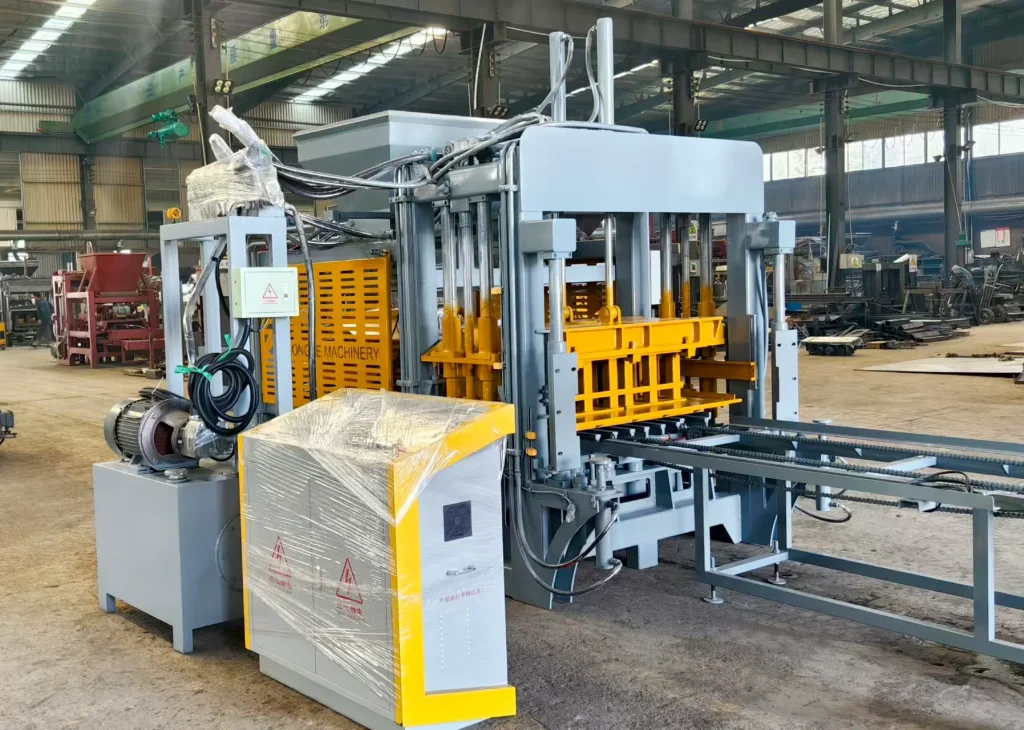
Wojin Machinery factory — manufacturer of QT4-15, QT6-15, and QT8-15 block machines
Choosing between the QT4-15, QT6-15, and QT8-15 is one of the most important decisions you’ll make for your block-making business. These three models are among the most popular concrete block machines sold in Africa, Southeast Asia, and the Middle East — but they serve very different production scales and budgets.
Pick the wrong one and you’ll either overspend on capacity you don’t need, or underproduce and miss profitable contracts. In this guide, we compare all three machines across 8 key factors — output, power, price, automation, mold capacity, footprint, labor requirements, and best use cases — so you can make the right choice with confidence.
Quick Comparison Summary
Before diving into the details, here’s a side-by-side overview of the three machines:
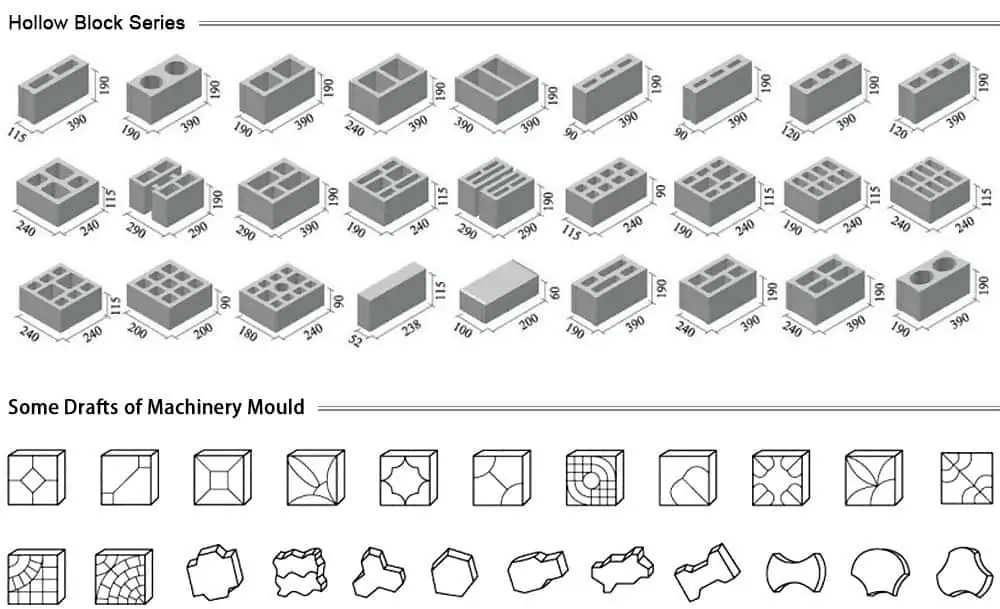
Block samples — all three machines produce hollow blocks, solid blocks, pavers, and interlocking bricks
| Specification | QT4-15 | QT6-15 | QT8-15 |
|---|---|---|---|
| Automation | Full Automatic | Full Automatic | Full Automatic |
| Output (8h shift) | 5,760–9,600 pcs | 8,000–12,000 pcs | 14,000–20,000 pcs |
| Power | 27.5 kW | 33 kW | 51 kW |
| Pallet Size | 880×680 mm | 900×700 mm | 950×900 mm |
| Mould Capacity | 4 blocks/cycle | 6 blocks/cycle | 8 blocks/cycle |
| Cycle Time | 15–20 sec | 15–18 sec | 15–18 sec |
| Weight | 8,600 kg | 11,000 kg | 15,000 kg |
| Price Range | $12,000–$20,000 | $18,000–$30,000 | $28,000–$48,000 |
Now let’s examine each machine in detail.
1. QT4-15: The Entry-Level Workhorse
QT4-15 Automatic Block Making Machine
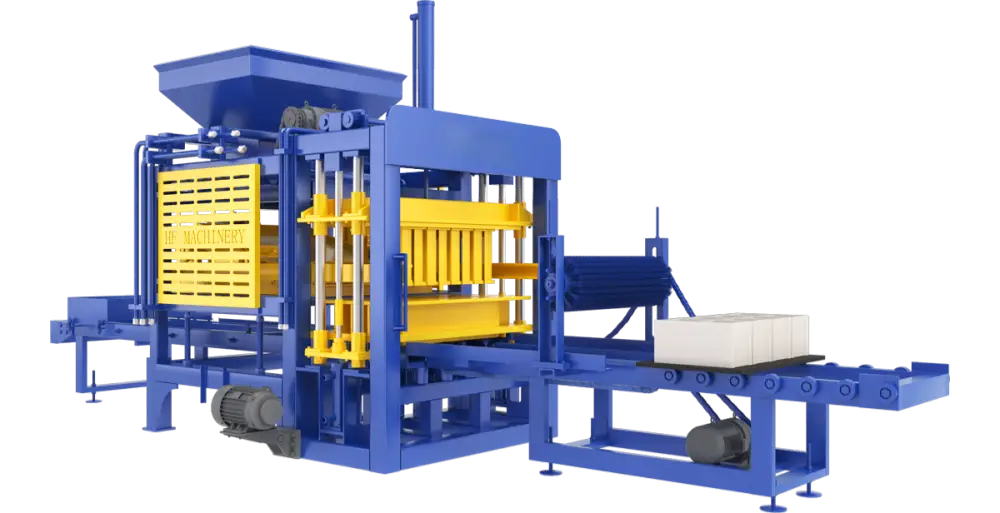
QT4-15 automatic block machine — the best-selling entry-level model
The QT4-15 is the best-selling model in Wojin’s lineup — and for good reason. It delivers full automatic operation at a price point that’s accessible to small and growing businesses. With a 4-block-per-cycle mold capacity and 27.5 kW power, it’s the perfect balance of performance and affordability.
Key strengths:
- Lowest price point among the three ($12,000–$20,000)
- Full automatic operation with PLC control
- Compact footprint — fits in smaller facilities
- Siemens electrical components for reliability
- Interchangeable molds for hollow blocks, pavers, and solid blocks
Best for: Small to medium block factories producing 5,000–10,000 blocks per shift. Ideal for businesses in their first 2–3 years of operation, or those serving local residential construction markets in cities like Lagos, Nairobi, or Accra.
Limitations: At 4 blocks per cycle, output is limited compared to larger models. If you’re bidding on government contracts or supplying large housing estates, the QT4-15 may not keep up with demand during peak periods.
2. QT6-15: The Balanced Mid-Range Choice
QT6-15 Hydraulic Paving Block Making Machine
The QT6-15 sits right in the sweet spot between affordability and high output. It produces 6 blocks per cycle — 50% more than the QT4-15 — while keeping the price reasonable at $18,000–$30,000. For many block manufacturers, this is the single best value machine on the market.
Key strengths:
- 50% higher output than QT4-15 (8,000–12,000 pcs/shift)
- Excellent surface finish quality for pavers and decorative blocks
- Supports molds from 60mm pavers to heavy curb stones
- Strong hydraulic system (16+ MPa) for dense, high-strength blocks
- Mid-range pricing — better value per block than QT4-15
Best for: Medium factories serving both residential and commercial construction. If you’re producing 8,000–12,000 blocks per shift and want to bid on mid-size contracts — apartment complexes, school buildings, perimeter walls — the QT6-15 gives you the capacity without the premium price tag of the QT8-15.
Limitations: Requires more space and power (33 kW) than the QT4-15. The larger pallet size (900×700 mm) means you need a bigger curing area. Not suitable for very small workshops.
3. QT8-15: The High-Volume Powerhouse
QT8-15 Fully Automatic Block Machine
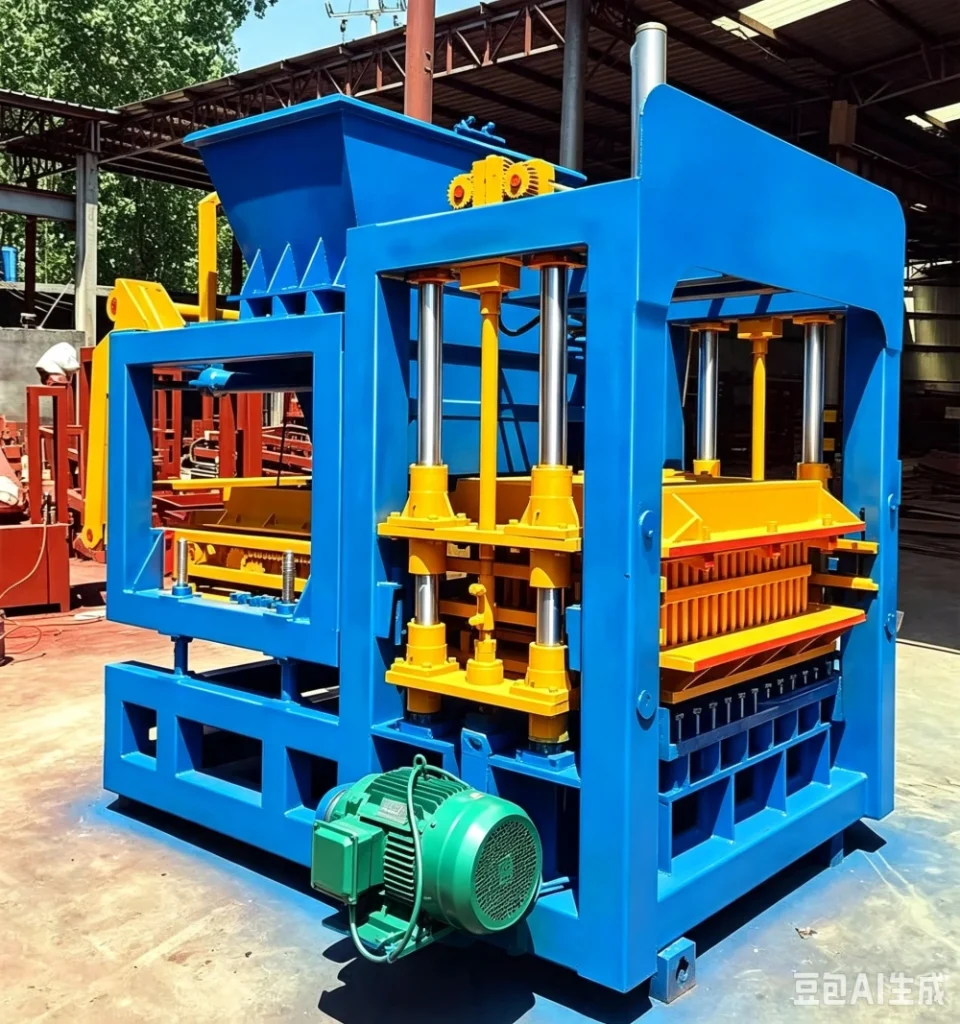
QT8-15 block machine host — built for high-volume commercial production
The QT8-15 is the machine you buy when you mean business. With 8 blocks per cycle, 51 kW of power, and a massive 950×900 mm pallet, it’s designed for factories that supply government road contracts, large housing developments, and commercial estate projects. It’s the most expensive of the three — but also the most productive.
Key strengths:
- Highest output: 14,000–20,000 blocks per shift
- PLC intelligent control with touchscreen interface
- Multi-directional vibration for maximum block density
- Large pallet accommodates bigger blocks and pavers
- Fully automatic — minimal labor required
Best for: Large-scale production facilities, government contract suppliers, and established block manufacturers looking to scale. If you’re running a block machine business and already have a steady customer base, the QT8-15 lets you meet high-volume demand without running multiple machines.
Limitations: High upfront cost ($28,000–$48,000). Requires significant power supply (51 kW — three-phase industrial). The 15,000 kg weight means you need a reinforced concrete floor. Not recommended for startups or small operations.
Head-to-Head: Which Machine Wins?
By Output Capacity
Winner: QT8-15. If raw production volume is your priority, nothing beats the QT8-15’s 14,000–20,000 blocks per shift. However, the QT6-15 offers the best output-to-price ratio — you get 60–70% of the QT8-15’s capacity at roughly half the price.
By Price-to-Value Ratio
Winner: QT6-15. At $18,000–$30,000 with 8,000–12,000 blocks per shift, the QT6-15 delivers the most blocks per dollar invested. The QT4-15 is cheaper upfront but has a lower ceiling; the QT8-15 is powerful but expensive for businesses that don’t need maximum output.
By Versatility
Winner: QT6-15. All three machines support interchangeable molds, but the QT6-15’s mold range — from 60mm thin pavers to heavy curb stones — makes it the most flexible. It handles paving blocks, hollow blocks, solid blocks, and decorative stones equally well.
By Ease of Use
Winner: QT4-15. All three machines use PLC control, but the QT4-15’s simpler interface and fewer parameters make it the easiest to operate. For first-time machine owners, this means shorter training time and fewer operational errors. Our maintenance guide applies to all three, but the QT4-15 requires the least maintenance overall.
By Power Efficiency
Winner: QT4-15. At 27.5 kW, the QT4-15 uses about 54% less power than the QT8-15 (51 kW). In regions where electricity is expensive or unreliable — which is common in many African countries — this matters. The machines under $15,000 in Africa typically have lower power consumption, and the QT4-15 is no exception.
Decision Framework: Which Should You Buy?
Still unsure? Use this simple decision framework:
| Your Situation | Recommended Machine | Why |
|---|---|---|
| Startup with under $20,000 budget | QT4-15 | Affordable, reliable, full automatic — best entry point |
| Growing business, 8,000+ daily demand | QT6-15 | Best value per block, versatile mold options |
| Government contracts, large estates | QT8-15 | Maximum output, handles high-volume orders |
| Limited power supply (under 30 kW) | QT4-15 | Lowest power consumption of the three |
| Producing mainly pavers and decorative blocks | QT6-15 | Best surface finish, wide mold range |
| Need 15,000+ blocks per shift | QT8-15 | Only model that hits this output consistently |
Real-World Cost Analysis
Let’s break down the economics. Assuming you sell hollow blocks at $0.50 each (a common price in many African markets), here’s how each machine performs financially:
| Factor | QT4-15 | QT6-15 | QT8-15 |
|---|---|---|---|
| Daily output (blocks) | 7,680 (avg) | 10,000 (avg) | 17,000 (avg) |
| Daily revenue (@$0.50) | $3,840 | $5,000 | $8,500 |
| Machine cost (mid-range) | $16,000 | $24,000 | $38,000 |
| Days to break even (gross) | ~4.2 days | ~4.8 days | ~4.5 days |
| Monthly profit (25 working days) | $96,000 | $125,000 | $212,500 |
Note: These are gross revenue figures before deducting material, labor, and electricity costs. Actual net profit depends on your local material prices, electricity rates, and labor costs. For a detailed breakdown, see our guide on how much it costs to make a concrete block.
The key takeaway: all three machines are highly profitable. The difference is scale. Even the smallest QT4-15 can generate impressive returns — the question is whether you need the extra capacity of the QT6-15 or QT8-15 to meet your market demand.
Still not sure which machine fits your needs?
Our experts will analyze your market, budget, and production goals to recommend the best machine — with factory-direct pricing and free installation.
Get a Free ConsultationFrequently Asked Questions
Which is better: QT4-15 or QT8-15?
It depends on your production needs. The QT4-15 is better for small to medium businesses with lower output requirements and limited budgets. The QT8-15 is better for high-volume commercial production where you need 14,000+ blocks per shift. For most growing businesses, the QT6-15 is the best middle ground.
What is the output difference between QT4-15, QT6-15, and QT8-15?
QT4-15 produces 5,760–9,600 blocks per 8-hour shift. QT6-15 produces 8,000–12,000 blocks per shift. QT8-15 produces 14,000–20,000 blocks per shift. The difference comes from mold capacity — QT4-15 makes 4 blocks per cycle, QT6-15 makes 6, and QT8-15 makes 8.
How much do these block machines cost?
QT4-15 ranges from $12,000–$20,000, QT6-15 from $18,000–$30,000, and QT8-15 from $28,000–$48,000. Prices vary based on mold configuration, shipping destination, and included accessories. Contact us at info@wgblockmachine.com for a detailed quote.
Can I upgrade from QT4-15 to QT8-15 later?
You can’t upgrade the machine itself, but many of our customers start with a QT4-15 and add a second machine — either another QT4-15 or a larger model — as their business grows. The molds and pallets are not interchangeable between models, so it’s better to choose the right capacity from the start if your budget allows.
Conclusion
There’s no single “best” block machine — only the best machine for your situation. The QT4-15 is perfect for startups and small operations. The QT6-15 is the best all-around value for growing businesses. The QT8-15 is the right choice when maximum output is non-negotiable.
Whichever you choose, all three machines are built by Wojin Machinery with ISO 9001 certified quality, Siemens electrical components, and backed by our 20+ years of manufacturing experience. Every machine comes with free installation, operator training, and a 2-year warranty.
Ready to choose? Contact us today for a personalized recommendation and factory-direct quote. We’ve helped hundreds of entrepreneurs in 60+ countries find the right block machine — and we’ll help you too.
Request Your Free Quote