
How Much Does it Cost to Make a Concrete Block? 2026 Full Breakdown
You might be surprised by how much the cost of making a concrete block can vary.
Materials, labor, electricity, machine type, production volume, and local prices all affect your cost per block. In this guide, you’ll learn how to calculate the real production cost, estimate profit per block, compare machine options, and see when your equipment could pay for itself.
Let’s break down the numbers.
What Goes Into the Cost of One Block?
The answer to how much it costs to make a concrete block depends on more than the machine purchase price. A realistic unit-cost calculation includes every expense required to produce a saleable block consistently.
Key cost areas include:
- Raw materials: Cement, sand, cinder, fly ash, mud, or other locally available inputs.
- Machine configuration: Manual, mobile, semi-automatic, or fully automatic equipment changes labor needs and output volume.
- Molds: Block size and shape determine the mold required. Wojin includes one set of molds with each machine purchase, reducing initial tooling expense.
- Labor and power: Operators, material handling, and energy use must be allocated across total production.
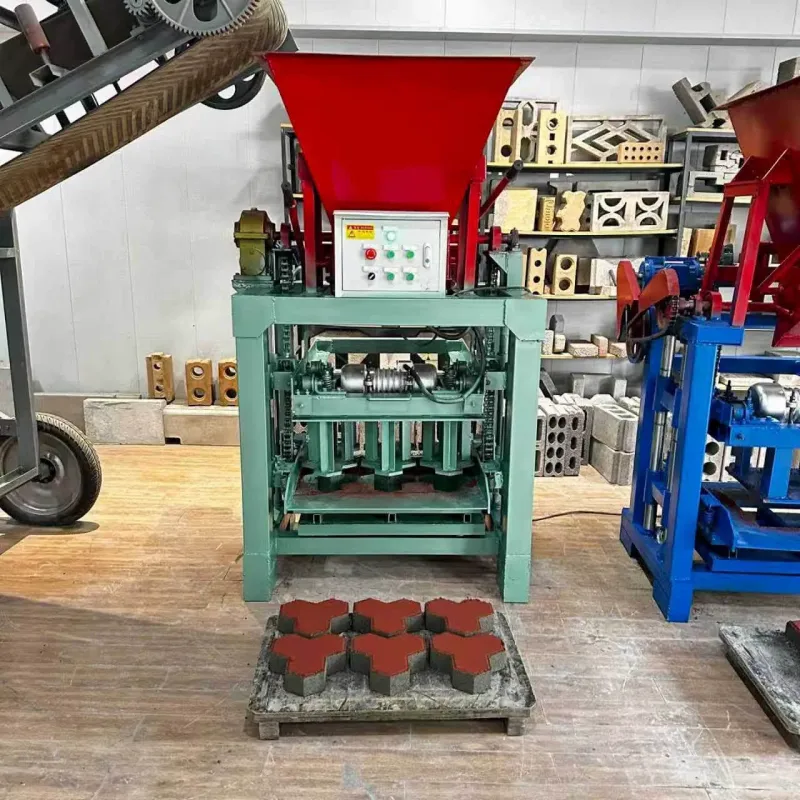
- Pallets and handling: Some mobile machines, including the QM2-40 manual model, operate without pallets, helping lower startup costs.
- Installation, freight, and maintenance: Sea shipping from Qingdao, installation, training, spare parts, and routine servicing affect the total investment.
A higher-output machine can spread fixed operating costs across more blocks. For example, the manual mobile QM2-40 can produce up to 1,280 8-inch hollow blocks in an 8-hour shift, making production volume an important factor in the cost per block.
Illustrative Cost Assumptions
There is no single universal cost for a concrete block because material prices, wages, electricity, freight, and local selling conditions vary by market. The most reliable estimate uses local prices and the selected production setup.
Use these planning assumptions:
| Cost Item | What Changes the Cost |
|---|---|
| Materials | Local prices for cement, sand, cinder, or fly ash |
| Output | Blocks produced per shift, day, or month |
| Labor | Number of operators and local wage rates |
| Equipment | Manual, mobile, or automated production level |
| Tooling | Required mold design and block dimensions |
| Startup needs | Pallets, site preparation, installation, and training |
| Support | Spare parts, maintenance, and shipping costs |
For accurate planning, divide total material, labor, power, and operating expenses by the number of acceptable blocks produced. This gives a practical production cost for each concrete block and helps compare machine configurations based on real local conditions.
The Formula You Can Use With Local Prices
Using actual production records
I calculate the cost per concrete block by dividing the total production cost for a measured run by the number of saleable blocks produced:
Cost per block = Total production cost ÷ Saleable blocks produced
Record the following for each production run:
- Quantity of cement, sand, cinder, fly ash, or other selected materials
- Local material prices
- Number of blocks produced and accepted
- Machine operating time
- Freight, installation, and other allocated setup costs
This method gives a practical unit cost based on real output rather than a general estimate. For example, the QMJ2-40 mobile machine is listed at up to 1,280 8-inch hollow blocks in an 8-hour shift, with no pallet required. Actual output should still be recorded at the operating site.
Estimating costs before production
Before purchasing, I use the same formula with quoted equipment and local operating figures:
- Obtain a factory-direct machine quotation based on the required capacity, mould, and automation level.
- Add sea freight from Qingdao, China, using the suitable container type.
- Include local material prices and the planned production volume.
- Allocate setup costs across the expected number of saleable blocks.
- Divide the estimated total by the planned output.
Machine investment varies between manual, mobile, and automated systems. The purchase includes one set of free moulds, which can reduce the initial tooling cost. For a broader equipment comparison, the concrete block machine price guide explains the main cost factors without assigning a fixed price where a customised quotation is required.
Cost per Block by Machine Type
There is no single published cost per concrete block because Wojin Machinery supplies machines by configuration rather than a fixed-price package. The main cost difference comes from the machine type, production scale, automation level, mold requirements, local material prices, labor, and freight.
| Machine type | Cost-per-block effect | Best suited to |
|---|---|---|
| Manual block machines | Lower initial equipment requirements, but output depends more on operator input and working time. | Small operations and gradual production growth |
| Mobile or egg-layer machines | The QM2-40 and QMJ2-40 do not need pallets, which can reduce initial setup costs. The QM2-40 can produce up to 1,280 8-inch hollow blocks in an 8-hour shift. | Projects needing flexible, on-site block production |
| Semi-automatic machines | Offer a balance between equipment investment, labor use, and production volume. | Growing block businesses |
| Fully automatic QT-series machines | Higher initial configuration requirements, but automation can support larger-scale production and more consistent output. Systems may include RGV and Finger Cart automation. | Commercial and mass-production plants |
I use the daily output and total operating costs to calculate a realistic unit cost, rather than comparing machine prices alone. Wojin provides factory-direct quotations based on the required capacity, mold, automation level, and block type. A guide to automatic block making machines explains how automation choices influence production planning and investment.
Profit per Block at Retail
Profit per block is the difference between the local selling price and the full cost to make, handle, and deliver that block. Since retail prices, wages, fuel, cement, sand, and freight vary by market, there is no single reliable profit figure for every producer.
Use this simple calculation:
Profit per block = Retail selling price − Total cost per block
Total cost should include:
- Raw materials, such as cement, sand, cinder, or fly ash
- Labor and power or fuel
- Machine operation and maintenance
- Mould, handling, storage, and loading costs
- Delivery costs where applicable
Higher daily output can improve margin by spreading fixed costs across more blocks. For example, the pallet-free QM2-40 mobile machine can produce up to 1,280 8-inch hollow blocks in an 8-hour shift, helping reduce handling and pallet-related setup costs. A suitable machine choice should match local demand, block type, and planned retail volume—not only the highest possible output.
When setting a retail price, we recommend leaving room for material-price changes, rejected blocks, transport, and routine repairs. Factory-direct equipment, one free mould set with each machine purchase, and the one-year warranty can also help control initial investment and protect long-term profit per block.
When Does the Machine Pay for Itself?
A block machine pays for itself when the profit earned from sold blocks covers the full startup investment. This includes the machine, required molds, freight from Qingdao, installation, training, and early operating expenses.
Use this simple payback calculation:
Machine payback period = Total startup investment ÷ Monthly net profit from block sales
Monthly net profit depends on three practical numbers:
- Blocks produced and sold each month
- Profit remaining on each block after materials, labor, power, and delivery costs
- Production uptime and local demand
For example, a mobile QM2-40 machine can produce up to 1,280 8-inch hollow blocks in an 8-hour shift without pallets. Avoiding pallet purchases can reduce initial setup costs, while steady output helps spread the machine investment across more blocks.
Automation can improve payback for higher-volume operations. Our QT-series equipment and automated handling options are designed for larger production needs, where consistent output and lower labor dependence can support a lower cost per block. The right choice depends on the production target, block type, local material costs, and available workforce. Our block making machine selection guide helps match machine capacity with the planned business scale.
We include one set of molds free with each machine purchase, helping reduce the upfront cost. On-site installation and operator training normally take one to two weeks, so production can begin soon after setup. A one-year warranty for material and workmanship defects also helps control unexpected maintenance costs during the first year of operation.
U.S. vs. Emerging-Market Cost Pictures
The answer to how much it costs to make a concrete block changes by location. Equipment configuration may be similar, but local material prices, labor, freight, power availability, and the required production scale can create very different cost pictures.
U.S. planning cost model
In the U.S., block producers should build their planning model around locally quoted cement, sand or aggregate, labor, utilities, site costs, and delivery expenses. A higher-output automated line can help spread fixed operating costs across more blocks, while a smaller operation may place more emphasis on reducing setup costs and avoiding unnecessary equipment.
We recommend defining the target block type, daily output, automation level, and mold requirement before requesting a machine quotation. Our factory-direct systems can be configured from manual production through automated QT-series lines; our QT6-15 block machine specifications and capacity provide a useful reference for buyers planning a higher-volume setup.
Emerging-market cost model
In many emerging markets, local access to sand, cinder, fly ash, mud, or other suitable inputs can strongly influence the cost per block. Labor availability, regional cement pricing, shipping distance from the port, and local demand also matter. Buyers often focus on dependable production, flexible block molds, and equipment that matches available infrastructure.
A mobile manual machine such as the QM2-40 can reduce initial setup requirements because it does not need pallets. It can produce up to 1,280 pieces of 8-inch hollow blocks in an 8-hour shift, helping operators assess how production volume may affect their unit cost. Each machine purchase also includes one set of free molds, which can lower early tooling expense.
FAQs on How Much Does it Cost to Make A Concrete Block?
What mix ratio should you use for concrete blocks?
The right mix ratio depends on the block type, local aggregates, required strength, and machine setup. We recommend testing locally available cement, sand, cinder, fly ash, or other suitable materials before full production. A consistent mix and controlled moisture level help reduce waste, improve block quality, and keep the cost to make a concrete block predictable.
Are hollow concrete blocks cheaper to produce?
Hollow blocks can use less material than solid blocks of the same outside size, which may lower material use per unit. Actual savings depend on the mould design, block dimensions, material prices, and production output. Mobile machines such as the QMJ2-40 can produce hollow and solid blocks without pallets, helping reduce initial pallet investment.
What hidden costs affect block production?
Beyond raw materials and machine investment, plan for these operating costs:
- Freight from Qingdao, China, including container requirements
- Site preparation, electricity or diesel, and labor
- Installation and operator training time
- Replacement wear parts and spare-parts shipping
- Extra moulds for different block sizes or profiles
- Production losses caused by inconsistent materials or incorrect operation
We include one set of moulds with each machine purchase, and our one-year warranty covers defects in materials and workmanship. Shipping costs for replacement parts remain the buyer’s responsibility.
How does production scale affect cost per block?
Higher, steady output can spread machine, labor, and setup costs across more blocks. For example, the manual QMJ2-40 mobile machine can produce up to 1,280 pieces of 8-inch hollow blocks in an 8-hour shift. Automated equipment can support larger production plans where demand is consistent. Selecting the right concrete block machine capacity is essential because an oversized or undersized line can increase the real cost per block.