
Are you struggling to figure out the true concrete block machine price for your production line? Investing in the right concrete block making machine can drastically boost your daily output and profits, but navigating the massive price gaps in the market can be tough.
In this guide, you’ll learn exactly what drives overall concrete block machine costs—from entry-level setups to high-capacity fully automatic block machines. We’ll break down realistic price ranges, key technical specifications, and how to maximize your long-term ROI.
If you’re ready to make a smart, profitable equipment investment, this guide is for you.
Let’s dive right in!
Overview of Concrete Block Making Machines
Concrete block making machines are the backbone of modern construction manufacturing. We specialize in manufacturing concrete block machine solutions engineered to maximize structural quality while lowering operational overhead. Understanding the core working systems helps producers make informed decisions regarding equipment selection and overall concrete block machine price evaluation.
Key Features and Working Principle
Modern block production integrates mechanical, hydraulic, and electrical engineering to convert aggregate mixtures into high-strength masonry units.
| Stage | Process | Core Function |
|---|---|---|
| 1. Batching & Mixing | Material Preparation | Blends cement, sand, gravel, and water into a uniform aggregate mix. |
| 2. Feeding | Multi-Shaft Distribution | Rapidly fills mold cavities with even material distribution. |
| 3. Molding | Hydraulic Pressing + Vibration | Combines high-tonnage pressure and high-frequency vibration for maximum block density. |
| 4. Demolding | Synchronized Ejection | Smoothly releases green blocks onto transport pallets for curing. |
Core Equipment Features:
Automated PLC Controls: Smart touchscreen interfaces manage cycle timing, diagnostics, and material metering.
Heavy-Duty Structural Frame: Heat-treated alloy steel resists intense daily vibration and dynamic stress.
Multi-Functional Molds: Quick-change mold systems allow seamless switching between hollow, solid, interlocking, and paver designs.
Main Advantages of Modern Concrete Block Machinery
Upgrading to advanced machinery provides clear operational benefits that protect your overall concrete block machine price investment:
- Maximum Yield & Speed: Fast molding cycles (15–25 seconds) generate thousands of uniform units per shift.
- Consistent Structural Strength: Hydraulic compaction ensures precise dimensions, sharp corners, and high load-bearing performance.
- Material Versatility: Processes eco-friendly raw materials including fly ash, slag, quarry dust, and recycled concrete.
- Lower Labor Costs: High levels of automation streamline material feeding and pallet stacking, reducing overall headcount requirements.
Concrete Block Machine Price and Cost Factors
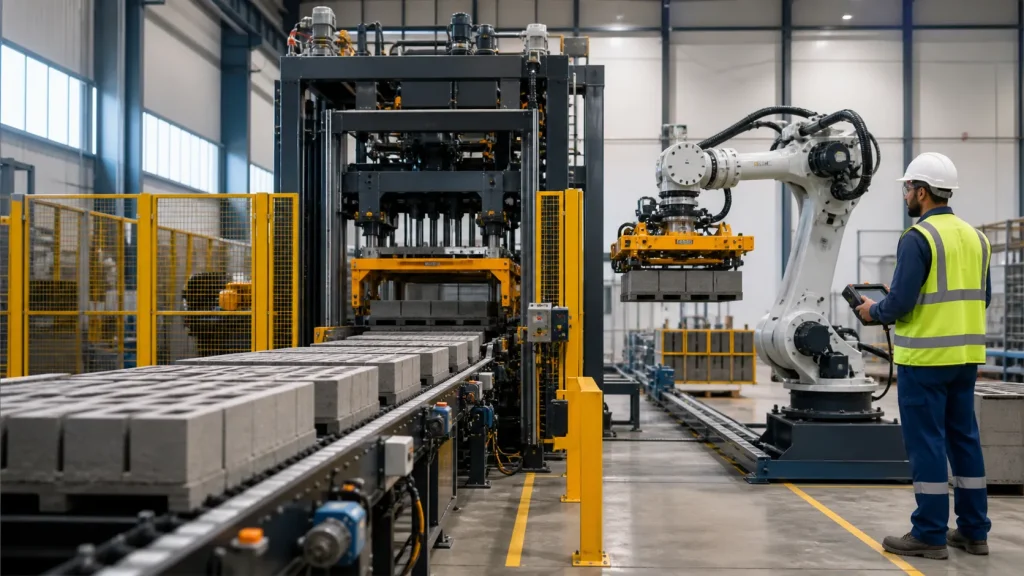
Understanding the concrete block machine price structure is essential for planning your budget and scaling your brick manufacturing operations effectively. Equipment costs vary widely depending on capacity, technology, and automation. We specialize in manufacturing concrete block machines designed to deliver maximum productivity at competitive price points for modern construction demands.
Average Price Range for Concrete Block Machines
The upfront investment depends heavily on the production volume and automation features your business requires. Check our breakdown of standard industry price ranges:
| Machine Category | Typical Price Range (USD) | Best Suited For |
|---|---|---|
| Manual / Small-Scale Machines | $1,000 – $8,000 | Startups, small local projects, low daily output |
| Semi-Automatic Block Machines | $10,000 – $35,000 | Growing enterprises, medium production volume |
| Fully Automatic Production Lines | $40,000 – $150,000+ | Large commercial operations, high-capacity output |
For lower budgets and localized production, our comprehensive small-scale block making machine guide outlines cost-effective entry options that deliver reliable performance.
Key Factors Influencing Concrete Block Machine Cost
Several core engineering and design elements directly impact the final machine pricing:
- Automation Level: Fully automated PLC systems with automatic batching, stacking, and feeding cost more initially, but significantly cut labor expenses.
- Production Capacity & Speed: High-speed machines capable of producing thousands of blocks per shift require heavier framing and larger motors, increasing overall cost.
- Hydraulic and Vibration Systems: High-pressure hydraulic systems paired with advanced multi-source vibration technology ensure superior block density, adding to capital cost while guaranteeing quality.
- Mold Flexibility & Build Quality: Premium alloy steel molds with heat treatment last longer and withstand high wear, raising initial machinery investment.
Refer to our complete cinder block machine price guide for a granular breakdown of specific models and machine configurations.
Return on Investment and Long-Term Operational Costs
Initial purchase price is only part of the equation. Evaluating long-term profitability requires factoring in total operational expenses:
- Labor Reduction: Automatic machines require fewer operators, cutting monthly payroll expenses.
- Energy Efficiency: Modern servo motors and optimized hydraulics lower per-block electricity consumption.
- Material Utilization: Precise weighing and mixing reduce raw material waste (fly ash, cement, aggregate).
- Maintenance & Durability: Heavy-duty structural steel reduces downtime and component wear over time.
A well-matched machine typically pays for itself within 6 to 18 months through continuous high-volume output. Review our detailed block machine operation and ROI analysis to calculate your project’s expected payback timeline.
Types of Concrete Block Machines by Automation Level
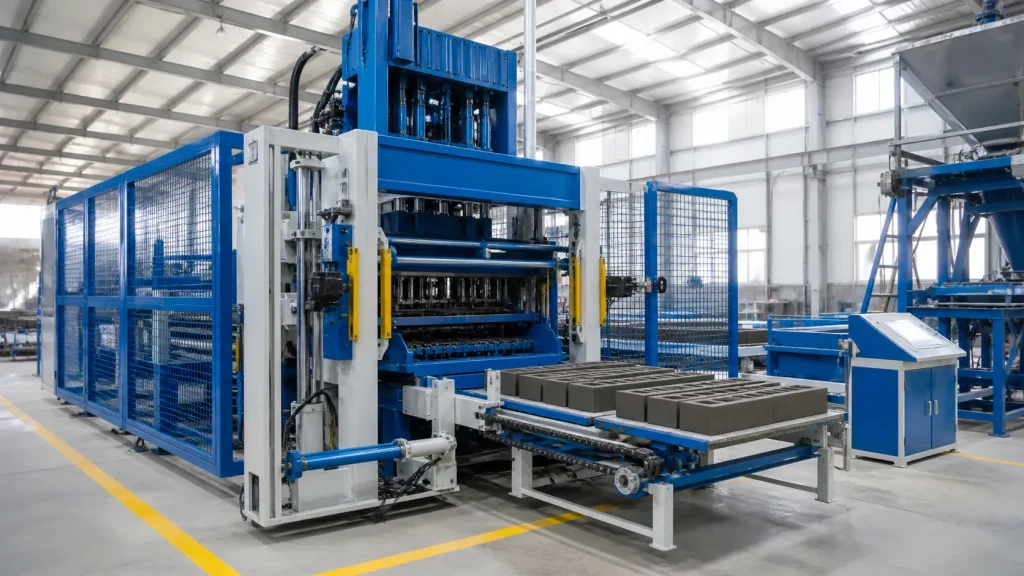
Choosing the right equipment comes down to your production targets, local labor costs, and capital budget. The level of automation is one of the most critical factors influencing the total concrete block machine price and your long-term return on investment.
Fully Automatic Concrete Block Making Machines
Fully automatic block plants streamline the entire manufacturing cycle—from raw material batching and mixing to hydraulic molding and pallet stacking—via PLC smart control systems. We specialize in manufacturing high-performance block equipment designed for continuous, high-volume production with minimal manual labor.
- Target Users: Large-scale industrial block manufacturers and major infrastructure projects.
- Core Strengths: Maximum daily output, consistent block density, and low labor dependency.
Upgrading to an advanced automatic cement brick making machine ensures top-tier product uniformity while significantly cutting down hourly operating expenses.
Semi-Automatic Concrete Block Machines
Semi-automatic setups combine automated vibration pressing and material feeding with manual assistance for pallet management or aggregate transfer. This configuration provides a powerful production setup at a fraction of the cost of a fully automated plant.
- Target Users: Mid-sized brickyards and growing building material suppliers.
- Core Strengths: Excellent balance of speed and affordability, lower maintenance demands, and quick setup.
Investing in a reliable semi-automatic block machine allows expanding businesses to boost daily capacity without incurring high upfront capital expenditure.
Manual Concrete Block Making Machines
Manual block machines rely on physical effort or basic mechanical levers for mold positioning, material compaction, and block demolding. While output speeds are substantially lower, they represent the most accessible entry point into block production.
- Target Users: Small local builders, micro-enterprises, and remote construction sites with limited power access.
- Core Strengths: Lowest initial concrete block machine price, highly portable, and extremely low power requirements.
Types of Block Machines by Technology and Product Output
Choosing the right equipment depends on the specific blocks your market demands and the drive system powering your plant. Different technologies directly impact overall yield, product density, and the ultimate concrete block machine price.
Hydraulic Concrete Block Machines
Hydraulic systems deliver high compression force paired with heavy vibration, producing blocks with strong load-bearing strength and exact dimensions. We specialize in manufacturing concrete block machine units built with heavy-duty hydraulic technology to handle continuous, high-volume production cycles.
- High Compression Power: Ensures uniform structural integrity for load-bearing walls.
- Consistent Density: Reduces raw material waste while meeting strict building standards.
- Cost Efficiency: A higher initial investment balanced by low long-term maintenance costs.
Fly Ash Brick and Interlocking Block Machines
Eco-friendly construction requirements have driven strong demand for fly ash and interlocking block equipment. These systems utilize industrial byproducts like fly ash, slag, and quarry dust, cutting raw material expenses while producing mortar-less interlocking blocks that speed up job-site assembly.
- Lower Input Costs: Repurposes industrial waste efficiently.
- Fast Installation: Interlocking designs reduce wall construction time and labor overhead.
- Material Versatility: Easily adjusts to suit diverse eco-material formulations.
Solid and Hollow Block Making Machines
Versatility is essential for commercial suppliers. Multi-functional block machinery allows operators to swap molds quickly, switching production between high-density solid bricks and lightweight structural hollow blocks. Deploying an adaptable hollow block making machine enables your plant to meet local construction requirements without requiring separate production lines.
| Block Type | Primary Application | Key Feature |
|---|---|---|
| Hollow Blocks | Partition walls, high-rise framing, structural infill | Thermal insulation, lightweight, sound dampening |
| Solid Blocks | Foundations, heavy load-bearing walls, civil engineering | High compressive strength, maximum durability |
Paving Block Making Machines
Paving block equipment utilizes precise vibration systems alongside specialized face-mix color feeders to produce durable paver blocks for walkways, driveways, and municipal projects.
Upgrading your plant with an industrial-grade concrete block machine equips your facility with automated color-layer application and quick mold changing, allowing you to target high-margin urban landscaping contracts effectively.
2>Technical Specifications and Performance Metrics
When evaluating an equipment investment, technical specs dictate long-term reliability, output speed, and final product quality. Understanding these core metrics ensures you select machinery that meets your target daily production without driving up operational overhead.
Production Capacity and Output Speed
Production capacity directly determines your daily revenue potential. Output speed is measured by the mold cycle time—the number of seconds required to feed raw materials, press, vibrate, and demold finished units.
| Machine Configuration | Average Cycle Time | 8-Hour Shift Output (Standard Hollow Blocks) | Operational Efficiency |
|---|---|---|---|
| Manual Machine | 45 – 60 seconds | 800 – 1,500 blocks | High labor demand, low speed |
| Semi-Automatic Machine | 20 – 30 seconds | 3,000 – 6,000 blocks | Balanced speed and labor |
| Fully Automatic Machine | 12 – 18 seconds | 8,000 – 15,000+ blocks | Maximum output, minimal labor |
- Fast Mold Cycles: Reduced cycle times lower power consumption per individual unit.
- Continuous Duty Cycles: Industrial-grade hydraulic systems and forced cooling enable continuous 24-hour manufacturing.
Hydraulic Pressure and Vibration Systems
Structural strength and density define premium block quality. Combining precision hydraulic pressure with synchronized high-frequency vibration eliminates air pockets and ensures uniform strength throughout the block.
- High Hydraulic Force: Operating pressure between 16 MPa and 25 MPa creates dense, load-bearing concrete products that meet strict building standards.
- Vertical Directional Vibration: Synchronized vibration tables distribute aggregate evenly, delivering sharp corners and precise dimensions.
- Inverter-Controlled Motors: Frequency conversion controls allow smooth acceleration, saving up to 30% on electricity while reducing mechanical wear.
Raw Material Compatibility and Mold Flexibility
Versatility is essential for staying competitive in local construction markets. Industrial machinery must adapt to available regional materials and rapidly changing product demands.
- Diverse Material Use: Process quarry dust, crushed stone, sand, slag, cinders, and industrial waste. Review our detailed cement brick making machine raw materials guide to optimize aggregate mix ratios.
- Quick-Change Molds: Carburized, heat-treated carbon steel molds can be swapped rapidly to manufacture hollow blocks, solid bricks, interlocking pavers, and curb-stones.
- Tight Tolerances: CNC-milled mold cavities maintain consistent product height and wall thickness across millions of production cycles.
Applications of Concrete Block Machinery
We specialize in manufacturing concrete block machine solutions designed to maximize productivity across multiple construction sectors. Investing in modern equipment delivers unmatched versatility, ensuring the overall concrete block machine price is quickly offset by multi-purpose production capabilities.
Commercial and Industrial Building Construction
Commercial projects demand high-strength, uniform blocks capable of supporting heavy structural loads. Our machinery produces dense, reliable units built for large-scale developments:
- Load-Bearing Heavy Blocks: Essential for factory foundations, multi-story structural frames, and perimeter security walls.
- Fire-Resistant Infill Blocks: Ideal for commercial interior partitions requiring strict safety compliance.
- Standardized Structural Masonry: Enables rapid, precise assembly that significantly cuts on-site labor costs.
Explore how our equipment powers diverse concrete block machinery applications across global industrial projects.
Residential Infrastructure Development
Rapid housing expansion requires affordable, high-volume building materials. Modern machinery offers flexible molding options to meet residential demands economically:
- Hollow Concrete Blocks: Lightweight with excellent thermal insulation, perfect for exterior walls and reducing structural dead weight.
- Solid Masonry Bricks: Cost-effective, high-density options for foundations and boundary fencing.
- Acoustic Partition Blocks: High sound dampening for interior walls in multi-family housing complexes.
Municipal Paving and Urban Landscaping
City infrastructure and public space beautification require durable pavers and decorative blocks. Utilizing an efficient cement brick making machine allows producers to manufacture high-wear products effortlessly:
| Product Type | Primary Application | Key Advantage |
|---|---|---|
| Interlocking Pavers | Sidewalks, parking lots, plaza walkways | Superior load distribution & simple repair |
| Concrete Curbstones | Roadways, highway borders, streetscapes | High density & extreme weather resistance |
| Permeable Grass Pavers | Eco-parking, green pathways, park trails | Natural drainage & erosion control |
How to Choose the Right Concrete Block Machine
Choosing the right equipment determines your unit production cost, daily output, and long-term profitability. We specialize in manufacturing concrete block machine configurations designed to scale with your business goals. Factoring your operational requirements against the initial concrete block machine price ensures you maximize daily yield without overspending on unnecessary capacity.
Determining Required Daily Production Capacity
Before comparing equipment options, calculate your target daily production based on local project demand, working shifts, and material storage space. Matching your output targets with the right machinery tier prevents costly operational bottlenecks.
| Production Scale | Target Output (Blocks / 8-Hour Shift) | Recommended Machine Configuration |
|---|---|---|
| Small-Scale | 500 – 3,000 standard blocks | Manual or Eco Hydraulic Machine |
| Medium-Scale | 3,000 – 8,000 standard blocks | Semi-Automatic Hydraulic Machine |
| Large Industrial | 8,000 – 20,000+ standard blocks | Fully Automatic Production Line |
Evaluating Machine Quality and Supplier Reliability
A low upfront concrete block machine price often conceals long-term costs related to frequent maintenance, mold wear, and unplanned downtime. Focus on build quality and manufacturer support during your evaluation:
- Frame and Structural Steel: Verify heavy-duty steel frames capable of enduring continuous high-frequency vibration and hydraulic pressure.
- Standard Component Brands: Select machines fitted with internationally recognized hydraulic valves, PLC units, and electric motors for easy local replacement.
- Supplier Support & Innovation: Partner with established manufacturers providing active industry developments, spare parts availability, and clear installation guidance.
- Mold Flexibility: Ensure quick-change mold designs to switch seamlessly between solid, hollow, paver, and interlocking blocks.
Balancing Initial Capital Investment vs. Efficiency
While fully automated plants require a higher upfront capital investment, they significantly lower ongoing labor costs and raw material wastage. Investing in high-efficiency cement brick machinery delivers a faster payoff by optimizing block density, reducing cement ratio requirements, and maintaining consistent product quality.
2>Frequently Asked Questions About Concrete Block Machine Prices
How much does a commercial concrete block machine cost?
The concrete block machine price varies significantly based on automation level, production capacity, and build quality. Here is the general baseline across the market:
- Manual & Small-Scale Machines: $1,000 to $10,000 (Ideal for startups or small localized projects)
- Semi-Automatic Machinery: $10,000 to $50,000 (Great balance for growing suppliers)
- Fully Automatic Production Lines: $50,000 to $200,000+ (Built for high-volume commercial production)
When evaluating machinery options, we always advise looking beyond the base quote. Investing in a reliable concrete block machine also involves factoring in shipping, installation, custom molds, and long-term energy efficiency.
What factors cause price variations in concrete block machinery?
Several technical specifications and component choices drive the price difference between basic and heavy-duty models:
- Degree of Automation: Fully automated PLC control panels and automatic stacking systems raise upfront costs but reduce labor demands.
- Output Capacity & Speed: Fast cycle times and larger molding areas command higher prices.
- Hydraulic & Vibration Technology: Premium hydraulic valves and high-frequency vibration tables yield denser blocks but add to manufacturing costs.
- Mold Versatility: Specialized multi-function molds (for hollow blocks, pavers, fly ash bricks, and interlocking blocks) affect initial setup expenses.
Is a fully automatic block machine worth the higher price?
Yes, if you aim for medium to large-scale production. While the initial capital requirement is higher, modern concrete block machinery with full automation yields a significantly lower cost per block.
- Saves on Labor: Requires only 2 to 3 operators to manage the entire plant.
- Unmatched Consistency: Computerized precision ensures strict weight, density, and dimension accuracy with near-zero waste.
- Faster ROI: Higher daily output allows you to fulfill large commercial orders quickly and recover your initial investment faster.