
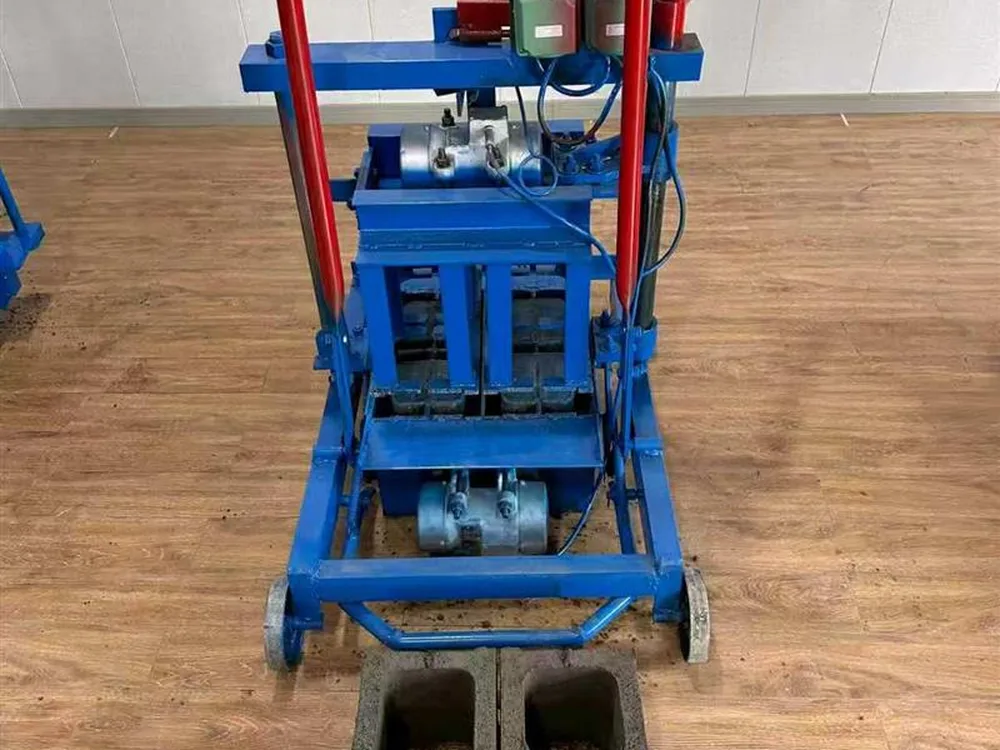
An egg laying block machine is a mobile brick-making device that produces concrete blocks directly on the ground. Unlike stationary machines that need a factory building, egg laying machines move around and lay blocks where they stand. This makes them a popular choice for small contractors and new business owners who want to start production with low investment.
In this guide, you will learn how egg laying machines work, what they cost, how many blocks they produce per day, and whether one is right for your business. We also compare them to stationary hollow block making machines so you can make an informed choice.
- Egg laying machines are mobile and produce blocks directly on the ground — no factory building needed
- Price ranges from $3,000 for manual models to $15,000 for fully automatic hydraulic versions
- Output: 800–2,000 blocks per 8-hour shift, depending on model and block size
- Best for small contractors, rural areas, and start-ups with limited budget
- Block quality is lower than stationary machines — not recommended for large commercial projects
What Is an Egg Laying Block Machine?
How It Got Its Name
The name “egg laying” comes from how the machine works. It moves forward, stops, and “lays” a row of blocks on the ground — like a hen laying eggs. The machine then moves forward by one row width and lays another set. This cycle repeats until enough blocks are produced for the day.
Because blocks are formed directly on the ground surface, you do not need pallets or curing racks. The blocks stay where they are made until they are strong enough to be moved, usually after 24 hours of natural curing.
Main Components of an Egg Laying Machine
A typical egg laying block machine has these core parts:
- Mould box — the steel frame that shapes the blocks
- Hopper — holds the concrete mix before it goes into the mould
- Vibration motor — compacts the mix inside the mould
- Hydraulic system — presses the mix and lifts the mould (on hydraulic models)
- Wheels and drive system — moves the machine forward between each cycle
- Control panel — buttons or levers to operate each function
- Water tank — for mixing and cleaning
Simple manual models use a hand-operated lever to lift the mould. More advanced models use hydraulic cylinders for better pressing force and consistent block quality.
How Does an Egg Laying Block Machine Work?
The egg laying production cycle follows these simple steps:
Step-by-Step Production Cycle
- Prepare the ground — The working area must be flat, firm, and clean. Many users lay a thin layer of sand to prevent blocks from sticking to the soil.
- Mix concrete — Cement, sand, aggregate, and water are mixed to the correct ratio. The mix is loaded into the machine’s hopper.
- Fill the mould — The mould box is lowered to the ground. Concrete flows from the hopper into the mould cavities.
- Vibrate and compact — Vibration motors shake the mould to settle the concrete and remove air bubbles. Hydraulic pressure adds force from above for denser blocks.
- Lift the mould — The mould box is lifted slowly, leaving the freshly formed blocks standing on the ground.
- Move forward — The machine rolls forward by exactly one row width and positions itself for the next cycle.
- Repeat — The cycle repeats, creating rows of blocks across the production area.
Each full cycle takes about 30 to 60 seconds, depending on the model and block type. A skilled operator can run 40 to 80 cycles per hour.
What Types of Blocks Can It Make?
Egg laying machines can produce several block types by changing the mould:
- Solid blocks — 4″, 6″, and 9″ sizes for walls
- Hollow blocks — with two or three holes for lighter weight
- Hourdi / slab blocks — for floor and roof slab systems
- Paving blocks — interlocking or standard shapes
- Boundary wall blocks — custom shapes for fence walls
Quick Fact
Most egg laying machines come with one standard mould (usually 9-inch hollow block). Additional moulds cost $200–$800 each and can be swapped in about 30 minutes.
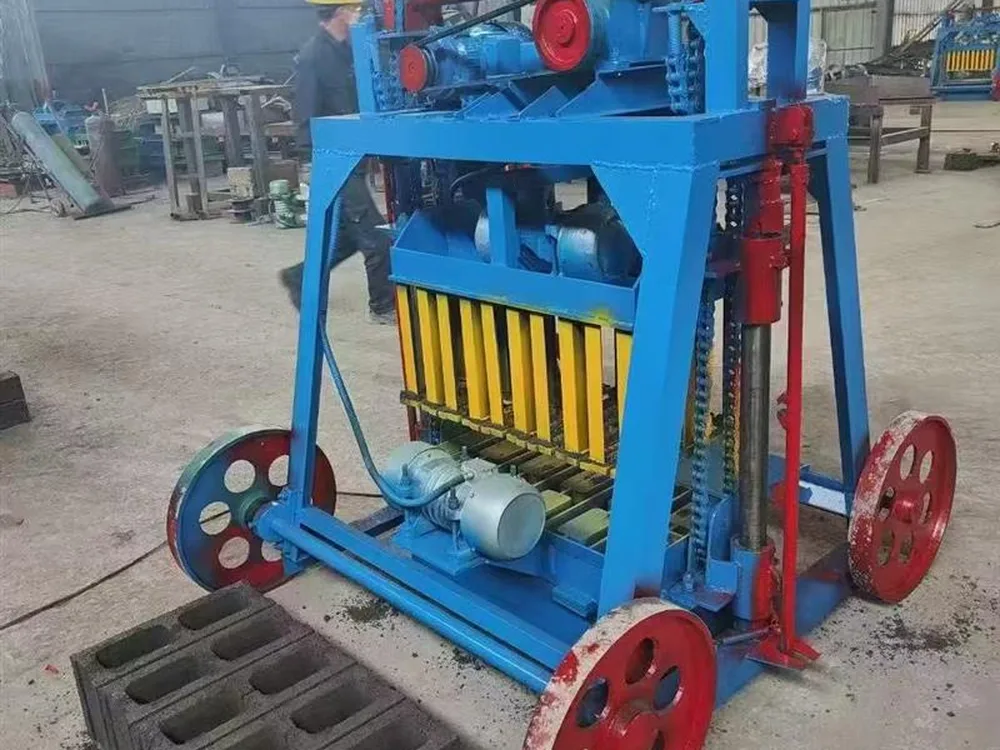
Egg Laying Block Machine Types and Models
Egg laying machines come in three main categories, from simple manual units to fully automatic hydraulic models.
Manual Egg Laying Machines
Manual models are the most basic and affordable option. The operator uses a hand lever to lift the mould and control the machine. Vibration is usually electric, but the pressing force comes from manual effort.
Key features of manual models:
- Price: $3,000 – $6,000
- Output: 800 – 1,200 blocks per day
- Workers needed: 2–3 people
- Block quality: fair, depends on operator skill
- Best for: very small operations and tight budgets
Semi-Automatic Egg Laying Machines
Semi-automatic models add hydraulic power for lifting the mould and pressing the concrete. The operator still controls the machine with buttons or levers, but the heavy work is done by hydraulics.
Key features of semi-automatic models:
- Price: $6,000 – $10,000
- Output: 1,200 – 1,800 blocks per day
- Workers needed: 2–3 people
- Block quality: good, more consistent than manual
- Best for: small to medium production
For comparison, a QT4-25 semi-automatic stationary machine produces more blocks per day but requires a factory building and pallets.
Fully Automatic Egg Laying Machines
Top-end egg laying machines are fully automatic. They use a PLC control system (programmable logic controller) to run the entire cycle with minimal manual input. The machine moves forward automatically and adjusts vibration time and pressure.
Key features of fully automatic models:
- Price: $10,000 – $15,000
- Output: 1,500 – 2,000 blocks per day
- Workers needed: 1–2 people
- Block quality: very good, highly consistent
- Best for: medium production with fewer workers
Even the best egg laying machine cannot match the output of a stationary QT6-15 automatic block making machine, which can produce 8,000+ blocks per day.
Egg Laying Block Machine Price in 2026
Prices vary widely based on model type, automation level, mould size, and brand quality. Here is a breakdown of what you can expect to pay in 2026.
Price Comparison Table
| Machine Type | Price Range (FOB China) | Output per Day | Workers Needed |
|---|---|---|---|
| Manual egg laying | $3,000 – $6,000 | 800 – 1,200 | 2–3 |
| Semi-automatic hydraulic | $6,000 – $10,000 | 1,200 – 1,800 | 2–3 |
| Fully automatic PLC | $10,000 – $15,000 | 1,500 – 2,000 | 1–2 |
| Extra mould set | $200 – $800 | — | — |
| Concrete mixer (optional) | $500 – $2,000 | — | — |
What Affects the Price?
Several factors determine the final price of an egg laying block machine:
- Automation level — more automatic = higher price
- Mould size — larger moulds that make more blocks per cycle cost more
- Hydraulic system quality — better pumps and valves last longer but cost more
- Steel thickness — heavier frame = longer life = higher price
- Brand and origin — Chinese machines offer the best value; European brands cost 3–5x more
- Extra moulds — each additional block shape adds cost
Shipping Note
An egg laying machine fits in a 20ft container. Shipping cost to most African ports ranges from $1,500 to $3,500, depending on the destination. Always ask for a delivered price or CIF quote when comparing suppliers.
Egg Laying Machine Production Capacity
How many blocks can an egg laying machine actually produce per day? The answer depends on several factors.
How Many Blocks Per Day?
| Block Size | Manual Model | Semi-Automatic | Fully Automatic |
|---|---|---|---|
| 4″ solid (100mm) | 1,000 – 1,400 | 1,500 – 2,000 | 1,800 – 2,400 |
| 6″ hollow (150mm) | 800 – 1,100 | 1,200 – 1,600 | 1,500 – 1,800 |
| 9″ hollow (200mm) | 600 – 800 | 900 – 1,200 | 1,100 – 1,500 |
| Paving blocks | 1,200 – 1,600 | 1,800 – 2,400 | 2,000 – 2,800 |
Figures based on an 8-hour shift with a skilled operator and steady material supply.
Factors That Reduce Output
Real-world production is often lower than the manufacturer’s advertised number. Here is why:
- Operator skill — a new worker produces 20-30% less than an experienced one
- Material supply — if concrete mix runs out between cycles, time is wasted
- Ground conditions — soft or uneven ground slows the machine down
- Weather — rain stops production; extreme heat can affect concrete setting
- Maintenance — broken parts or poor maintenance cause downtime
- Block type change — switching moulds takes 30–60 minutes
For a more detailed look at output calculations across different machine types, see our guide on how many blocks a QT10-15 produces per day.
Pros and Cons of Egg Laying Block Machines
Advantages
- Low initial investment
- No factory building required
- No pallets needed
- Easy to transport to different sites
- Simple to operate and maintain
- Quick setup — start producing in 1–2 days
- Good for small projects and rural areas
Disadvantages
- Lower production output
- Block quality not as good as stationary machines
- Blocks need flat ground to cure
- Weather-dependent production
- More manual labor required
- Limited block shapes and sizes
- Not suitable for large-scale projects
Egg Laying vs Stationary Block Machine: Which Is Better?
The biggest question for new buyers is whether to choose an egg laying machine or a stationary block machine. Each has its place — the right choice depends on your goals.
Key Differences at a Glance
| Factor | Egg Laying Machine | Stationary Machine |
|---|---|---|
| Initial cost | $3K – $15K | $10K – $85K+ |
| Factory building | Not needed | Required |
| Pallets | Not needed | Required (200–500 pallets) |
| Daily output | 800 – 2,400 blocks | 2,000 – 20,000 blocks |
| Block quality | Good (10–15 MPa) | Excellent (15–25 MPa) |
| Workers needed | 2–3 | 3–8 |
| Setup time | 1–2 days | 2–4 weeks |
| Mobility | Fully mobile | Fixed location |
When to Choose an Egg Laying Machine
An egg laying machine is the right choice if:
- You have a limited budget (under $15,000)
- You do not have a factory building or covered space
- You need to produce blocks at different job sites
- You are starting a small part-time business
- Demand in your area is under 2,000 blocks per day
- You mainly supply small houses, boundary walls, and local projects
When to Choose a Stationary Machine
A stationary machine like the QT5-15 is better if:
- You plan to produce 3,000+ blocks per day
- You have or can build a factory shed
- Block quality is critical (high-rise buildings, commercial projects)
- You want to make many different block types and sizes
- You plan to scale up production over time
- You need year-round production regardless of weather
For a more detailed side-by-side comparison, read our article on QT5-15 vs QT6-15 mid-range block machines.
How to Choose the Right Egg Laying Machine Supplier
Not all egg laying machines are the same quality. A cheap machine from an unknown supplier may break down within a year. Here is what to check before you buy.
What to Look for in a Good Supplier
- Factory experience — choose a supplier with 5+ years in the block machine industry
- Steel quality — ask about frame thickness and mould material
- Hydraulic brand — reliable pumps and valves mean fewer breakdowns
- After-sales support — do they provide spare parts and technical help?
- Customer references — ask for contact details of past buyers in your country
- Warranty — at least 1 year for major components
- Price transparency — avoid quotes that seem too good to be true
Red Flags to Avoid
Watch out for these warning signs when evaluating suppliers:
- Price is 30%+ below the market average — quality is likely compromised
- No factory photos or video tours available
- Supplier cannot provide customer references in your region
- Warranty terms are vague or not in writing
- They push for quick payment without a proper contract
- The machine specifications are not clearly listed
Pro Tip
Always ask for a video of the machine running with the exact block type you need. Photos can be misleading, but a working video shows the real performance.
Setting Up and Operating Your Machine
Site Preparation
Before your machine arrives, prepare the production area:
- Level the ground — use a compactor to create a firm, flat surface
- Add a sand layer — 2–3 cm of clean sand prevents blocks from sticking to dirt
- Provide drainage — the area should slope slightly so rainwater runs off
- Arrange storage — you need space for cement, sand, and aggregate near the machine
- Install water and power — you need a reliable water source and 3-phase electricity
A standard production area of 10m × 30m can hold about 3,000 blocks at a time, allowing you to produce for 2–3 days before moving the curing blocks.
Daily Operation Routine
A typical workday with an egg laying machine follows this pattern:
- Morning setup (30 min) — Check oil levels, clean the mould, prepare materials
- Production (6 hours) — Run production cycles, with short breaks every 2 hours
- Lunch break (1 hour) — Clean the machine before leaving for lunch
- Afternoon production (1.5 hours) — Finish the day’s target
- Cleanup (30 min) — Wash the mould, hoses, and tools; cover the machine
Maintenance Tips
Regular maintenance keeps your machine running for 8–12 years:
- Daily — Clean the mould, check hydraulic oil level, inspect for loose bolts
- Weekly — Grease all moving parts, check vibration motor mounts
- Monthly — Change hydraulic oil filter, inspect electrical connections
- Yearly — Full hydraulic oil change, replace worn seal kits, check mould wear
For more maintenance advice, see our article on 10 maintenance tips to extend your block machine life.
Is an Egg Laying Block Machine Worth Buying?
Good Investment If…
An egg laying machine is a smart purchase when:
- You have $5,000–$15,000 to invest
- Local demand for blocks is steady but not huge
- You have access to affordable cement and aggregates
- You can operate the machine yourself or manage a small team
- You want a business that starts generating income quickly
Many small contractors start with an egg laying machine to supply their own construction projects. Any extra blocks they produce are sold locally, creating an additional income stream.
Not Worth It If…
An egg laying machine may not be the best choice if:
- You need to supply large commercial or government projects
- Your market demands high-strength, precision-made blocks
- You plan to produce 3,000+ blocks per day
- You have heavy rainfall most of the year
- You cannot find skilled operators
If any of these describe your situation, consider a stationary automatic block machine instead. It costs more upfront but produces higher-quality blocks at much higher volume.
Egg Laying Block Machine FAQs
How much does an egg laying block machine cost?
Prices range from $3,000 for a basic manual model to $15,000 for a fully automatic PLC-controlled machine. Most buyers spend $6,000–$10,000 on a semi-automatic hydraulic model.
Additional costs to consider:
- Shipping: $1,500–$3,500 to most African ports
- Concrete mixer: $500–$2,000
- Extra moulds: $200–$800 each
- Installation and training: often included by the supplier
How many blocks can an egg laying machine produce per day?
Production depends on the model and block size. Here are typical numbers for an 8-hour shift:
- Manual model: 600–1,200 blocks/day
- Semi-automatic: 900–1,800 blocks/day
- Fully automatic: 1,100–2,400 blocks/day
Smaller blocks (4-inch) produce more per cycle, while larger blocks (9-inch) produce fewer. Real-world output is usually 20–30% lower than the advertised number due to operator skill and material supply delays.
What is the difference between egg laying and stationary block machines?
The main difference is that an egg laying machine is mobile and produces blocks directly on the ground, while a stationary machine is fixed in one place and produces blocks onto pallets.
- Egg laying: lower cost, no factory needed, mobile, lower output, lower block quality
- Stationary: higher cost, needs factory building, fixed location, much higher output, better block quality
Choose egg laying for small budgets and small-scale production. Choose stationary for higher volume and better quality.
How many workers do you need to operate an egg laying machine?
Most egg laying machines need 2–3 workers:
- 1 operator who controls the machine
- 1–2 workers who feed materials and monitor production
Fully automatic models can run with just 1–2 workers since the machine handles most functions automatically. You also need 2–3 additional workers for raw material preparation and block stacking.
How long do egg laying block machines last?
A well-maintained egg laying machine from a good manufacturer lasts 8–12 years. The frame and structure can last even longer, but you will need to replace wear parts over time:
- Mould liners: every 2–3 years
- Hydraulic seals: every 3–4 years
- Vibration motors: every 4–6 years
- Hydraulic pump: every 6–8 years
Cheap machines from low-quality suppliers may only last 3–5 years before major parts fail.
Can egg laying machines make different types of blocks?
Yes, egg laying machines can make different block types by changing the mould. Common options include:
- Solid blocks (4″, 6″, 9″)
- Hollow blocks (2-hole, 3-hole)
- Paving blocks and interlocking bricks
- Hourdi / slab blocks for floors
- Boundary wall blocks
Each additional mould costs $200–$800 and takes about 30 minutes to swap. Most machines come with one standard mould included.
Final Thoughts
Is an Egg Laying Machine Right for You?
An egg laying block machine is an excellent entry point into the block production business. With a low investment of $5,000–$10,000, you can start producing blocks within days of the machine arriving. No factory building, no pallets, no complex setup.
But it is important to set realistic expectations. Egg laying machines produce fewer blocks per day than stationary machines, and the block quality is lower. They work best for small contractors, rural markets, and start-up businesses where demand is moderate.
Next Steps Before You Buy
Before placing an order, take these steps:
- Research local block prices and demand in your area
- Calculate how many blocks you need to sell per day to make a profit
- Compare quotes from at least 3 different suppliers
- Ask for customer references in your country
- Request a video of the machine running with your target block type
- Check shipping costs and delivery time
If you are still unsure which machine fits your needs, you can contact our technical team for free advice. We help buyers choose the right machine based on their budget, production goals, and local market conditions.
Ready to find the right egg laying machine for your business?
Get a free consultation and customized quote from our engineering team.
Get Free Quote NowDisclaimer & Disclosure
Editorial Disclosure: This article is published by Wojin Machinery, a manufacturer of block making machines. We have a financial interest in the products discussed. However, the information provided is based on our real customer data and factory performance, not theoretical marketing claims.
Data Sources: Production capacity figures come from actual output measurements at customer factories worldwide. Price data reflects 2026 ex-factory prices for standard configurations. Performance examples are for illustration only — actual results vary by location, material quality, operator skill, and maintenance practices.
Financial Disclaimer: This article provides general information only and does not constitute financial or investment advice. Business results depend on many factors beyond equipment quality, including local market prices, labor costs, electricity reliability, and management skill. Always conduct your own market research and consult a business advisor before making investment decisions.