
Overview of Hollow and Solid Concrete Blocks
Modern infrastructure relies on concrete masonry units engineered for precision, endurance, and structural reliability. Selecting the right building material begins with understanding the core mechanical profile of hollow versus solid units. Both block configurations fulfill vital roles across residential, commercial, and industrial construction sectors worldwide.
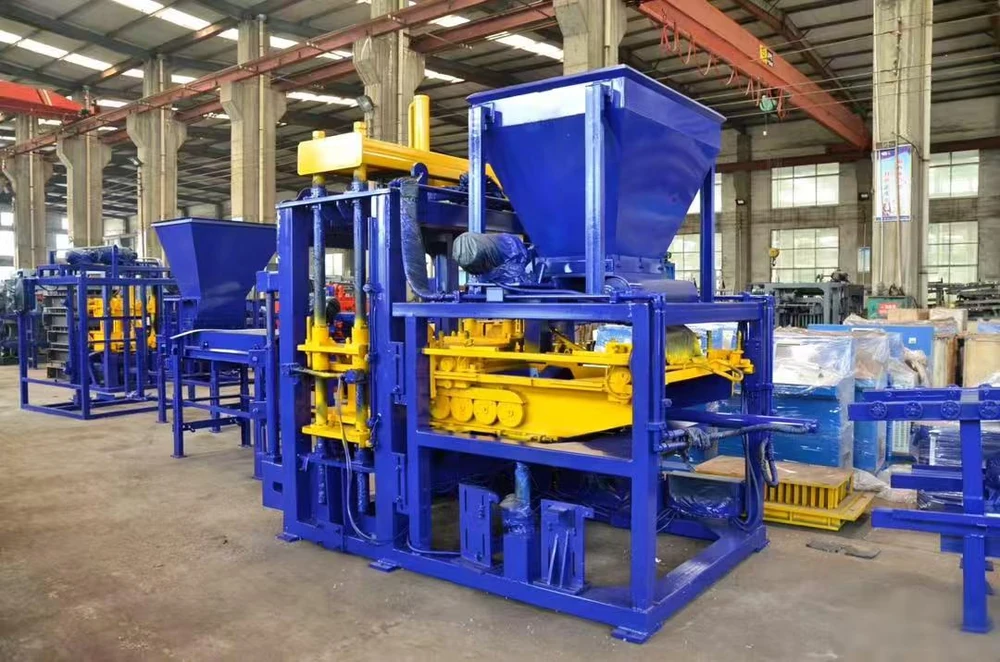
What Are Hollow Cement Blocks?
Hollow cement blocks are precast structural units manufactured with engineered internal cavities or voids. These lightweight concrete blocks are designed to reduce structural dead weight while maintaining uniform wall thickness.
- Internal Voids: Cavities typically make up a substantial portion of the total block volume, facilitating effortless routing of utility conduits.
- Weight Profile: Significantly lighter than traditional masonry, reducing transport logistics and foundation stress.
- Functional Benefits: Built-in air chambers provide natural thermal insulation and acoustic damping properties.
- Target Uses: Widely deployed for partition walls, framed-structure infill, and reinforced masonry systems.
What Are Solid Cement Blocks?
Solid cement blocks are dense, high-mass masonry units featuring no large voids or hollow chambers. Engineered for maximum structural integrity, these units provide uninterrupted physical mass across the entire unit footprint.
- Mass and Density: Completely compacted concrete mixture ensuring consistent density from core to perimeter.
- Load Performance: Excellent compressive strength suited for heavy-duty structural applications.
- Environmental Resilience: Superior resistance to moisture penetration, weathering, and dynamic surface impacts.
- Target Uses: Heavy load-bearing walls, structural foundations, retaining walls, and civil infrastructure.
| Feature | Hollow Cement Blocks | Solid Cement Blocks |
|---|---|---|
| Internal Structure | Preformed hollow chambers/voids | 100% solid, void-free mass |
| Unit Weight | Reduced mass per block | High density and heavy unit mass |
| Primary Advantage | Material efficiency and thermal control | Maximum load support and durability |
| Typical Application | Infill walls and multi-story partitions | Substructures and load-bearing walls |
How Cement Block Making Machines Work
A modern cement block machine utilizes a synchronized process of hydraulic compression and high-frequency vibration to compact raw materials into stable, high-density building units.
- Material Feeding: A balanced mix of cement, sand, gravel, and water enters the machine hopper and is evenly distributed into the heavy-duty concrete block mold.
- Dynamic Compaction: Multi-directional vibration tables activate alongside vertical hydraulic pressure, forcing trapped air out and achieving high-density aggregate interlock.
- Core Insertion or Flat Pressing: For hollow blocks, precision-machined core assemblies establish the inner voids during compression, whereas solid block configurations apply uninterrupted surface pressing across the entire cavity.
- Stripping and Palletizing: The hydraulic de-molding system lifts the mold frame vertically, ejecting uniform, green-state masonry units onto transport pallets ready for the curing phase.
5 Key Differences Between Hollow and Solid Blocks
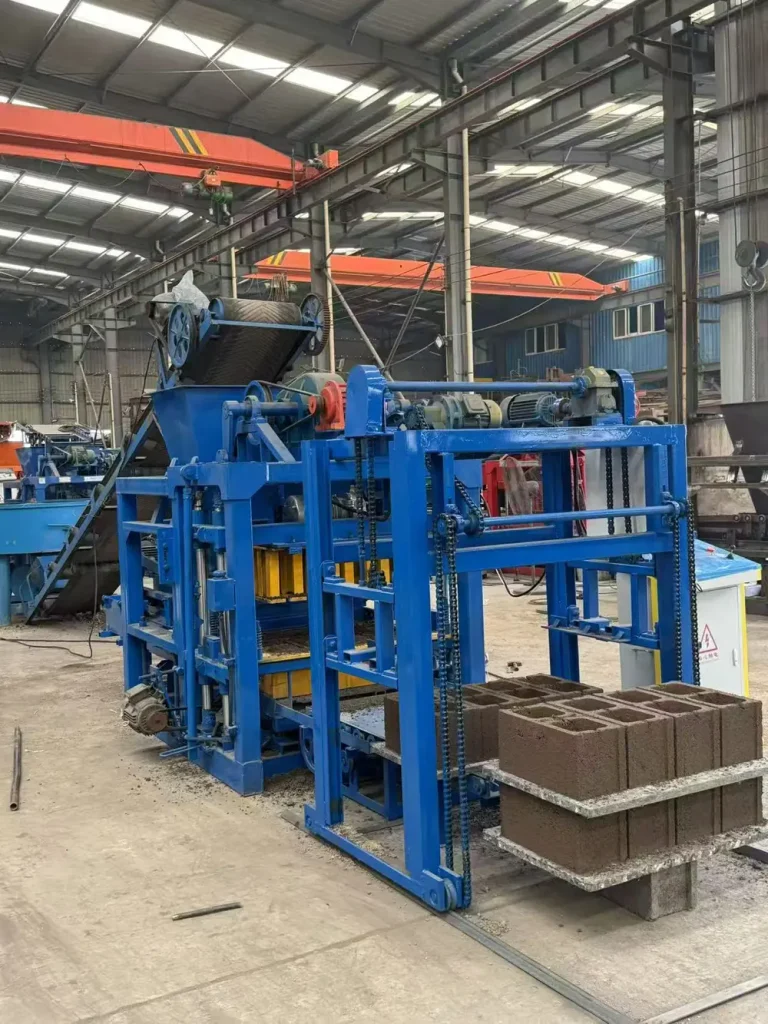
Choosing the right production setup for your cement block machine directly impacts operating costs, material handling, and end-market appeal. Below are the five practical differences between producing and using hollow versus solid concrete units.
| Feature / Metric | Hollow Concrete Blocks | Solid Concrete Blocks |
|---|---|---|
| Primary Structural Role | Non-load-bearing partitions & reinforced masonry | Heavy load-bearing walls & foundations |
| Unit Weight | Significantly lighter (voids reduce dead weight) | Dense and heavy |
| Thermal & Acoustic Insulation | Higher (internal air cavities trap heat/sound) | Lower (dense mass conducts temperature) |
| Raw Material Use | Lower consumption per square meter of wall | Higher cement and aggregate consumption |
| Laying Speed & Mortar Use | Faster installation, minimal joint mortar | Slower manual handling, higher mortar volume |
1. Compressive Strength and Load-Bearing Capacity
- Solid Blocks: Provide continuous compressive resistance across their entire surface area. Because there are no internal voids, they reliably support heavy, direct vertical loads in foundations, retaining walls, and civil infrastructure.
- Hollow Blocks: Concentrate compressive strength along reinforced outer shells and internal webs. While lighter, they deliver ample strength for framed multi-story builds and allow steel rebar and grout to be poured directly through cores for high-load walls.
2. Block Weight and Structural Load Impact
- Solid Blocks: Their high mass adds significant dead load to foundations and building frames, increasing structural reinforcement requirements throughout a project.
- Hollow Blocks: Function as lightweight concrete blocks that lower total dead load on structures. This weight reduction simplifies transport logistics, reduces crane or manual handling fatigue, and minimizes structural strain on upper-level floors.
3. Thermal and Sound Insulation Performance
- Hollow Blocks: The internal air cavities act as natural thermal and acoustic barriers. They slow down external heat transfer into living spaces and absorb airborne sound, making them ideal for residential and commercial exterior walls.
- Solid Blocks: Dense concrete conducts thermal energy more readily. Without dedicated exterior insulation panels, solid block structures require higher energy usage to maintain stable indoor temperatures.
4. Raw Material Consumption and Manufacturing Cost
- Solid Blocks: Every cycle uses maximum raw aggregate and cement volume, driving up per-unit manufacturing costs and batching plant demand.
- Hollow Blocks: Utilizing specialized tooling on a hollow block making machine cuts raw material consumption substantially per unit. You achieve greater wall-surface coverage per ton of raw mix, directly protecting operational margins as outlined in our concrete block machine price guide and features.
5. Construction Speed and Mortar Efficiency
- Hollow Blocks: Larger dimensional formats paired with lighter weights allow masons to cover wall area rapidly. Mortar is primarily applied to bed joints and face shells, sharply cutting overall mortar consumption.
- Solid Blocks: Due to heavier unit weight and smaller modular sizing, laying rates are slower. Mortar must cover broad solid beds, leading to higher site-mortar expenses and longer construction timelines.
Hollow vs Solid Block Machine: Production & Mechanical Differences
When comparing machinery for hollow versus solid block manufacturing, the underlying mechanics determine your plant efficiency, tooling durability, and finished product quality. While a versatile cement block machine can often produce both units using swappable tooling, the mechanical forces applied during forming differ significantly. For a detailed breakdown of equipment configurations, review our concrete block machines types, operation, and ROI guide.
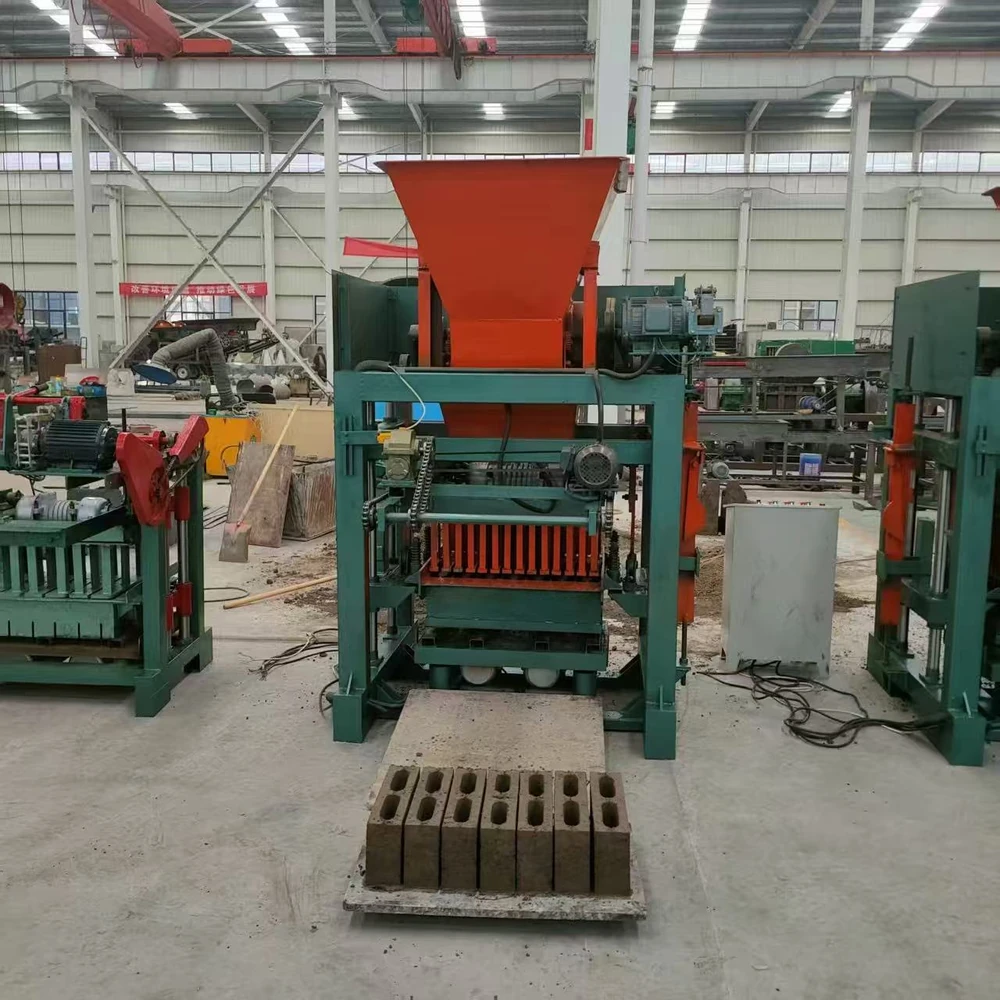
| Mechanical Parameter | Hollow Block Production | Solid Block Production |
|---|---|---|
| Mold Configuration | Mold box with internal cavity cores (mandrels) | Open cavity mold box without internal cores |
| Vibration Focus | High-frequency directional vibration for thin walls | Deep multi-directional vibration across full mass |
| Pressure Application | Controlled vertical pressure to avoid core damage | Heavy, direct hydraulic compaction across the entire surface |
| Material Consumption | Lower raw material volume per square meter produced | High mass volume per pallet |
| Demolding Risk | Web cracking or slumping if mix moisture is off | Surface adhesion or uneven corner compaction |
Molding Systems and Core Pulling Technology
The primary hardware distinction lies in the concrete block mold assembly:
- Hollow block tooling: Utilizes precision-engineered core pullers or stationary mandrels suspended within the mold cavities. These cores create the inner voids for lightweight concrete blocks. The core assemblies endure severe lateral friction, requiring hardened, wear-resistant steel to maintain uniform wall thickness over long production runs.
- Solid block tooling: Employs straightforward open-cavity designs without core assemblies. Because there are no internal mandrels to navigate, mold fabrication is less complex, mold wear is distributed evenly across the outer walls, and mold maintenance cycles are typically longer.
Hydraulic Pressure and Vibration Requirements
Density and compaction mechanics diverge sharply between these two product types:
- Solid concrete blocks: Achieving the necessary compressive strength across a solid body requires substantial hydraulic pressing combined with low-to-mid frequency vibration. Without sufficient downward compaction, air pockets remain trapped within the core of the block, compromising its ability to serve in high-load foundation costs reduction strategies and load-bearing walls.
- Hollow concrete blocks: These units rely heavily on high-frequency table and tamper-head vibration rather than brute hydraulic force alone. High-frequency vibration fluidizes the semi-dry concrete mix, allowing it to flow smoothly around narrow mold cores and tightly pack the thin vertical webs without collapsing when the mold strips upward.
Cycle Time and Production Capacity
Production throughput is governed by material feed speed, compaction duration, and pallet handling:
- Material feed and filling: Hollow block molds require precise feed box agitation to distribute aggregate evenly around the cores. Uneven filling leads to weak outer shells or cracked webs. Solid molds fill faster because the aggregate drops straight into an unrestricted cavity.
- Pallet output and material efficiency: A standard production cycle averages between 15 to 25 seconds for both styles on modern equipment. However, material consumption differs drastically. A single batch of mixed concrete yields significantly more hollow units than solid units, maximizing square-meter output per operating hour and optimizing bulk raw material expenditures.
Application Scenarios: When to Use Each Block Type
Selecting between hollow and solid units comes down to engineering requirements, load limits, and project budgets. Running the right molds on our high-capacity concrete block making machines allows producers to switch production quickly and supply precisely what local contractors demand.
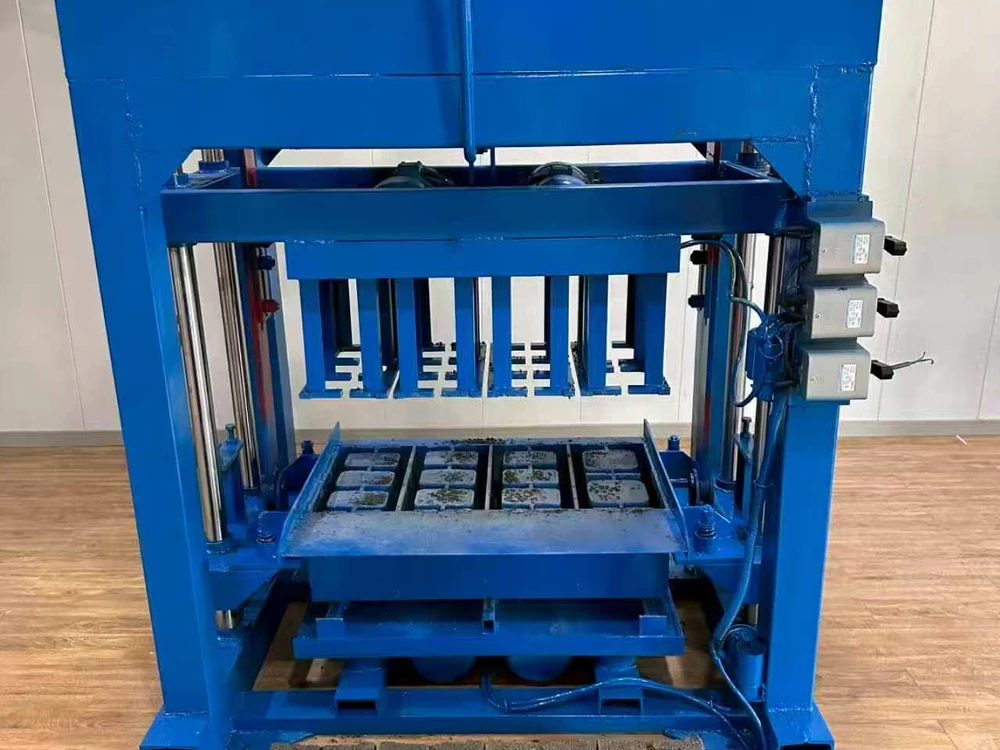
Best Applications for Hollow Concrete Blocks
Hollow concrete blocks excel in structural designs where reducing overall dead weight and speeding up installation are the primary goals.
- Framed Multi-Story Buildings: Ideal as curtain wall and partition wall infills in high-rise concrete or steel frame structures.
- External Perimeter Fencing: Provides fast installation for boundary walls and compound enclosures without overloading light foundations.
- Utility-Heavy Walls: Cavities offer ready-made pathways for electrical wiring, water conduits, and vertical steel reinforcement without the need for extensive wall chasing.
- Insulation-Critical Builds: Air voids provide natural thermal and sound dampening, lowering heating and cooling loads for residential and commercial spaces.
Best Applications for Solid Concrete Blocks
Solid concrete blocks deliver the density and massive compressive strength required for heavy-duty structural applications where structural integrity cannot be compromised.
- Substructures and Foundation Work: Excellent for basement walls, underground footings, and retaining structures that must resist heavy lateral soil pressure and moisture penetration.
- Heavy Load-Bearing Walls: Used in low-rise masonry structures that do not rely on reinforced concrete frames to carry the roof and floor loads.
- Civil and Infrastructure Projects: Applied in bridge abutments, drainage channels, protective blast walls, and heavy storage compounds.
- High-Security Enclosures: Chosen for bank vaults, secure storage facilities, and perimeter defense barriers where physical penetration resistance is mandatory.
Structural Combinations in Multi-Story Buildings
Modern construction frequently combines both products to balance structural safety with overall cost efficiency:
- Foundation to Ground Floor: Builders use high-density solid concrete blocks for foundation courses and basement levels to maximize compressive strength and ground stability.
- Upper Levels and Partitions: Contractors switch to lightweight hollow concrete blocks on upper floors. This reduces the dead load on beams and columns, cuts foundation costs, and lowers transport and crane handling efforts across the site.
How to Choose the Right Cement Block Making Machine
Selecting the right equipment comes down to matching your local market demand with the right production capacity. Whether your target buyers need high-compressive-strength solid units for foundations or lightweight concrete blocks for high-rise partition walls, choosing the right machinery configuration ensures high productivity and consistent product quality.
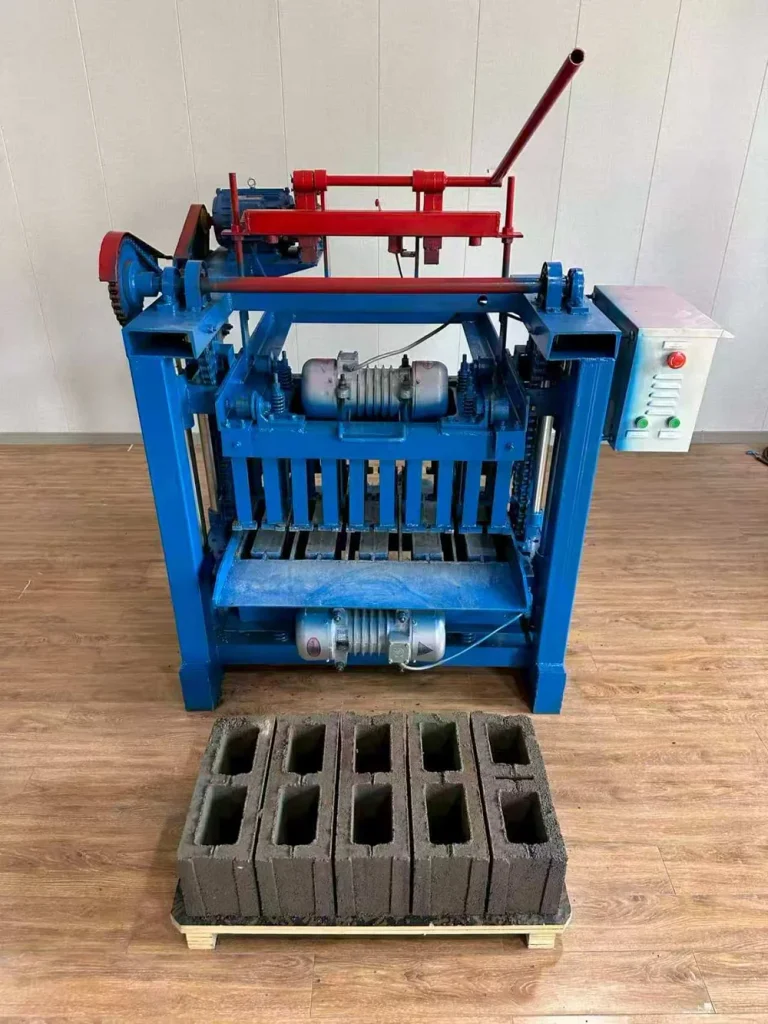
Semi-Automatic vs Fully Automatic Block Machines
Your automation level directly impacts labor overhead, output consistency, and cycle times. Evaluating your daily production targets will determine which setup fits your plant best:
- Semi-Automatic Machines: Best for small to medium operations. These units require manual intervention for pallet feeding and material discharge control, making them cost-effective to set up with lower initial machinery costs.
- Fully Automatic Lines: Ideal for commercial-scale plants. Automated batching, hydraulic pressing, pallet indexing, and stacking maximize output while minimizing labor costs. Check our comprehensive automatic block making machine guide to explore how automation configurations match different volume requirements.
| Feature | Semi-Automatic System | Fully Automatic System |
|---|---|---|
| Daily Output | Low to medium | High volume / 24-7 continuous |
| Labor Requirement | 3–5 operators per line | 1–2 operators monitoring PLC |
| Cycle Precision | Variable (operator-dependent) | Exact hydraulic & vibration timing |
| Best For | Startups & regional supply yards | Industrial suppliers & large civil projects |
Interchangeable Molds for Hollow and Solid Production
You do not need separate base machines to manufacture both block types. Modern hydraulic systems allow you to switch out the concrete block mold assembly to produce solid concrete blocks, multi-core hollow blocks, pavers, or interlocking bricks on the same platform.
- Mold Durability: High-grade, heat-treated steel molds resist abrasive wear from harsh aggregate mixes.
- Core Assembly: Quick-change hollow mold cores allow fast changeovers between standard structural units and lightweight configurations.
- Versatility: Understanding how to choose the right mold for your block making machine ensures clean de-molding, accurate dimensions, and minimal machine downtime during product changeovers.
Initial Equipment Investment and Operational ROI
Calculating your return on investment requires balancing initial machinery capital expenditure against recurring operational costs:
- Raw Material Consumption: Hollow units consume significantly less cement and aggregate per square meter of wall area, lowering unit production costs and boosting profit margins on partition block lines.
- Structural Application Value: Solid units consume more material but command premium prices in infrastructure, heavy load-bearing walls, and foundation work where high compressive strength is non-negotiable.
- Payback Period: A balanced brick making machine setup running at steady capacity typically recovers initial equipment and tooling costs quickly through consistent pallet throughput, low maintenance downtime, and adaptable production schedules.
Frequently Asked Questions
Can One Machine Produce Both Hollow and Solid Blocks?
Yes. A single cement block machine can easily switch between manufacturing solid concrete blocks and hollow units by swapping the concrete block mold. The machine base stays the same; we simply change the tooling from solid cavity molds to assemblies equipped with internal core pullers and adjust the vibration parameters to match the mix density. To ensure your production line supports quick changeovers, review the essential questions to ask before buying a cement block machine.
Which Block Is Stronger for Foundation Work?
Solid concrete blocks are the standard choice for underground foundations, heavy load-bearing walls, and civil structures. Because solid units have no internal voids, they distribute heavy structural loads evenly and offer superior compressive strength under direct vertical pressure and soil shifting. While reinforced hollow units work well in multi-story wall frames, solid blocks provide maximum durability against high groundwater pressure and heavy structural loads.
Are Hollow Blocks Cheaper to Manufacture Than Solid Blocks?
Yes. Hollow blocks require significantly lower material consumption per pallet because internal cavities eliminate dense core mass. This reduction in cement and aggregate lowers production costs per unit, cuts shipping weight, and speeds up drying times on our hollow block making machine setups. For commercial wall construction, these raw material savings make hollow concrete blocks the more cost-effective choice.