
Overview of Cement Block Machine Attachments
Modern concrete product manufacturing requires consistent throughput, strict dimensional accuracy, and minimal operational downtime. While the core forming unit is the heart of any production plant, integrating purpose-built auxiliary systems transforms a standalone machine into an automated, high-yield manufacturing line.
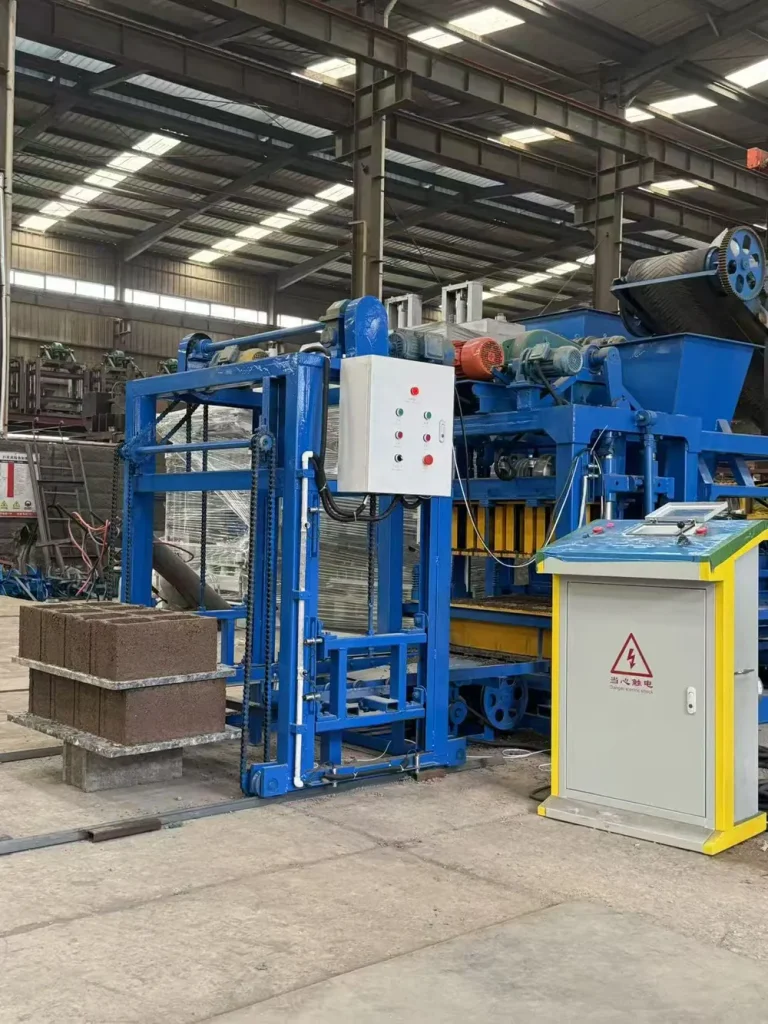
What Are Block Making Machine Attachments?
Block making machine attachments are specialized modular systems and auxiliary units designed to integrate seamlessly with a cement block machine. Rather than replacing an entire production line, these components upgrade specific stages of the manufacturing cycle—from raw material batching to final product stacking.
Key categories of production attachments include:
- Material Preparation Units: Automated concrete batching systems and high-efficiency concrete mixers.
- Moulding and Tooling Systems: Precision-machined, quick-change block moulds for standard blocks, pavers, and curbstones.
- Handling Automation: Heavy-duty pallet feeder units and green-block conveyers.
- End-of-Line Systems: Automated block stackers, palletizers, and cubing attachments.
How Auxiliary Equipment Drives Production Efficiency
Integrating auxiliary equipment eliminates the mechanical and operational bottlenecks that restrict daily output. Manual feeding, uneven raw material mixing, and manual offloading often slow down overall cycle times.
Targeted attachments drive plant performance through:
- Continuous Material Flow: Synchronized aggregate and pallet feeding prevents machine idle time between molding cycles.
- Consistent Compaction and Quality: Automated dosing and homogeneous mixing ensure structural density and dimensional uniformity across every batch.
- Labor Optimization: Mechanizing heavy handling tasks reduces reliance on manual labor while improving on-site operating safety.
- Reduced Product Breakage: Automated transfers protect fresh, green concrete units from damage before the curing phase.
1. Automatic Pallet Feeder and Handling System
Streamlining Pallet Delivery to the Mould
Manual pallet feeding is one of the most common bottlenecks in concrete manufacturing. When operators load pallets by hand, the machine constantly pauses, leading to inconsistent cycle times. An automatic pallet feeder stores a stack of empty production pallets in a heavy-duty magazine and feeds them sequentially into the molding chamber.
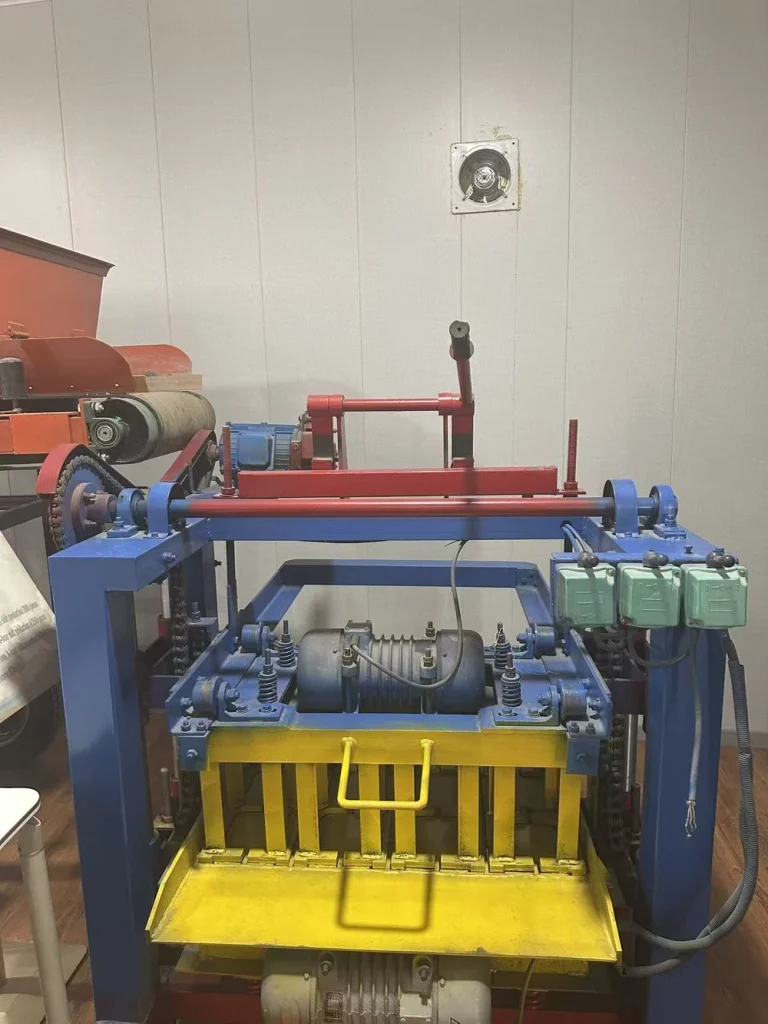
By integrating a motorized conveyor belt with the feeder mechanism, each pallet slides directly into place beneath the block moulds with exact positioning. This steady supply prevents the cement block machine from idling, allowing the pressing cycle to repeat smoothly without interruption.
Reducing Cycle Times and Minimizing Manual Handling
Automating pallet handling is a direct way to increase daily unit output while cutting down on labor overhead. Integrating this attachment into modern automatic block making machine systems optimizes plant floor workflow in several key ways:
- Faster Molding Cycles: Synchronized pallet advancement eliminates manual staging delays, keeping hydraulic compaction operating at peak efficiency.
- Lower Labor Costs: Operators no longer need to lift heavy wooden, PVC, or steel pallets, freeing up workforce hours for quality control and packaging.
- Reduced Product Damage: Smooth mechanical movement prevents sudden jolts that can crack or deform freshly pressed green blocks before they ever reach the curing racks.
2. Advanced Concrete Batching and Mixing Attachments
A steady, high-output production line requires a consistent supply of perfectly mixed concrete. Integrating automated batching and mixing units directly to your setup eliminates the material supply bottlenecks that slow down daily cycles.
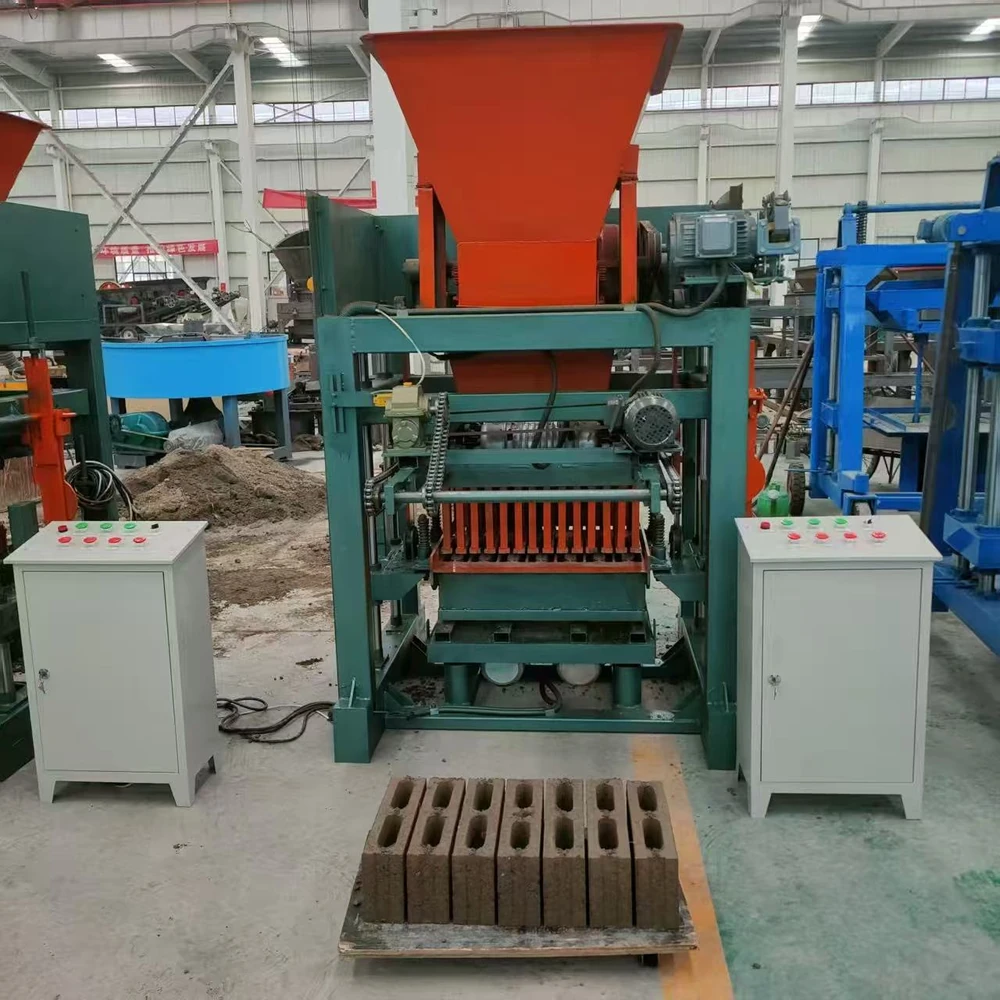
Planetary and Twin-Shaft Concrete Mixers
The quality and speed of your mix dictate the efficiency of the entire moulding process. High-performance planetary and twin-shaft concrete mixers ensure rapid, homogeneous blending of aggregates, cement, and water in minimal time.
- Rapid Cycle Times: Fast mixing cycles keep the concrete hopper charged, allowing your concrete block machine to operate continuously without idle periods.
- Uniform Material Distribution: Intensive blending action eliminates dry-mix clumps and ensures even cement distribution throughout every batch.
- Reduced Wear and Maintenance: Heavy-duty, abrasion-resistant liners and blades withstand continuous industrial use, lowering overall maintenance downtime.
Automated Aggregate and Moisture Feeding Systems
Manual ingredient measurement often leads to inconsistent density and wasted raw materials. An automated aggregate feeding system paired with electronic weighing hoppers streamlines the entire pre-mix stage.
- Precision Batching: Load cells and automated batching bins deliver exact aggregate and binder ratios for every cycle.
- Consistent Moisture Control: Integrated water dosing units ensure accurate water-to-cement ratios, optimizing the compaction quality needed for high-strength output on any hollow block making machine.
- Seamless Material Transfer: Heavy-duty conveyor belts move batched materials directly from the aggregate bins to the mixer with zero manual intervention.
3. Quick-Change Precision Block Moulds
Industrial-grade block moulds serve as the core shaping attachment in any high-output concrete manufacturing line. Upgrading to precision-engineered, quick-change mould assemblies allows our production setups to alternate between hollow blocks, solid bricks, interlocking pavers, and curb stones with minimal disruption.
Minimizing Downtime During Product Changeover
Traditional mould replacements often create major bottlenecks, stalling production for hours. Quick-change systems solve this issue by standardizing mounting points and clamping mechanisms:
- Rapid Installation: Swap out core assemblies and tamper heads in a fraction of standard changeover times.
- Continuous Line Flow: Keep operators productive and avoid long idle periods for your mixing and conveying equipment.
- Versatile Product Mix: Fulfill diverse client orders for different block geometries within the same production shift.
For operators running the best cement block machines rated by output, integrating quick-change tooling ensures your machinery spends maximum time producing blocks rather than sitting idle during maintenance.
Enhancing Uniformity and Compaction Quality
High-precision tooling directly influences product structural integrity and surface finish. CNC-machined, heat-treated moulds optimize hydraulic compaction and vibration transfer across every cavity:
- Exact Dimensional Accuracy: Consistent block height, sharp edges, and uniform wall thickness across all units.
- Balanced Density: Eliminates air pockets and weak spots through even pressure distribution.
- Extended Service Life: Wear-resistant alloy construction resists intense vibration, reducing replacement frequency and long-term operating costs.
4. Automatic Stacking and Cubing Systems
Manual offloading at the end of the molding line often creates the biggest bottleneck in concrete operations. As your cement block machine forms products at high cycle speeds, moving fresh, wet units by hand slows output and causes edge breakage. Integrating automated stacking and cubing mechanisms solves this issue by streamlining block transport directly from the molding chamber.
High-Speed Block Stacking and Palletizing
An automatic stacker matches the rapid pace of your production line, lifting green blocks smoothly without compromising their structural integrity. By operating in sync with the primary machine, this attachment lifts, indexes, and stacks production boards cleanly.
- Zero Breakage: Mechanical clamps and precision lifting eliminate the corner damage common with manual handling.
- Constant Line Flow: Prevents production pauses caused by offloading delays, allowing the machine to cycle without interruption.
- Reduced Labor Strain: Replaces heavy, repetitive physical labor with automated lifting cycles.
For operations scaling their infrastructure, working with an experienced block machine distributor for automatic block machines ensures that automated palletizers integrate seamlessly with the main control system.
Optimizing Post-Curing Storage and Logistics
Beyond handling freshly molded units, cubing attachments organize hardened products for transport and yard storage. These units grab cured blocks, remove them from the production pallets, and stack them into tight cubes ready for strapping.
| Cubing Advantage | Operational Benefit |
|---|---|
| Pallet Return Efficiency | Boards return immediately to the production cycle without waiting for yard clearance. |
| Compact Yard Storage | Blocks are tightly aligned, maximizing square footage in your curing yard. |
| Rapid Forklift Loading | Uniform cubes allow forklift operators to load delivery trucks in minutes rather than hours. |
Implementing automated stacking and cubing keeps the entire manufacturing loop balanced, protecting finished goods and sustaining peak throughput throughout the workday.
5. Secondary Face Mix and Color Feeding Systems
Enabling Multi-Color and Two-Layer Paver Production
Standard concrete units do not always meet the aesthetic demands of modern landscaping and urban projects. Adding a secondary face mix system transforms a standard cement block machine into a versatile production station capable of manufacturing high-grade, two-layer interlocking pavers and architectural stones.
- Dual-Hopper Distribution: The auxiliary feeding unit automatically applies a thin, concentrated top layer of fine aggregate, binder, and pigment directly over the base concrete in the block moulds.
- Material Efficiency: By applying premium pigments and aggregates exclusively to the wearing surface, we avoid coloring the entire unit, dramatically reducing pigment costs outlined in our cement brick making machine raw materials guide.
- Consistent Layering: Automated feed drawers ensure every cycle receives the exact volume required for uniform thickness and dependable hydraulic compaction across the pallet.
Increasing Market Value Without Slowing Line Speeds
Integrating a dedicated face mix attachment enables premium product lines without introducing bottlenecks into the core molding cycle.
- Synchronized Feeding: The face mix hopper moves in sequence with the main feed cart, adding only seconds to the overall cycle time while doubling the finished product value.
- Automated Color Blending: Automated controls allow rapid transitions between solid colors, multi-color blends, and standard concrete finishes without line reconfiguration.
- Higher Profit Margins: Two-layer pavers command higher prices in commercial and residential markets, allowing operations to expand revenue potential on the exact same plant footprint.
Key Benefits of Upgrading Your Block Making Line
Integrating high-performance auxiliary attachments into a cement block machine setup transforms a standard plant into a high-yield manufacturing center. Upgrading modular components targets the exact mechanical bottlenecks that restrict daily volume, delivering immediate improvements across all production metrics.
| Operational Area | Standard Setup | Upgraded Automated Setup |
|---|---|---|
| Material Handling | Manual weighing and loading | Automated batching and steady feeding |
| Pallet Movement | Operator-dependent line cycles | Continuous automatic pallet delivery |
| Finished Handling | Manual offloading and green block damage | Automated stacking and precision cubing |
| Quality Control | Varied block density and height variance | Uniform hydraulic compaction and exact dimensions |
Higher Daily Output and Reduced Labor Costs
Manual aggregate feeding and hand-stacking green blocks create chronic operational delays. When you automate these stages with high-capacity mixers, feeders, and stackers, the core machine operates at its full potential without idle intervals.
- Non-Stop Cycle Times: Pallet feeders and automated conveyors maintain continuous feeding into the molding chamber, preventing mechanical downtime.
- Streamlined Labor Allocation: Shifting from manual offloading to mechanical palletizing cuts yard labor requirements while boosting shift-by-shift output.
- Maximized Capacity: Reviewing our guide on choosing a block making machine helps match the right auxiliary equipment to your target daily volume.
Consistent Compaction, Strength, and Product Quality
Product defects typically stem from uneven raw material mixes or erratic feed volumes. Precision batching units and heavy-duty mixer attachments deliver completely homogeneous concrete blends directly to the mold.
- Eliminated Density Voids: Controlled material distribution ensures aggregate fills every mold cavity evenly before hydraulic compaction begins.
- Accurate Dimensions: Engineered block molds maintain sharp corners, uniform wall thicknesses, and consistent heights across solid blocks, hollow blocks, and pavers.
- Reduced Scrap Rates: Stable mechanical handling protects fragile green blocks from cracking before they reach the curing yard.
Enhanced Plant Safety and Operational Reliability
Heavy concrete products and repetitive lifting pose significant workplace hazards. Automating your production line removes operators from high-risk interaction zones around heavy hydraulic presses and wet casting areas.
- Reduced Physical Strain: Automatic stackers and pallet magazines take over heavy lifting, dramatically lowering repetitive strain risks.
- Engineered Durability: Industrial-grade auxiliary attachments feature robust structural designs that withstand continuous vibration and heavy aggregate wear.
- Predictable Maintenance: Synchronized PLC automation tracks line speed, pinpoints mechanical wear early, and prevents sudden production line shutdowns.
How to Choose the Right Attachments for Your Cement Block Machine
Upgrading a block production line requires matching modular components to your plant’s operational bottlenecks. Adding auxiliary equipment without evaluating compatibility and return on investment risks creating new constraints instead of expanding throughput.
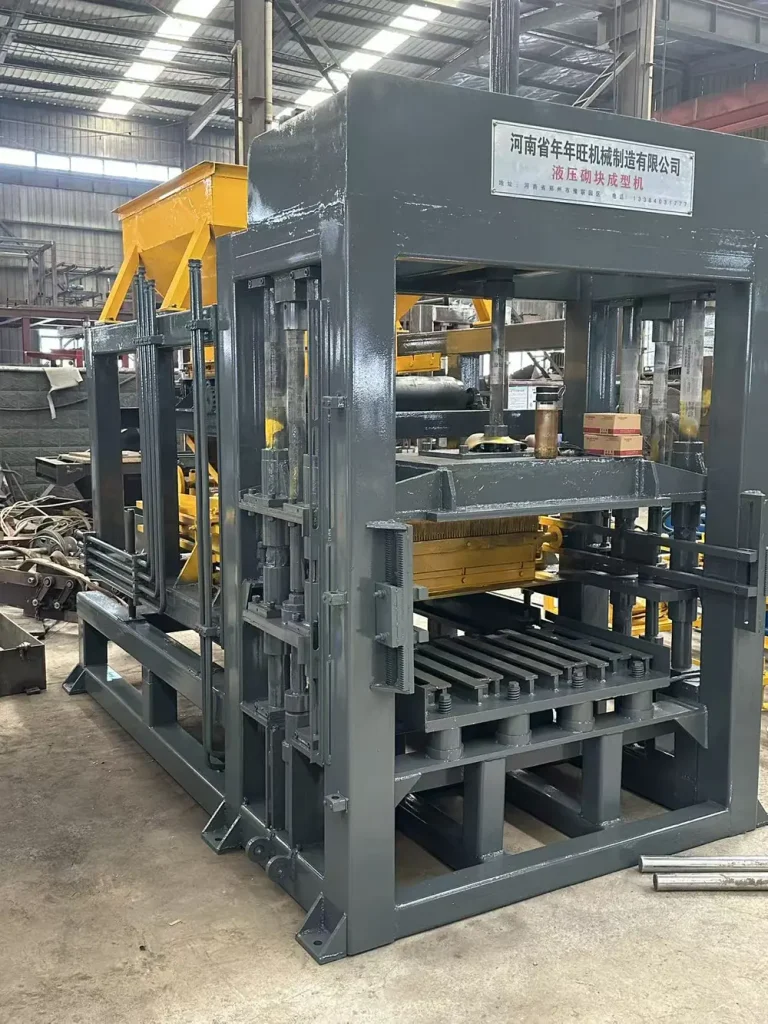
Evaluating Machinery Compatibility and Plant Layout
Before adding new systems, verify mechanical, hydraulic, and electrical compatibility with your primary cement block machine. Automated auxiliary equipment must integrate seamlessly with central PLC control units to ensure smooth sequence timing and prevent line interruptions.
- Footprint and Flow: Measure available plant space to ensure smooth material movement between the concrete mixer, the forming area, and the curing yard.
- Control Sync: Confirm that automated pallet feeders, transfer systems, and stackers can synchronize with your main control panel.
- Power and Hydraulics: Verify that your central hydraulic station and electrical supply can handle the load of extra modules.
Assessing Production Goals and Return on Investment (ROI)
Choose attachments that directly solve your biggest production limits. If uneven material mix holds back forming cycles, invest in upstream batching. If green block handling creates bottlenecks and product damage, prioritize downstream automation.
| Attachment Upgrade | Primary Operational Focus | Target Production Benefit |
|---|---|---|
| Batching & Mixing Units | Raw material proportioning | Homogeneous mix, reduced raw material waste |
| Automatic Pallet Feeder | Mold chamber feeding | Continuous cycle times, reduced idle time |
| Stacker / Cubing System | Green block handling | Lower labor costs, reduced handling breakage |
| Quick-Change Moulds | Product versatility | Minimal downtime during line changeovers |
Comparing different operational scales—such as reviewing QT4-15 vs QT6-15 vs QT8-15 block machine setups—can help you determine which auxiliary capacity best fits your volume targets and timeline for capital recovery.
Maintenance Demands and Spare Parts Availability
Every new mechanical assembly introduces components that require routine inspection and lubrication. Focus on heavy-duty attachments built with standard wear parts and accessible grease points to minimize production halts.
Following established maintenance tips to extend your cement block machine life protects your auxiliary attachments against aggregate abrasion and hydraulic contamination. Prioritize equipment supported by reliable spare parts availability so replacement wear liners, sensors, and hydraulic seals can be swapped out quickly without stalling daily output.