
What Is a Cement Block Machine and How Does It Work?
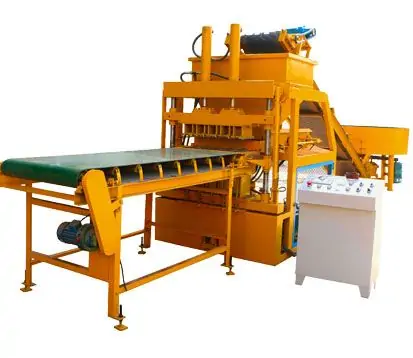
A cement block machine is industrial manufacturing equipment designed to compress aggregate mixtures into high-density building blocks, including hollow blocks, solid bricks, and interlocking pavers.
The machine operates through a streamlined mechanical and hydraulic cycle:
- Feeding: A measured ratio of concrete mixture enters the mold cavity.
- Compaction: High-frequency vibration redistributes particles and eliminates air voids within the mix.
- Compression: A hydraulic pressure machine applies heavy tonnage to solidify the block structure.
- Demolding: The finished block is pushed out onto pallets for curing and stacking.
Key Components of Block Making Equipment
High-performance concrete block making machine systems integrate several core modules to maintain continuous operation and consistent product quality:
- Batching & Mixing Plant: Blends cement, aggregates, and water into a uniform dry-cast concrete mix.
- Material Feeder: Distributes concrete evenly into the mold box using rotating feed carts.
- Vibration & Hydraulic System: Delivers dual compaction forces to achieve maximum load-bearing strength.
- Heavy-Duty Mold Assembly: Interchangeable steel molds engineered for precise block dimensions and edge retention.
- PLC Automated Control Unit: Monitors machine pressure, cycle speed, and operational diagnostics in real time.
- Automatic Stacker: Transfers green blocks efficiently onto transport pallets to accelerate material handling.
Raw Materials Used in Cement Block Production
Selecting the right raw material mix determines final block density, compressive strength, and unit cost:
- Portland Cement: Serves as the primary binding matrix (typically 10%–15% of total mix design).
- Aggregates (Sand & Crushed Stone): Provides physical structure; uses river sand, quarry dust, or fine gravel up to 10 mm.
- Water: Hydrates the cement; kept at low moisture levels for dry-cast block consolidation.
- Industrial Byproducts: Integrates fly ash, slag, or stone chips to reduce material expenses and enhance sustainability.
- Concrete Admixtures: Added to shorten curing cycles, increase early strength, and reduce water absorption.
Main Types of Cement Block Machines
Choosing the right equipment setup directly affects daily block output, operational efficiency, and labor costs. Different machine designs match specific production scales and budget targets.
Fully Automatic Concrete Block Machines
These high-capacity production lines manage batching, mixing, molding, and stacking with minimal manual intervention. Driven by advanced PLC controllers and heavy-duty hydraulics, a fully automatic block machine delivers short cycle times and consistent unit quality.
- Daily Output: 8,000 to 20,000+ blocks per 8-hour shift.
- Best For: Industrial concrete producers and large infrastructure projects.
- Key Advantages: High precision, continuous operation, and minimal labor overhead.
For large-scale investments, working with a certified block machine distributor for automatic block machines ensures proper line configuration and ongoing technical support.
Semi-Automatic Cement Block Machines
A semi-automatic model pairs hydraulic compression with manual control over material feeding or pallet handling. This option strikes a balance between initial equipment cost and high production speed.
- Daily Output: 3,000 to 7,000 blocks per shift.
- Best For: Medium-sized commercial block yards and regional building suppliers.
- Key Advantages: Lower capital investment, straightforward maintenance, and quick mold changes.
Manual and Mobile Block Making Machines
Manual block making equipment and mobile egg-layer units lay finished blocks directly onto a concrete floor, eliminating the need for pallets. These portable units require minimal electrical infrastructure, making them ideal for field operations.
- Daily Output: 500 to 2,000 blocks per shift.
- Best For: Small business startups, rural construction, and localized sites.
- Key Advantages: Excellent portability, low entry cost, and simple mechanical operation.
Hydraulic vs. Vibratory Block Machines
How compression is applied dictates the strength, surface finish, and density of your finished products. Reviewing a comprehensive concrete block machines types, operation, and ROI guide helps clarify which technology fits your aggregate mix.
| Feature | Hydraulic Pressure Machine | Vibratory Block Machine |
|---|---|---|
| Compaction Force | High-tonnage hydraulic pressure | High-frequency mechanical vibration |
| Block Density | Superior density and load-bearing strength | Standard density for hollow and paver blocks |
| Material Compatibility | Fly ash, crushed stone, heavy aggregates | Standard cement-sand and aggregate mixes |
| Maintenance & Noise | Low noise, minimal structural wear | Higher operational noise, regular motor checks |
10 Best Cement Block Machines Rated by Output and Price
Selecting the right block-making equipment comes down to matching your daily production targets with your available startup capital. We evaluated top-performing stationary and mobile models based on 8-hour shift output capacity, mechanical build quality, and pricing.
| Machine Model | Automation Type | Daily Output (8-Hour Shift) | Price Range (USD) | Best Suited For |
|---|---|---|---|---|
| QT10-15 | Fully Automatic | 19,200 – 34,560 pcs | $38,500 – $65,000 | Large Industrial Production Plants |
| QT8-15 | Fully Automatic | 15,360 – 26,880 pcs | $35,800 – $50,000 | High-Volume Block Suppliers |
| QT6-15 | Fully Automatic | 11,520 – 17,280 pcs | $22,000 – $35,000 | Commercial Concrete Factories |
| QT5-15 | Fully Automatic | 9,600 – 15,360 pcs | $20,000 – $30,000 | Regional Commercial Outfits |
| QT4-15 | Fully Automatic / Semi | 7,680 – 8,640 pcs | $18,500 – $25,000 | Mid-Sized Construction Yards |
| QT4-18 | Semi-Automatic | 6,400 – 8,000 pcs | $12,000 – $16,500 | Growing Block Businesses |
| QT4-25C | Semi-Automatic | 4,320 – 7,680 pcs | $10,500 – $14,000 | Starter Commercial Operators |
| QMY6-25 | Mobile (Egg Layer) | 7,000 – 10,000 pcs | $9,500 – $13,000 | Pallet-Free Yard Operations |
| LMT4-26 | Semi-Automatic | 3,200 – 12,000 pcs | $6,000 – $9,000 | Entry-Level Stationary Producers |
| QMY4-30 | Mobile (Egg Layer) | 3,840 – 4,608 pcs | $3,500 – $5,000 | Onsite & Small Rural Projects |
Top High-Output Automatic Machines for Large Enterprises
Large construction supply operations require heavy hydraulic pressure, rapid moulding cycles, and continuous automated production.
- QT10-15 Fully Automatic Line: The flagship industrial machine, pressing up to 34,560 standard hollow blocks in an 8-hour shift with advanced PLC controls.
- QT8-15 Fully Automatic Machine: Combines intense hydraulic compaction with fast cycling, outputting up to 26,880 blocks daily for major commercial suppliers.
- QT6-15 Automatic Machine: Offers a balanced footprint for producing heavy pavers and hollow blocks. Compare specs across top models in our detailed review of QT concrete block making machines rated by output.
- QT5-15 Automatic Machine: Delivers up to 15,360 blocks per shift, giving commercial plants high efficiency without requiring excessive floor space.
Best Mid-Range Semi-Automatic Machines for Commercial Use
Mid-range machines balance reasonable machinery costs with reliable daily production, making them the most popular choice for expanding supply yards.
- QT4-15 Block Machine: Delivers higher output (over 8,600 units daily) with semi-automated pallet feeding to lower labor overhead.
- QT4-18 Semi-Automatic Machine: Built with heavy-duty vibration motors, reliably generating up to 8,000 blocks per shift for regional contractors.
- QT4-25C Semi-Automatic Machine: An affordable starter commercial unit producing up to 7,680 blocks daily with minimal maintenance.
Best Budget and Mobile Block Machines for Small Businesses
Small-scale producers and startup operations benefit from lower upfront machinery costs and mobile designs that reduce pallet expenses.
- QMY6-25 Mobile Concrete Block Machine: An egg-laying mobile machine that lays finished blocks directly onto a concrete slab floor, saving thousands on pallet purchases.
- LMT4-26 Small Stationary Machine: A dependable starter option offering outputs up to 3,200 hollow blocks per shift. See our complete small-scale block making machine guide and price breakdown to evaluate low-budget options.
- QMY4-30 Mobile Block Machine: Compact and maneuverable, perfect for rural onsite projects requiring reliable production up to 4,600 blocks per shift.
Cement Block Machine Output Capacity and Production Rates
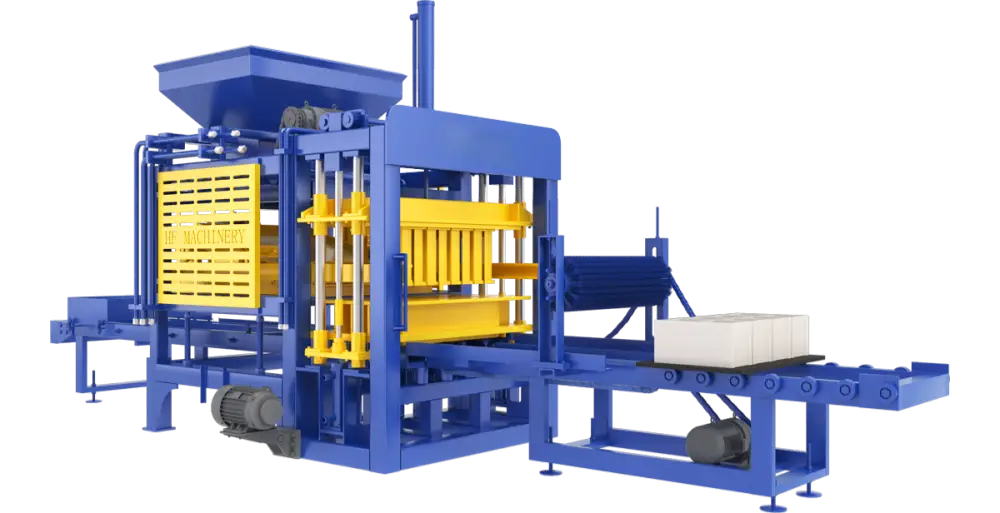
Production efficiency directly impacts daily profitability, making raw output rate one of the most critical metrics when selecting equipment.
Daily Production Output by Machine Type
Production capacity varies significantly based on automation level and compaction mechanism. To see how automated systems streamline workflow, check out our automatic block making machine guide.
| Machine Type | Average Mold Cycle | Hourly Output Rate | 8-Hour Daily Block Output (8″ Hollow) |
|---|---|---|---|
| Manual / Mobile | 45–60 seconds | 200–500 blocks | 1,600–4,000 blocks |
| Semi-Automatic | 20–35 seconds | 600–1,200 blocks | 4,800–9,600 blocks |
| Fully Automatic | 12–20 seconds | 1,500–3,000+ blocks | 12,000–24,000+ blocks |
For commercial enterprises targeting high volumes, reviewing detailed QT6-15 block machine capacity and specifications gives a precise benchmark for scaling hollow block and paver block production.
Factors Influencing Machine Mold Cycles and Output
- Hydraulic Pressure & Vibration: High hydraulic pressure paired with high-frequency vibration speeds up material compaction, reducing cycle times to as low as 12 seconds.
- Raw Material Consistency: Standardized aggregate sizes and controlled moisture levels prevent block sticking and reduce mold ejection delays.
- Automation Level: Automatic pallet stackers and batching systems eliminate manual bottlenecks, keeping production running at maximum hourly output.
- Mold Configuration: Forming smaller paver blocks or solid bricks yields significantly more units per mold drop than larger hollow block molds.
- Maintenance & Operator Pace: Regular cleaning, proper lubrication, and trained staff keep downtime low during shift handovers and mold swaps.
Cement Block Machine Price Breakdown and Cost Factors
Average Cost Ranges for Manual, Semi-Auto, and Automatic Models
Investing in the right block production line requires matching your capital expenditure with daily output targets. Based on our industry benchmarks and comprehensive concrete block machine price guide, total machinery costs scale according to automation depth, hydraulic power, and mold flexibility.
| Machine Type | Estimated Price Range (USD) | Average Daily Output (8-Hour Shift) | Best Suited For |
|---|---|---|---|
| Manual Block Making Equipment | $1,500 – $6,000 | 500 – 1,500 blocks | Rural projects & small startup sites |
| Semi-Automatic Model | $8,000 – $25,000 | 3,000 – 8,000 blocks | Growing commercial block yards |
| Fully Automatic Block Machine | $30,000 – $150,000+ | 10,000 – 25,000+ blocks | Large-scale industrial operations |
Key Factors Influencing Cement Block Machine Prices
- Automation Level: Integrated PLC smart control panels and automated material batching increase upfront machinery cost, but drastically reduce long-term labor expenses.
- Hydraulic Pressure Systems: High-tonnage hydraulic pressure machines compact concrete mix denser, enabling production of higher-strength paver block and hollow block products.
- Steel Quality and Mold Engineering: Molds treated with high-temperature carburizing and heat processing cost more upfront, but offer extended service lifespans under continuous heavy use.
- Vibration Technology: Dual-motor, high-frequency vibratory systems improve cycle speeds and block structural integrity, directly driving up daily block output rates.
Operational and Maintenance Overhead Costs
Calculating your complete manufacturing plant price requires factoring in running overhead alongside the initial machinery invoice:
- Raw Materials: Aggregates, sand, fly ash, and Portland cement represent 60%–70% of ongoing operational budgets.
- Power Supply: Industrial hydraulic units demand stable three-phase power or high-capacity diesel generator backups.
- Routine Servicing: Proactively resolving operational block machine problems through regular filter replacements, hydraulic fluid changes, and mold lining inspections prevents costly production downtime.
- Labor Expenses: Fully automated plants run lean with 3–4 operators, while manual or semi-automatic production lines require 6–10 laborers for material mixing, stacking, and curing.
How to Choose the Right Cement Block Machine
Selecting the right equipment impacts daily block output, product quality, and long-term operating costs. I always recommend matching machine specifications directly with site conditions and local market demand before committing capital.
Assessing Production Goals and Required Output
Calculate target daily block output based on regional demand and delivery schedules. High-volume commercial operations require a fully automatic block machine to maintain uniform density, while smaller regional setups thrive on flexible semi-automatic units.
- Small Operations (1,000 – 3,000 blocks/day): Compact manual or mobile block making equipment for localized supply.
- Medium Operations (4,000 – 8,000 blocks/day): Semi-automatic models balancing labor efficiency and investment cost.
- Large Commercial Plants (10,000+ blocks/day): Fully automatic concrete block making machine lines with batching plants and stackers.
For a deeper step-by-step breakdown on aligning equipment with project demands, review our how to choose a block making machine guide.
Evaluating Power Supply and Automation Level
Power reliability and available labor dictate whether hydraulic pressure machines or mechanical vibration systems suit the facility best.
| Selection Factor | Manual / Mobile | Semi-Automatic | Fully Automatic |
|---|---|---|---|
| Power Setup | Single-Phase / Diesel | 3-Phase Grid (15–30 kW) | 3-Phase Grid (40+ kW) |
| Labor Needed | 3–5 Workers | 4–6 Workers | 2–3 Operators |
| Cycle Speed | 30–45 seconds | 20–30 seconds | 12–18 seconds |
| Best Use Case | Remote / Off-Grid Sites | Growing Commercial Yards | High-Output Industrial Hubs |
Selecting a Reliable Manufacturer and Warranty Support
Securing a reliable manufacturing plant price means looking beyond the initial tag to evaluate build durability and long-term technical support.
- Structural Integrity: Heavy-duty steel frames and international-brand hydraulic valves withstand continuous high-frequency vibration.
- Mold Versatility: Multi-purpose frames allow fast mold changes to yield hollow blocks, solid bricks, and paver blocks on one production line.
- After-Sales Backing: Verify global spare part availability and clear warranty coverage on pumps, motors, and PLC units to eliminate unplanned downtime.
Frequently Asked Questions About Cement Block Machines
What is the ROI for a cement block making business?
From my experience managing production setups, most standard plants break even within 6 to 12 months. Your exact payback timeline depends on aggregate costs, regional construction demand, and initial equipment capacity. Following proven operational strategies for how to start a block machine business successfully keeps material waste low and secures strong profit margins early on.
| Investment Tier | Capital Range | Average ROI Timeline | Net Profit Margin |
|---|---|---|---|
| Small Mobile / Manual | $3,000 – $10,000 | 3 – 6 months | 15% – 25% |
| Mid-Range Semi-Auto | $15,000 – $40,000 | 6 – 10 months | 20% – 30% |
| Fully Automatic Plant | $50,000 – $150,000+ | 8 – 14 months | 25% – 35% |
How many blocks can a cement block machine produce per hour?
Hourly output depends on mold cycle times, hydraulic power, and automation levels. Entry-level manual equipment yields 200 to 400 standard hollow blocks per hour. A high-efficiency automatic cement brick making machine easily produces 1,000 to 2,000 units per hour under continuous operation.
- Manual/Mobile Units: 200 – 400 blocks/hour (low labor investment)
- Semi-Automatic Machines: 500 – 900 blocks/hour (balanced commercial output)
- Fully Automatic Line: 1,000 – 2,500+ blocks/hour (high-volume commercial scale)
What is the difference between fly ash and cement block machines?
The fundamental difference comes down to raw materials and molding mechanics. Standard concrete block machines mix cement, sand, and aggregates using high-frequency vibration. Fly ash brick machines use extreme hydraulic pressure to compact industrial fly ash, lime, and gypsum into smooth, lightweight building units.
| Feature | Cement Block Machine | Fly Ash Brick Machine |
|---|---|---|
| Primary Raw Materials | Cement, sand, gravel, crushed stone | Fly ash, lime, gypsum, sand/stone dust |
| Molding Technique | Hydraulic pressure + table vibration | High-tonnage hydraulic compression |
| Block Characteristics | High load-bearing strength, rougher texture | Uniform dimensions, smooth finish, lightweight |
| Main Uses | Structural walls, foundations, paver blocks | Partition walls, eco-building projects, infill |