
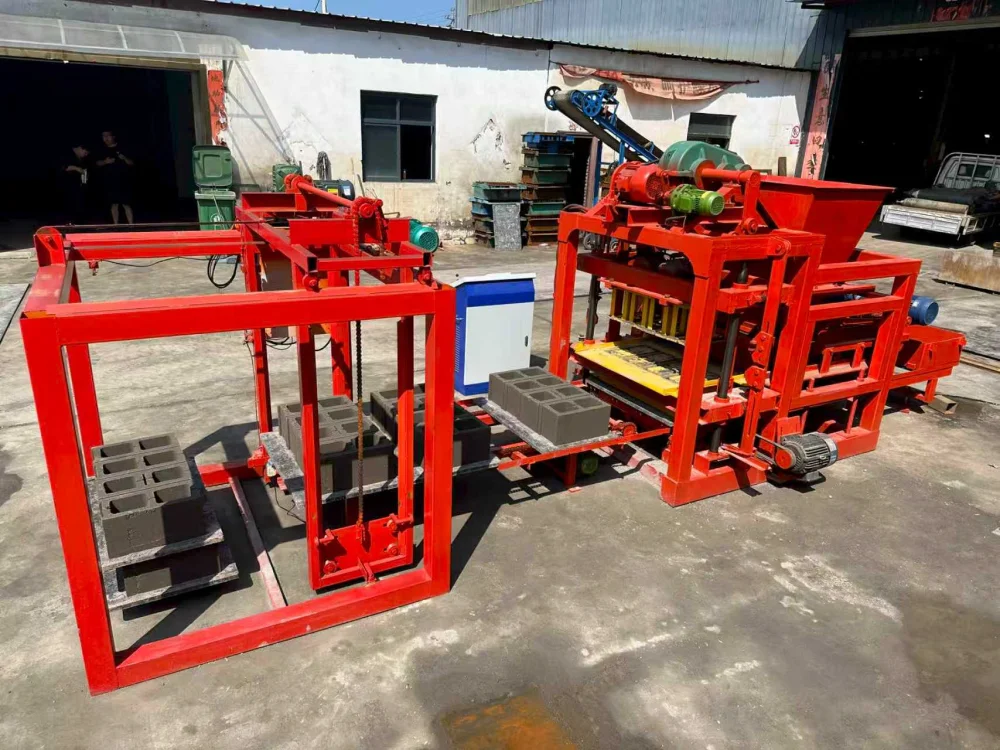
A stationary block production line set up in a fixed factory
Choosing between a stationary vs mobile block machine is one of the first big decisions for a new block maker. Both machines produce concrete blocks, bricks, and pavers. However, they fit very different business models. A stationary machine stays in one place and produces huge volumes. In contrast, a mobile machine drives from site to site and molds blocks right where you need them.
This guide compares both types in plain words. You will learn how each machine works, what it costs, and where each one shines. Moreover, we added a side-by-side table, honest pros and cons, and answers to the most common questions. By the end, you will know exactly which machine fits your project. If you are still new to the topic, our hollow block making machine guide covers the basics first.
- A stationary block machine produces 3,000 to 20,000+ blocks per day, while a mobile machine makes 350 to 2,000 blocks per day.
- Stationary machines cost more upfront, yet they give a lower cost per block.
- Mobile machines need no factory, no pallets, and far less setup money.
- Additionally, mobile machines suit small projects, rural areas, and on-site jobs.
- Ultimately, choose a stationary machine for a fixed factory and a mobile machine for flexible, on-site production.
What Is a Stationary Block Making Machine?
A stationary block making machine is fixed in one place, usually inside a workshop or on a concrete foundation. Once installed, it does not move. Blocks travel away from the machine on pallets, and workers carry them to a curing area. Because the machine does not move, it can be bigger, heavier, and much more productive.
How a Stationary Machine Works
The process follows a simple cycle. First, workers or a loader pour mixed concrete into the hopper. Next, the machine feeds the mix into a mold and presses it with strong vibration. Then, the fresh block lands on a pallet and moves down the output conveyor. Finally, workers stack the pallets in a curing area for seven days.
Since the machine stays put, you can add extras around it. For example, you can attach a batching plant, a belt conveyor, an automatic stacker, or a cuber. These add-ons turn a simple machine into a full production line. As a result, big factories always build around stationary machines. To see how a full line performs, read our QT10-15 capacity and ROI analysis.
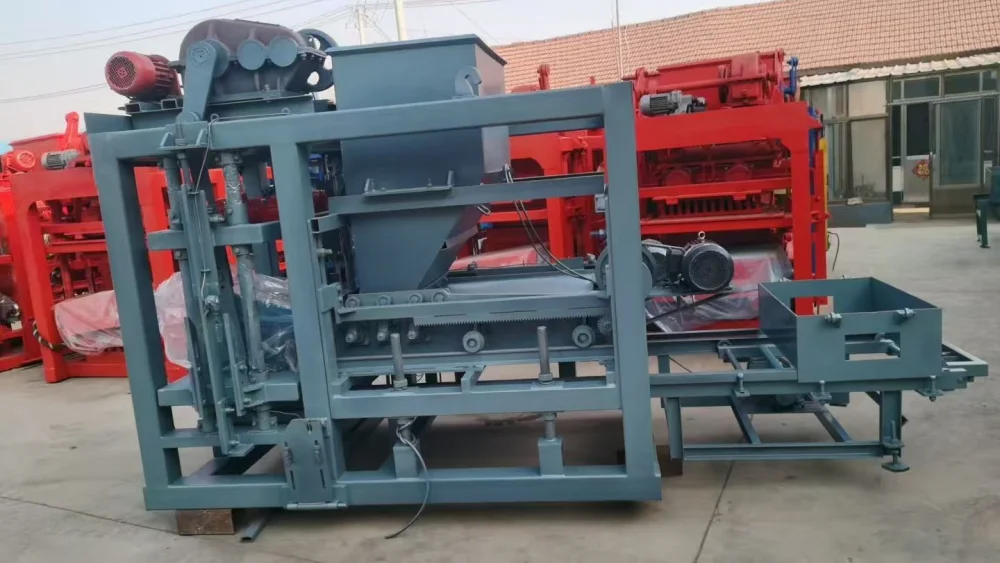
A stationary machine with mold frame and pallet feeder, ready for fixed installation
Common Models and Prices
Stationary machines come in many sizes. For example, the QT4-25 is a small semi-automatic model, while the QT6-15 and QT10-15 are fully automatic mid-range and large models. Prices start around $8,000 for a basic semi-automatic machine and reach $85,000 for a full automatic line. Moreover, you must add the cost of a workshop, pallets, and a mixer. We break down these numbers later in this guide.
What Is a Mobile Block Making Machine?
A mobile block making machine moves on its own wheels. People also call it an egg laying machine, because it lays blocks on the ground and moves forward like a hen. It does not use pallets at all. Instead, it casts blocks directly on a flat, prepared surface.
How a Mobile Machine Works
The workflow is very simple. First, workers prepare a flat concrete slab or compacted ground. Next, they fill the mold with concrete by hand. Then, the machine vibrates and presses the blocks onto the ground. After that, it lifts its own frame, drives forward, and casts the next row. Consequently, one machine can “walk” across a whole yard in a day, leaving rows of fresh blocks behind.
Most mobile machines run on diesel, so they work in places without electricity. Others use a small electric motor. Either way, the machine needs no foundation, no pallets, and no factory building. For a full walkthrough of this type, see our egg laying block machine buyer’s guide.
Common Models and Prices
Mobile machines are small and affordable. Most models mold 2 to 6 blocks per cycle and produce 350 to 2,000 blocks per day. Prices range from $2,000 for a basic diesel model to about $10,000 for a larger hydraulic version. Furthermore, you only need a mixer and a water source to start. Therefore, many first-time investors begin here.
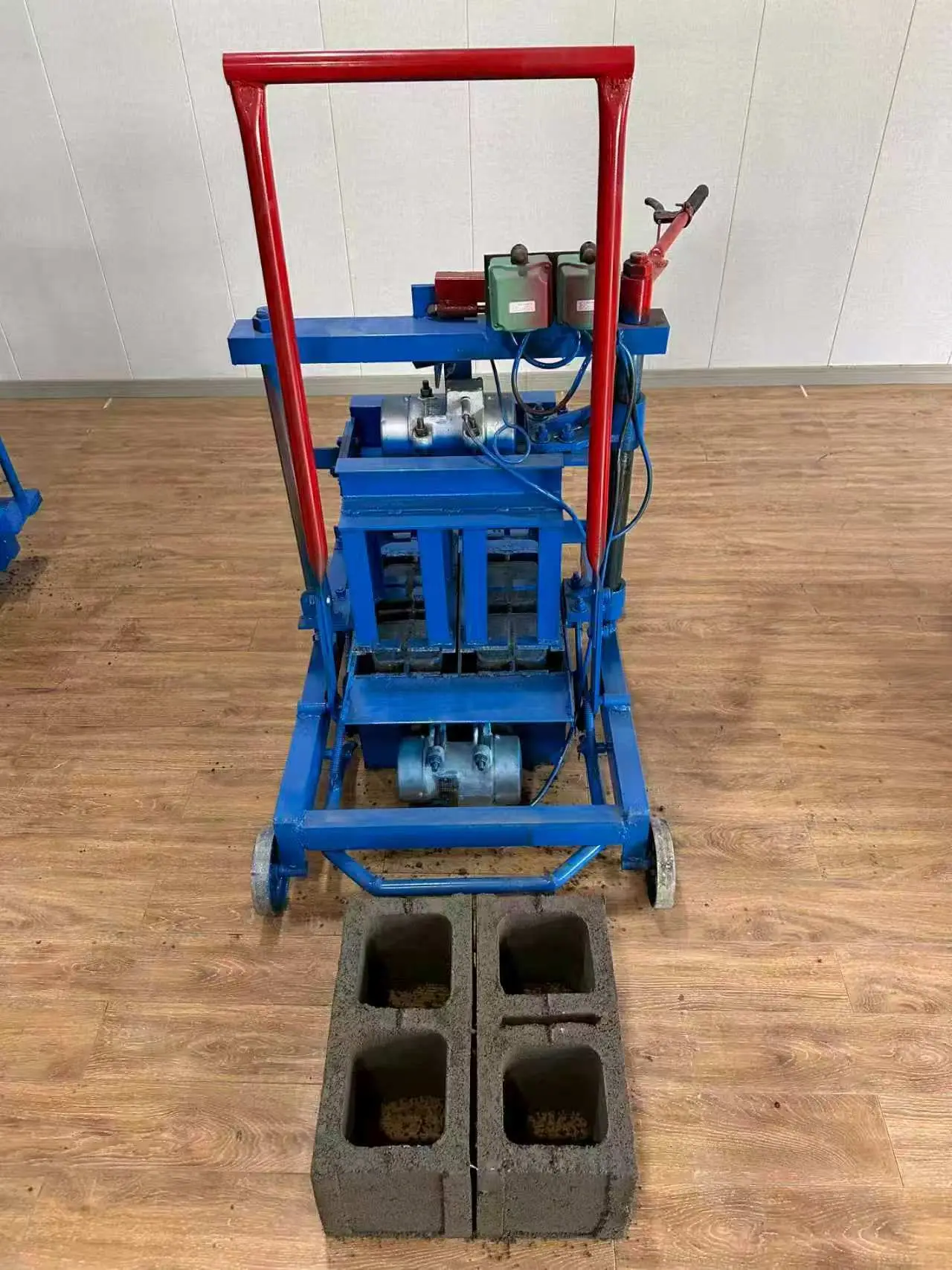
A small mobile machine casting hollow blocks directly on the ground
Stationary vs Mobile Block Machine: Side-by-Side Comparison
Now let’s put both machines next to each other. The table below shows the key numbers side by side. Keep in mind that exact figures vary by model and supplier.
Key Differences at a Glance
| Feature | Stationary Machine | Mobile Machine |
|---|---|---|
| Daily output | 3,000 – 20,000+ blocks | 350 – 2,000 blocks |
| Machine price | $8,000 – $85,000 | $2,000 – $10,000 |
| Factory building | Required | Not required |
| Pallets | Hundreds needed | None needed |
| Power source | 3-phase electric | Diesel or electric |
| Workers per shift | 4 – 8 | 3 – 5 |
| Block consistency | Very high | Good |
| Automation level | Semi to fully automatic | Manual feeding |
| Best for | Fixed factories, big orders | Small projects, remote sites |
Which Type Produces More Blocks per Day?
A stationary machine wins on output by a wide margin. For instance, a QT6-15 automatic line produces 8,000 to 10,000 standard hollow blocks per 8-hour shift. In contrast, a typical mobile machine finishes about 800 to 1,200 blocks per day. Consequently, a stationary line can supply housing projects, distributors, and government contracts.
However, output only matters if you can sell the blocks. A mobile machine that sells out every day is better than a half-idle factory. Therefore, match the machine to your real market size, not to the biggest number on a brochure. Additionally, our QT5-15 vs QT6-15 comparison shows how output scales between mid-range stationary models.
Stationary vs Mobile Block Machine: Pros and Cons
Both machine types have clear strengths and weaknesses. Let’s look at them honestly, so you can weigh the trade-offs for your own situation.
Advantages of Stationary Block Machines
- First, the output is far higher, which lowers your cost per block.
- Additionally, hydraulic pressing gives blocks a smoother finish and higher strength.
- Moreover, you can add automatic stackers, cubers, and mixers as you grow.
- Furthermore, quality stays consistent, which helps you win big contracts.
- Also, the machine works in any weather, because it sits indoors.
- Finally, a wide model range covers every budget and scale.
Disadvantages of Stationary Block Machines
- First, the upfront cost is higher, often including a workshop and foundation.
- Additionally, you must buy hundreds of pallets, which adds cost.
- Moreover, you need reliable 3-phase electricity on site.
- Furthermore, blocks must be transported to the job site, which raises delivery costs.
- Finally, moving the factory later is slow and expensive.
Advantages of Mobile Block Machines
- First, the entry cost is low, so beginners face less risk.
- Additionally, no factory, foundation, or pallets are required.
- Moreover, the machine produces blocks on site, which saves transport money.
- Furthermore, diesel models work in areas with no electricity.
- Also, setup takes only a few hours on flat ground.
- Finally, one machine can serve several nearby villages or projects.
Disadvantages of Mobile Block Machines
- First, the daily output is low, which limits your income ceiling.
- Additionally, manual feeding demands more physical work from your team.
- Moreover, block consistency depends heavily on operator skill.
- Furthermore, rain can stop production, because blocks cure in the open air.
- Finally, large automated options are not available for this type.
Stationary vs Mobile Block Machine: Cost Comparison
Money is often the deciding factor. Therefore, let’s compare the full cost of both setups, not just the price tag on the machine.
Equipment Price
The machine itself is the biggest cost. The list below shows typical factory-direct price ranges in 2026:
- First, small mobile machines cost $2,000 to $10,000.
- Additionally, semi-automatic stationary models like the QT4-25 cost $8,000 to $15,000.
- Moreover, mid-range automatic models like the QT5-15 and QT6-15 cost $25,000 to $45,000.
- Finally, large fully automatic lines like the QT10-15 cost $50,000 to $85,000.
Remember that these are machine prices only. Shipping, taxes, and local fees come on top. Our QT10-15 ROI guide shows a full cost example for a large stationary line.
Setup and Extra Costs
Stationary setups carry hidden costs that buyers often miss. For example, you need a concrete foundation, a workshop or shed, hundreds of pallets, a mixer, and a loader. Together, these extras can add $10,000 to $30,000 to a mid-size project. In contrast, a mobile setup only needs a mixer, a water source, and flat ground. Consequently, a mobile operation can start for under $15,000 all-in, while a small stationary factory usually needs $25,000 or more.
On the other hand, cost per block tells a different story. A stationary line spreads its higher fixed costs over many more blocks. As a result, big stationary factories make more profit per block than mobile producers. Ultimately, the right choice depends on your volume, not just your budget.
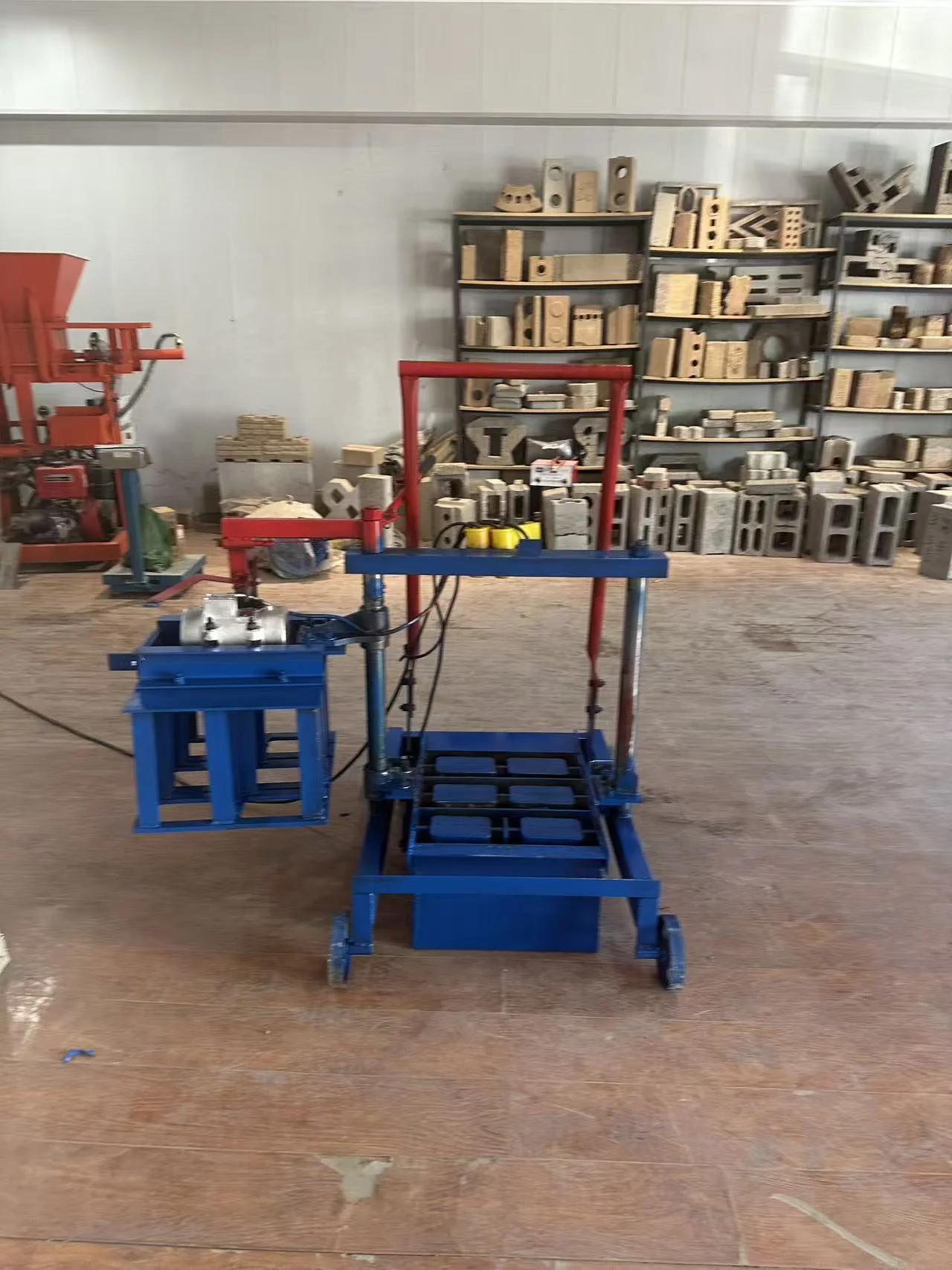
A mobile machine can move between job sites, which saves transport costs
Stationary vs Mobile Block Machine: Which Should You Buy?
There is no single “best” machine. Instead, the best choice matches your market, your budget, and your plans. Use the two lists below to find your situation.
Buy a Stationary Machine If…
- First, you already have steady orders from housing projects or dealers.
- Additionally, you own or can rent a proper workshop with power.
- Moreover, you plan to produce blocks every day for years.
- Furthermore, your local market demands high-strength, consistent blocks.
- Finally, you want room to automate and grow into a full line.
Buy a Mobile Machine If…
- First, you are testing the block business with limited money.
- Additionally, your customers are spread across villages or small sites.
- Moreover, your area has no stable electricity supply.
- Furthermore, you want to avoid pallet and factory costs.
- Finally, you need blocks directly on construction sites.
Many smart investors actually do both. For example, they start with a mobile machine to learn the market. Later, once orders grow, they add a stationary line. In this way, the mobile machine becomes the seed of a bigger factory.
Stationary vs Mobile Block Machine: FAQs
Can a mobile machine make hollow blocks?
Yes. Most mobile machines mold hollow blocks, solid bricks, and pavers with interchangeable molds. However, mold changes take 30 to 60 minutes, so plan your production day around one main product. Additionally, check the mold list before you buy, because some small models only carry two mold types.
Do I need pallets with a mobile machine?
No. Mobile machines cast blocks directly on the ground, so no pallets are needed. This saves $2,000 to $5,000 compared with a stationary setup. Nevertheless, you must prepare a flat, hard surface, because soft ground makes uneven blocks.
How strong are blocks from a mobile machine?
Properly made blocks reach 7 to 10 MPa, which is fine for single-story and low-rise buildings. In contrast, hydraulic stationary machines reach 10 to 20 MPa for multi-story projects. Therefore, match the machine to your customers’ building codes. Moreover, correct mix design and curing matter as much as the machine itself.
Is block making profitable in Africa?
Yes, when you secure steady demand. For example, our QT10-15 case study shows a Ghana factory earning about $5,000 net profit per month. Initially, a mobile machine offers a low-risk entry point. Later, a stationary line raises your margin as volume grows. As a result, both paths can work, as long as your market research comes first.
How many workers does each machine need?
A stationary semi-automatic line needs 4 to 6 workers per shift. Meanwhile, a fully automatic line needs only 3 to 4 workers. In contrast, a mobile machine needs 3 to 5 workers, because feeding is manual. Therefore, labor cost per block is actually lowest on a large automatic line.
Can I upgrade a mobile machine into a stationary one?
Not directly. The two designs are built differently, so one cannot become the other. However, you can keep the mobile machine as a backup or second unit. Then, add a stationary line when your orders justify it. Ultimately, many successful factories run both types side by side.
Final Thoughts: Stationary or Mobile Block Machine?
The Bottom Line
Ultimately, the stationary vs mobile block machine choice comes down to scale and location. A stationary machine is the engine of a serious factory, with high output and low cost per block. In contrast, a mobile machine is a flexible, low-cost entry into the block business. Both are profitable when matched to the right market.
Next Steps
First, count your realistic daily block demand from real orders or surveys. Next, compare that number with the output ranges in this guide. Then, check your budget, power supply, and workshop space. Finally, talk to a supplier who sells both types, so you get honest advice. Our team at Wojin has helped 200+ factories in 30+ countries choose the right setup. Send us your project details, and we will reply with a free recommendation and quote within 24 hours.
Not sure which machine fits your project?
Tell us your budget, location, and daily block demand. Our engineers will recommend the best setup for free.
Get Free Machine AdviceEditorial Disclosure: This article was published by Wojin Machinery, and we have a financial interest in the machines discussed. However, the data is based on actual customer factory results, not theoretical marketing claims.
Data Sources: Output figures come from measured production at our installed customer factories. Prices reflect 2026 factory-direct rates and may vary with configuration and shipping.
Financial Disclaimer: This article provides general information only and is not financial advice. Investment returns depend on many factors beyond machine quality, including local market prices, labor costs, power reliability, and management skills. Please do your own market research and consult a business advisor before investing.