
What is a Cement Block Making Machine?
A concrete block making machine is industrial equipment engineered to produce high-density building units by compressing a mixture of cement, sand, crushed stone, and water. Utilizing heavy-duty hydraulic pressure combined with high-frequency vibration technology, these machines form durable construction materials including hollow blocks, solid bricks, interlocking paver machines, and curb stones.
As urbanization drives massive structural development across emerging markets, modern block makers provide the foundational technology needed for efficient, large-scale hollow block production and infrastructure growth.
Essential Components of Concrete Block Machines
To ensure high production capacity and structural integrity, every commercial block production line relies on several core mechanical and automated components:
- Batching and Mixing Unit: Prepares raw materials with exact water-to-cement ratios using twin-shaft mixers to ensure uniform aggregate consistency.
- Hydraulic Press & Vibration System: Delivers high compression forces and multi-directional vibration to eliminate air pockets, ensuring maximum block density and load-bearing strength.
- Heavy-Duty Mold Assembly: Precision-engineered, interchangeable steel molds that determine block dimensions (e.g., hollow, solid, or paver shapes).
- PLC Control Panel: Advanced electronic control systems (often equipped with Siemens PLCs) that automate material feeding, pressing, and block ejection.
- Pallet & Stacking System: Transfers freshly molded blocks away from the main unit efficiently to minimize manual handling and accelerate throughput.
Main Types of Cement Block Machines for Sale
Choosing the right equipment depends on your target daily output, budget, and local labor availability. We build three primary categories engineered to meet various commercial production demands.
Fully Automatic Concrete Block Machines
Engineered for mass production, fully automatic lines deliver maximum output and consistent density with minimal manual labor.
- PLC Automation: Centralized control systems automate raw material batching, mixing, feeding, and stacking.
- High Production Capacity: Ideal for large commercial block yards supplying major infrastructure projects.
- Maximum Efficiency: Learn more about system integration and power requirements in our automatic block making machine guide.
Semi-Automatic Cement Block Machines
Semi-automatic models combine powerful hydraulic vibration with manual material handling, offering the ideal balance between initial investment and daily yield.
- Optimized Costs: Lower upfront capital investment while maintaining top-tier block quality and compression strength.
- Versatile Molds: Rapidly swap molds to shift between hollow block production, solid bricks, and pavers.
- Proven ROI: Check our concrete block machines operation and ROI guide to calculate your potential profit margins and payback timelines.
Manual and Mobile Hydraulic Block Machines
Manual and mobile block machines offer an entry point for startups and project sites located in remote areas with limited power access.
- Egg-Laying Mobility: Mobile hydraulic units deposit finished blocks directly onto the concrete floor, saving costs on pallets.
- Low Operational Overhead: Mechanical simplicity keeps maintenance straightforward and spare parts affordable.
- Flexible Power Options: Operates using single-phase electricity or compact diesel engines for complete job-site independence.
Top 10 Cement Block Machines for Sale in Africa (2026)
We have evaluated the top 10 machinery models dominating concrete block production across the African continent this year. Whether you are running large-scale infrastructure projects in Nigeria or supplying localized housing yards in South Africa, these choices balance reliable output, power adaptability, and heavy-duty performance.
High-Yield Fully Automatic Block Production Lines
For commercial plants serving high-demand urban centers, an automatic block maker maximizes daily throughput while keeping labor costs low. These industrial lines feature PLC control systems, automated aggregate batching, and intense hydraulic compaction to yield uniform block strength.
- QT10-15 Fully Automatic Line: Our top heavy-duty setup for commercial producers, capable of generating up to 16,000 hollow blocks per 8-hour shift.
- QT8-15 Block Production Plant: Delivers massive daily volume (up to 12,000 units per shift) with multi-functional mold swapping for hollow, solid, and paving blocks.
- QT5-15 Block Model: The ultimate middle-weight powerhouse for commercial hollow block production. The QT5-15 block model delivers around 8,000 high-density blocks daily with efficient power consumption, making it one of the most requested setups in West and East Africa.
Versatile Mobile and Egg-Laying Block Machines
Mobile units deposit finished blocks directly onto a concrete slab and step forward automatically. By eliminating the need for wooden or plastic pallets, these machines cut initial site setup costs dramatically.
| Model | Shift Output (8 Hours) | Key Advantage | Best Suited For |
|---|---|---|---|
| QMY10-25 Mobile Hydraulic | 8,000 – 10,000 blocks | Heavy hydraulic pressure; high daily yield | Decentralized commercial yards |
| QMJ4-30 Mobile Unit | 3,000 – 4,000 blocks | Zero pallet costs; simple diesel engine operation | Remote infrastructure sites |
| QMJ2-40 Egg-Layer | 1,500 – 2,000 blocks | Compact frame; single-phase power compatible | Small contractor field projects |
Partnering with dependable egg-laying block machine suppliers in China allows block producers to bypass heavy pallet logistics and launch mobile setups quickly.
Economical Semi-Automatic and Manual Block Machines
A semi-automatic brick machine provides an ideal balance for startups and growing enterprises that need proven durability without massive upfront capital.
- QT4-24 Semi-Automatic Machine: A proven favorite among Nigeria construction equipment buyers, outputting 4,000 to 6,000 blocks daily with simple mechanical vibration and easy local maintenance.
- QT4-26 Semi-Automatic Unit: Offers enhanced vibration force for extra density, easily powered by diesel generators where local grid electricity is unreliable.
- LHB-1 Manual Block Machine: An entry-level manual block machine yielding up to 1,200 solid or hollow blocks daily—ideal for small family businesses and off-grid rural sites.
If you are planning your setup, make sure to review our detailed block machine prices and Africa import guide to accurately calculate freight, customs duties, and local site installation expenses.
Multi-Layer Interlocking Paver and Brick Machines
Upgrading your product line to high-margin paving stones and interlocking blocks unlocks municipal road contracts and modern architectural housing projects.
- QT4-15 Multi-Layer Interlocking Paver Machine: Specifically built to produce double-layer color face paving stones, curb-stones, and standard bricks at full production capacity.
- Compressed Earth & Cement Interlocking Machine: Engineered for soil-cement stabilizing projects inspired by popular Hydraform South Africa building standards, ideal for eco-friendly and low-cost wall construction.
Key Advantages of Investing in Block Machines in Africa
Investing in quality cement block machines for sale in Africa offers unmatched growth potential as urbanization and commercial development expand across the continent.
Meeting Growing Regional Infrastructure Demand
Rapid population growth across markets like Nigeria, Kenya, and South Africa creates relentless demand for durable building materials. Developers are replacing slow, traditional casting methods with machine automation to keep major projects moving on schedule. Understanding the impact of handmade vs machine-made bricks in modern construction demonstrates why commercial projects now require the uniform strength and precision that only mechanical block makers provide.
High Profitability and Fast Return on Investment
Block manufacturing yields high profit margins driven by low raw material costs and constant market demand.
- Low Material Costs: Easy access to local sand, stone dust, and cement keeps per-unit overhead minimal.
- Rapid Capital Recovery: High demand from commercial contractors allows plant owners to achieve a fast return on investment.
- Scalable Output: High daily production capacity ensures your plant scales smoothly as regional supply contracts grow.
To balance initial equipment investments with projected factory revenues, review our concrete block machine price guide and costs before selecting your setup.
Flexibility in Producing Hollow, Solid, and Paver Blocks
Modern concrete block equipment offers complete versatility by utilizing quick-change mold systems on a single production line:
- Hollow Blocks: Ideal for lightweight partition walls and modern multi-story framing.
- Solid Blocks: Crucial for load-bearing foundations and heavy industrial structures.
- Interlocking Pavers: High in demand for private driveways, municipal sidewalks, and road paving.
Cement Block Machine Price Guide and Cost Factors
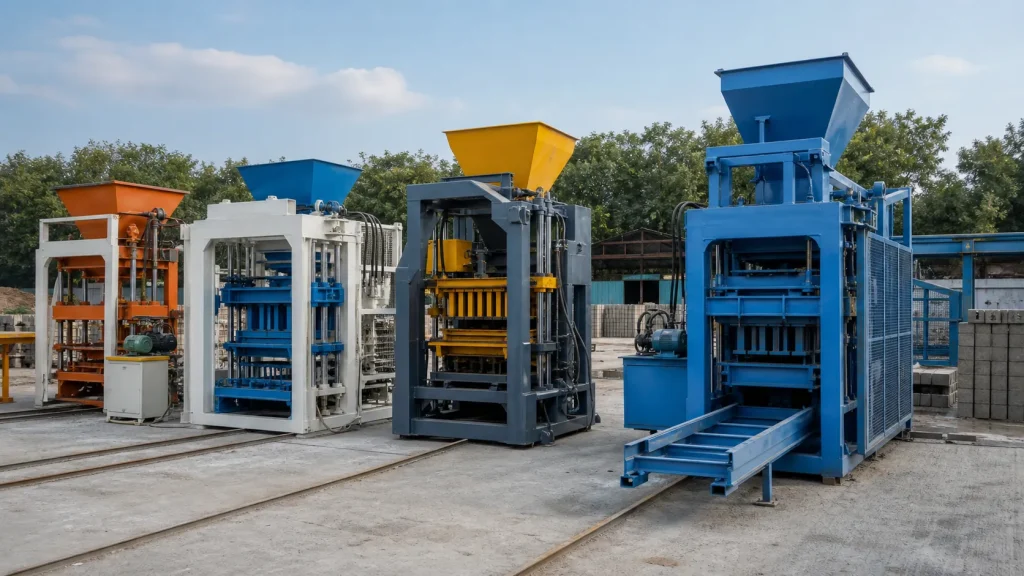
Understanding equipment pricing requires looking beyond the initial equipment quote. Total capital expenditure depends heavily on automation levels, local logistics across African markets, and ongoing operational utility costs.
Impact of Automation Level and Capacity on Price
The purchase price of a concrete block making machine directly correlates with its automation level and overall production capacity. Manual units fit tight entry budgets, while an automatic block maker requires a higher initial investment offset by significantly lower per-unit labor costs.
| Automation Level | Daily Output Capacity | Estimated Price Range (USD) | Best Suited For |
|---|---|---|---|
| Manual / Mobile | 1,000 – 3,000 blocks | $2,500 – $8,000 | Small local projects & startups |
| Semi-Automatic | 4,000 – 8,000 blocks | $9,000 – $25,000 | Expanding block yards |
| Fully Automatic | 10,000 – 20,000+ blocks | $30,000 – $120,000+ | Commercial infrastructure suppliers |
To see local price variations and regional breakdown examples, check out our guide on the block making machine price in Kenya.
Shipping, Import Tariffs, and Local Setup Costs in Africa
Delivering machinery to site requires accounting for logistics overhead:
- Ocean Freight: Shipping standard 20ft or 40ft containers to main ports such as Lagos, Mombasa, Tema, or Durban.
- Import Tariffs & Customs: Local clearance fees, import duties, and VAT rates vary based on regional trade blocs (ECOWAS, EAC, SADC).
- Civil Work & Installation: Concrete foundation preparation, electrical wiring setup, and curing yard construction.
Maintenance and Operational Power Requirements
Long-term profitability depends on selecting equipment that matches local utility realities:
- Power Sources: Grid power in many regions can fluctuate. We configure our machines with heavy-duty 3-phase motors compatible with industrial diesel generator backups.
- Wear-and-Tear Parts: Molds, tamper heads, and hydraulic seals require regular inspection to sustain block quality.
- Material Optimization: Utilizing a specialized interlock brick making machine can cut overall material expenditure by optimizing raw cement ratios per block.
How to Select the Right Cement Block Machine Supplier
Choosing the right equipment partner dictates your project’s long-term profitability. Beyond initial machinery costs, evaluating supplier reliability, build quality, and ongoing support ensures uninterrupted hollow block production. Read our practical guide to choosing a block making machine to align your equipment purchase directly with operational goals.
Evaluating Equipment Durability and Local Power Compatibility
- Heavy-Duty Construction: Ensure the machine frame uses high-strength manganese steel with stress-relieved welding to handle high-frequency vibration and constant heavy loads.
- Power Source Flexibility: Opt for dual diesel-electric configurations or industrial diesel engines if operating in areas with unstable electrical grids.
- Voltage Compatibility: Verify three-phase motor specs match regional power standards (typically 380V–415V, 50Hz) to prevent motor burnouts and voltage issues.
Verifying Supplier After-Sales Service and Spare Parts Availability
- Spare Parts Stock: Confirm the manufacturer maintains active inventories of wear-and-tear parts, including hydraulic seals, switches, vibration motors, and custom molds.
- Technical Support: Choose suppliers providing clear installation manuals, remote video troubleshooting, and site setup assistance.
- Warranty Terms: Secure written warranty coverage for core hydraulic systems and structural frames to protect your capital investment.
Matching Production Capacity with Local Market Demand
Select machine capacity based on current order volume and realistic growth projections rather than over-purchasing equipment.
| Operation Scale | Target Daily Output | Recommended Machine Type | Primary Target Market |
|---|---|---|---|
| Startup / Micro | 500 – 2,000 blocks/day | Manual or Mobile Egg-Laying Machine | Small rural builds, direct retail |
| Commercial | 3,000 – 6,000 blocks/day | Semi-Automatic Hydraulic Machine | Residential developments, contractors |
| Industrial | 8,000 – 15,000+ blocks/day | Fully Automatic Production Line | Commercial projects, civil infrastructure |
Evaluating local construction activity helps keep overhead low while meeting buyer deadlines. Review our guide on how to start a block machine business successfully to accurately calculate target production capacity before finalizing your machinery selection.