
What is an Interlocking Brick Making Machine?
Definition and Overview
We specialize in manufacturing high-performance interlock brick making machines designed for modern, eco-friendly construction. An interlocking brick making machine is heavy-duty concrete block equipment engineered to produce high-density mortarless bricks, compressed earth blocks, and soil cement blocks.
By applying heavy hydraulic pressure, these machines compress raw materials—such as soil, cement, sand, or fly ash—into precise self-locking shapes. The resulting bricks lock into each other seamlessly, drastically reducing construction time and eliminating the need for traditional mortar layer-by-layer.
Key Components and Technical Specifications
Our machinery integrates robust structural design with intelligent automation to maximize production capacity and minimize downtime.
- Hydraulic Power Unit: Delivers stable, high-tonnage compression for maximum block density and structural integrity.
- Precision Alloy Molds: Heat-treated, wear-resistant steel molds crafted to ensure exact block dimensions.
- Intelligent PLC Control: Automated interface providing seamless control over feeding, pressing, and demolding cycles.
- Material Feeding System: Ensures uniform distribution of raw materials into the mold matrix for zero-defect output.
| Specification Parameter | Standard Range / Capability |
|---|---|
| Forming Pressure | 10 – 25 MPa (Hydraulic Press) |
| Cycle Time | 15 – 25 seconds per mold |
| Raw Material Compatibility | Soil-cement, Sand-cement, Fly ash, Crushed stone |
| Automation Level | Fully Automatic / Semi-Automatic / Manual |
| Primary Output | Interlocking wall blocks, paving blocks, hollow bricks |
Key Features and Advantages of Interlocking Brick Machines
Investing in a modern interlock brick making machine transforms block manufacturing. We specialize in manufacturing interlock brick making machine systems engineered for high productivity, precise dimensions, and maximum durability across diverse construction sites worldwide.
High Production Efficiency and Output
Modern machinery maximizes daily output while keeping operating costs low. High-frequency vibration combined with heavy-duty pressure ensures fast cycle times, turning raw materials into finished units within seconds.
| Machine Type | Daily Output (8 Hours) | Best Suited For |
|---|---|---|
| Manual Brick Press | 1,000 – 2,000 blocks | Small local projects & startups |
| Semi Automatic Block Maker | 3,000 – 6,000 blocks | Medium-scale commercial sites |
| Fully Automatic Block Machine | 8,000 – 15,000+ blocks | Industrial large-scale production |
Upgrading to automated equipment significantly boosts total production capacity compared to manual labor. You can review our detailed breakdown on handmade vs machine-made bricks in modern construction to see how machine precision accelerates project delivery.
Cost-Effective and Eco-Friendly Brick Production
Interlocking blocks cut construction expenses by reducing mortar consumption by up to 80%. These mortarless bricks also support sustainable building practices by utilizing widely available, eco-friendly raw materials.
- Versatile Raw Material Usage: Easily processes fly ash bricks, soil cement block mixes, quarry dust, river sand, and compressed earth blocks.
- Lower Operational Costs: Reduced cement consumption and rapid on-site assembly lower labor costs significantly.
- Minimal Material Waste: Precise molding systems eliminate scrap during the compaction process.
High Block Precision and Superior Structural Strength
Advanced hydraulic pressure systems compact materials evenly, producing high-density blocks with exceptional load-bearing strength. Exact dimensional accuracy guarantees seamless tongue-and-groove alignment during wall construction.
To maximize structural performance, modern concrete block equipment delivers consistent density throughout every block, protecting finished structures against moisture penetration, cracking, and severe weather.
Types of Interlocking Brick Making Machines
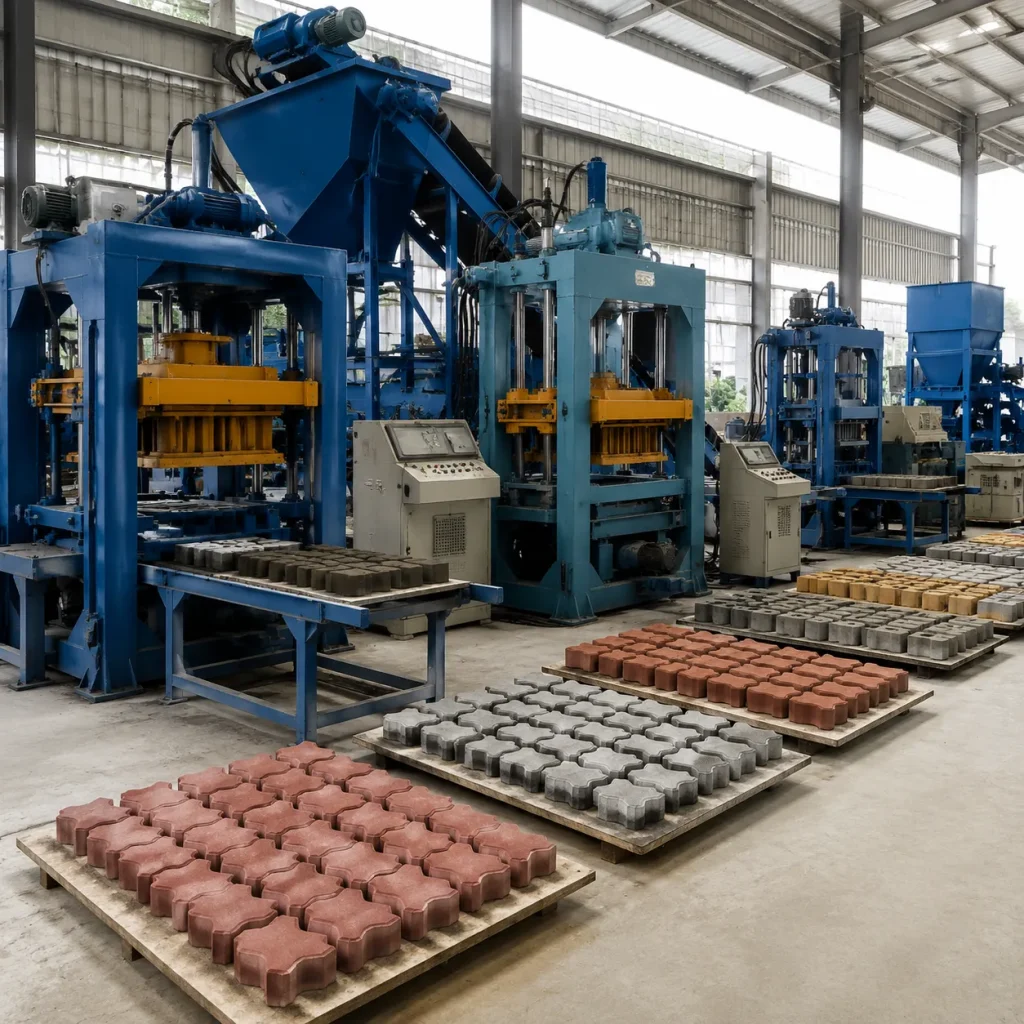
We manufacture a versatile range of interlock brick making machines designed to meet different production capacities, budgets, and job site requirements.
Fully Automatic Interlocking Brick Machine
Our fully automatic block machines deliver maximum productivity with minimal labor overhead. Controlled by advanced PLC systems, these units handle auto-batching, feeding, high-pressure molding, and automatic stacking seamlessly.
- Maximum Output: Continuous high-speed production cycles for commercial operations.
- Precision Control: Smart sensors ensure uniform block height and extreme dimensional accuracy.
- Featured Equipment: For high-capacity needs, our automatic cement brick making machine and robust automatic brick making machine set the industry benchmark for long-term reliability.
Semi-Automatic Interlocking Brick Machine
A semi automatic block maker offers the ideal balance between low initial investment and reliable output. Operators manage material feeding or pallet handling while the machine handles hydraulic compression.
- Cost-Effective: Lowers entry costs while maintaining impressive daily block yields.
- Simple Maintenance: Fewer electronic components make troubleshooting and servicing fast and simple.
- Ideal For: Growing businesses and mid-sized construction projects.
Manual Interlocking Brick Machine
For startups, rural projects, or sites without reliable electrical grids, a manual brick press provides an accessible solution. These units rely on mechanical leverage or simple power packs to produce high-quality interlocking blocks.
- Highly Portable: Easy to move directly to work sites, reducing raw material transport costs.
- Low Energy Overhead: Operates with minimal power or manual force.
- Ideal For: Small-scale producers, DIY construction, and remote infrastructure setups.
Hydraulic Interlocking Block Machine
Hydraulic compression is essential for producing high-strength compressed earth blocks, fly ash bricks, and soil cement blocks. Our hydraulic pressure systems deliver high tonnage to compact material tightly without heavy cement reliance.
| Feature | Specifications & Benefits |
|---|---|
| Pressure System | High-tonnage hydraulic force ensures superior block density and load capacity. |
| Product Output | Perfect for manufacturing precision mortarless bricks with exact locking joints. |
| Material Flexibility | Efficiently processes quarry dust, river sand, clay, soil, and fly ash mixtures. |
How Does an Interlocking Brick Machine Work?
Operating an interlock brick making machine is a streamlined process designed to yield high-strength building units with maximum efficiency. By skipping the traditional clay-firing process, our concrete block equipment converts raw aggregates into precise, durable blocks through three primary steps.
Raw Material Preparation and Mixing
High-performance block production starts with a balanced aggregate batch. Depending on local availability and project requirements, you can produce soil cement blocks, compressed earth blocks, or fly ash bricks.
- Material Proportioning: Mix screened soil, crushed stone, or fly ash with cement (usually 8% to 10% by volume) and water.
- Homogeneous Blending: A specialized pan mixer thoroughly combines the dry materials and moisture to prevent air pockets and ensure uniform density.
Whether operating a full production plant or a small-scale block making machine, keeping moisture levels consistent across every batch is critical for uniform compressive strength.
Hydraulic Compression and Molding Process
Once mixed, the raw material feeds directly into the mold cavity to undergo intense mechanical shaping.
- High Hydraulic Force: Powerful hydraulic pressure compresses the mixture inside the heavy-duty mold, driving out trapped air and bonding the aggregate tight.
- Precision Shaping: Custom molds form exact tongue-and-groove profiles, creating high-precision mortarless bricks that lock together seamlessly on the construction site.
Understanding how heavy-duty pressing drives product quality is a key step when deciding how to choose a block making machine for your local market requirements.
Demolding, Stacking, and Curing
The final stage transforms freshly compressed units into construction-ready building blocks.
- Ejection & Demolding: The machine gently pushes the green blocks out of the mold cavity without damaging their clean edges or interlocking keys.
- Stacking: Operators or automated stacking systems transfer the green blocks on pallets to designated curing zones.
- Water Curing: Freshly pressed units undergo a hydration curing process lasting 7 to 14 days. Keeping the blocks shaded and regularly sprayed with water allows the cement to hydrate fully and reach peak structural strength.
Applications of Interlocking Bricks and Blocks
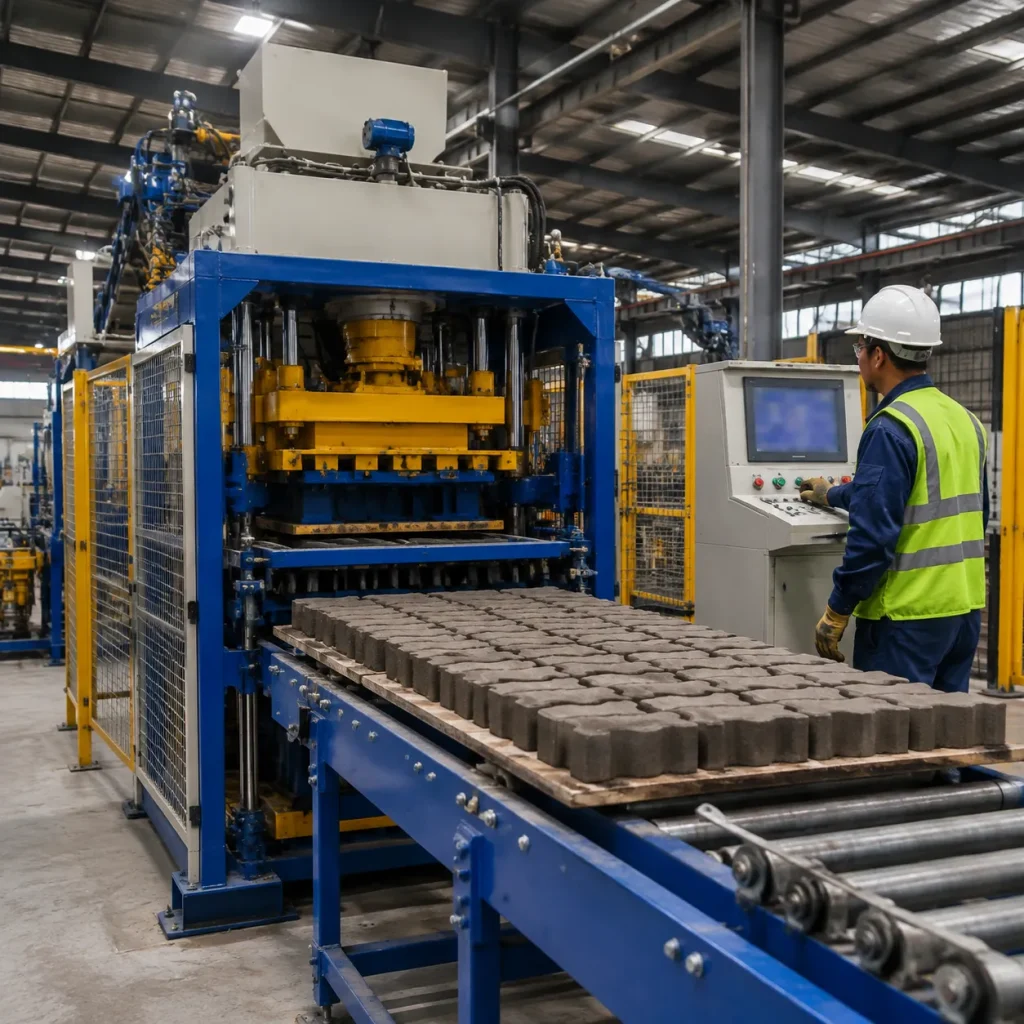
Interlocking blocks produced by our advanced interlock brick making machine offer versatile structural solutions across multiple construction sectors. By removing or drastically reducing the need for traditional mortar, these high-density blocks accelerate project timelines while delivering outstanding load-bearing strength.
Residential and Commercial Building Construction
From single-family modern homes to multi-story commercial offices, interlocking blocks provide a strong and efficient foundation:
- Rapid Wall Construction: High-precision mortarless bricks lock together effortlessly, cutting labor costs and shortening overall build times.
- Eco-Friendly Building: Utilizing compressed earth blocks and soil cement block formulations delivers exceptional thermal insulation, keeping indoor environments comfortable year-round.
- Sustainable Masonry: Developers rely on fly ash bricks and dense concrete units to minimize raw material waste without compromising safety or structural integrity.
Paving and Landscaping Projects
Interlocking pavers and blocks excel in outdoor applications where long-term durability and aesthetic appeal are essential:
- Heavy-Duty Surfaces: Precision-molded pavers easily withstand continuous vehicular traffic, making them ideal for driveways, parking lots, and industrial yards.
- Urban Landscaping: Interlocking units form clean, attractive borders for garden beds, pedestrian walkways, public plazas, and commercial walkways.
- Water Management: Specialized interlocking designs promote natural drainage, reducing surface runoff and standing water during heavy rains.
Retaining Walls and Infrastructure Construction
In heavy-duty civil engineering projects, the exact tolerances achieved by our concrete block equipment ensure reliable earth retention and long-term stability:
- Erosion Control: Interlocking retaining wall blocks secure steep slopes, embankments, and terraced landscapes without relying on wet mortar joints.
- Public Works: Contractors deploy these heavy-duty units for culverts, flood barriers, and secure perimeter fencing.
- Global Infrastructure: Demand for cost-effective building technology continues to climb globally; contractors evaluating regional expansions often consult our complete breakdown of the block making machine price in Kenya to gauge equipment ROI for community infrastructure projects.
Interlocking Brick Machine Price and Buying Guide
Investing in an interlock brick making machine is a strategic decision that directly impacts your operational profitability and output quality. Understanding market prices and machine specifications helps you choose equipment tailored precisely to your project requirements and budget.
Factors Affecting Interlock Brick Machine Price
Several key technical factors determine the overall cost of an interlocking brick machine:
- Automation Level: Fully automatic systems cost more upfront due to advanced PLC control panels and automated material handling, whereas a manual brick press offers the lowest barrier to entry.
- Hydraulic Pressure Rating: Machines with higher hydraulic pressure deliver greater compaction force, producing dense, high-strength mortarless bricks, but require heavier hydraulic stations.
- Production Capacity: Higher hourly output demands larger motors, reinforced steel framing, and multi-cavity molds, which increase manufacturing costs.
- Mold Quality and Versatility: Precision-machined, heat-treated alloy molds add value by extending lifespan and supporting custom block geometries.
When comparing equipment options, evaluating long-term return on investment across our heavy-duty concrete block machines ensures you get maximum durability for your capital investment.
Choosing the Right Production Capacity and Automation Level
Matching your machinery to local market demand and labor costs prevents over-investing or bottlenecks in production:
| Automation Level | Target Daily Output | Best Suited For | Core Benefit |
|---|---|---|---|
| Manual | 1,000 – 3,000 blocks | Community builds, initial startups | Very low initial capital outlay |
| Semi-Automatic | 3,000 – 8,000 blocks | Growing regional brickyards | Ideal balance of speed and cost |
| Fully Automatic | 8,000 – 20,000+ blocks | Large-scale commercial suppliers | Maximum production capacity, minimal labor |
For producers looking to step up efficiency without full automation costs, a flexible semi-automatic block machine provides an excellent yield-to-investment ratio.
Key Factors to Consider Before Purchasing
Before placing your order, run through this practical checklist:
- Raw Material Compatibility: Verify that the machine handles your specific aggregate mix, whether you plan to produce soil cement blocks, compressed earth blocks, or fly ash bricks.
- Power and Electrical Setup: Check local grid voltage and phase specifications to match the hydraulic motor and vibration systems.
- Frame Build & Wear Parts: Ensure the core structural frame uses thick steel channels and that wear parts are easy to replace.
- Manufacturer Support: Confirm access to spare parts, technical guidance, and reliable after-sales service to keep downtime to a minimum.