
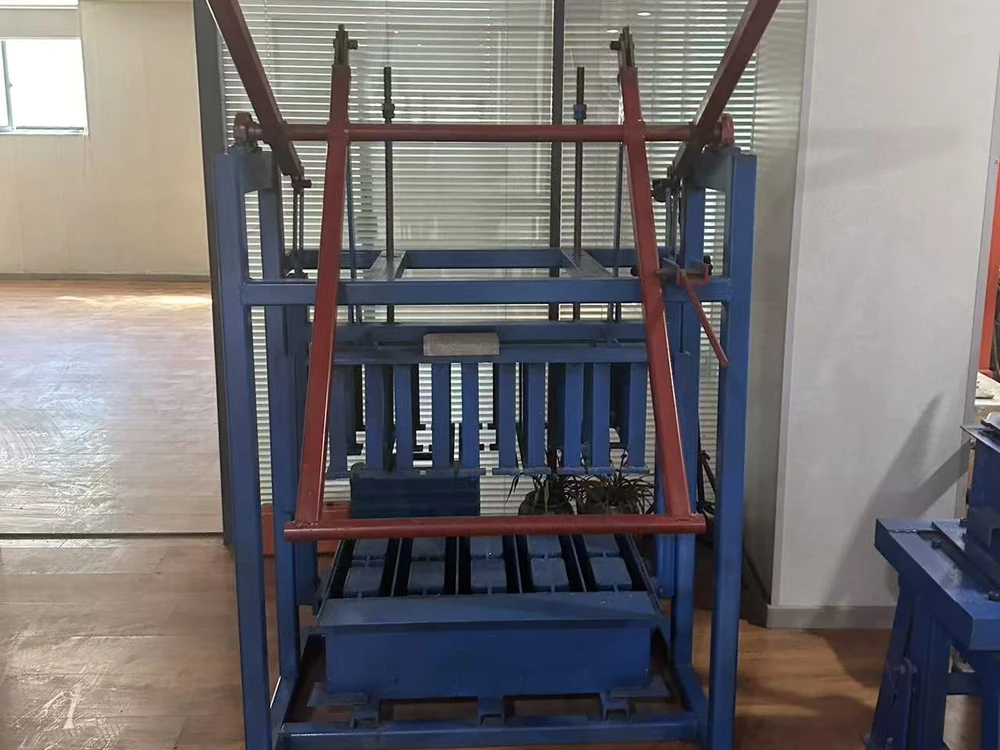
What Is a Hand Brick Making Machine?
A hand brick making machine is a manually operated mechanical press designed to manufacture uniform building blocks, bricks, and pavers without relying on an external electrical grid or fossil fuels. Engineered around simplicity and high mechanical advantage, these units convert manual downward force into concentrated compaction pressure inside a heavy-duty steel mould cavity.
They serve as the standard production equipment for small-scale manufacturers, rural construction ventures, and remote infrastructure projects where low capital investment and complete operational independence are required.
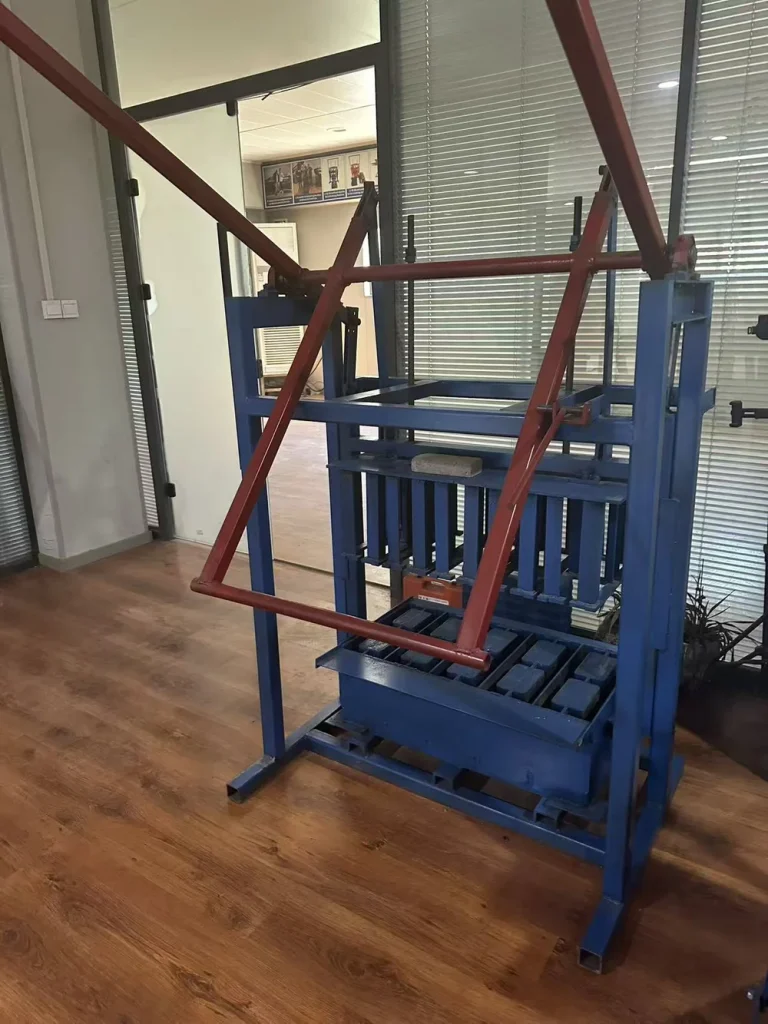
Working Principle of Manual Brick Machines
Manual brick machines rely on basic physics—primarily leverage, toggle linkages, and mechanical compression—to compress raw batch materials into solid masonry units:
- Material Loading: The operator feeds a prepared, semi-dry aggregate mixture directly into the open mould cavity until flush.
- Compression Stroke: The operator pulls a long, counterweighted mechanical lever arm. This lever activates a downward ram plate, delivering mechanical force directly onto the mixture to expel trapped air and compact the material.
- Demoulding & Ejection: Once compressed, the lever mechanism or an integrated foot pedal engages the lower ejection plate, raising the green brick smoothly out of the mould for curing and stacking.
Key Advantages of Hand-Operated Brick Makers
Investing in manual press equipment delivers direct operational and financial benefits for entry-level and remote commercial brick production:
- Zero Utility Dependency: 100% mechanical operation requires no three-phase power connections, hydraulic fluid systems, or diesel fuel supplies.
- Ultra-Low CapEx: Exceptional return on investment with minimal startup capital compared to automated hydraulic plants.
- Streamlined Maintenance: Built with structural steel plates, mechanical pivots, and standard grease points—eliminating costly electrical diagnostic repairs.
- On-Site Versatility: Compact dimensions allow quick transport and rapid redeployment directly at building sites or raw material excavation pits, reducing finished-block logistics costs.
Compatible Raw Materials: Clay, Cement, and Soil
Hand brick machines process a broad range of locally available aggregates and binders. Achieving target compressive strength depends on selecting the right raw material mix:
| Raw Material Blend | Common Proportions | Typical Application |
|---|---|---|
| Soil + Cement | 90%–95% Subsoil / 5%–10% Portland Cement | Interlocking compressed earth blocks (CEB) |
| Fly Ash + Sand + Cement | 50%–60% Fly Ash / 30% Sand / 10% Cement | Standard lightweight solid bricks |
| Crushed Stone Dust + Cement | 85%–90% Quarry Dust / 10%–15% Cement | High-density solid blocks and standard pavers |
| Clay + Sand | 70%–80% Clay / 20%–30% Sand | Traditional green bricks intended for kiln firing |
Main Types of Hand Brick Making Machines
Choosing the right equipment depends directly on the site location, material choices, and target output. When assessing handmade vs. machine-made bricks in modern construction, manual systems offer distinct mechanical configurations built for specific job requirements.
Manual Lever and Mechanical Press Brick Machines
These are the workhorses of off-grid production. A standard manual brick press relies on pure mechanical advantage, using a long leverage arm to compress the mix without any electrical power.
- Mechanism: Direct compound leverage, toggles, or mechanical gears.
- Best For: Standard solid bricks, pavers, and small-scale foundation units.
- Key Benefits: Zero fuel or power costs, simple welded frames, and minimal breakdown risks.
Hand-Operated Interlocking Block Machines
This setup focuses on precision soil-cement blocks that fit together without thick mortar layers.
- Mechanism: Dual-linkage compression levers paired with shaped male-female mold inserts.
- Best For: Compressed earth blocks (CEB) and interlocking paving stones.
- Key Benefits: Produces uniform edges for faster wall assembly, cutting site mortar use significantly.
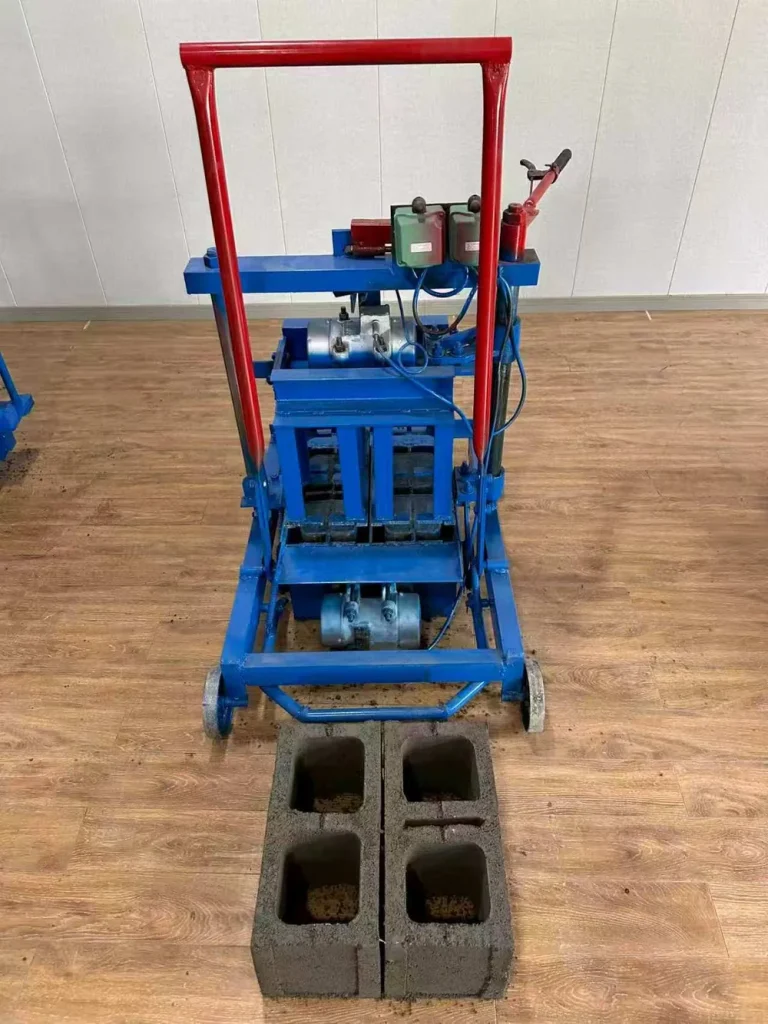
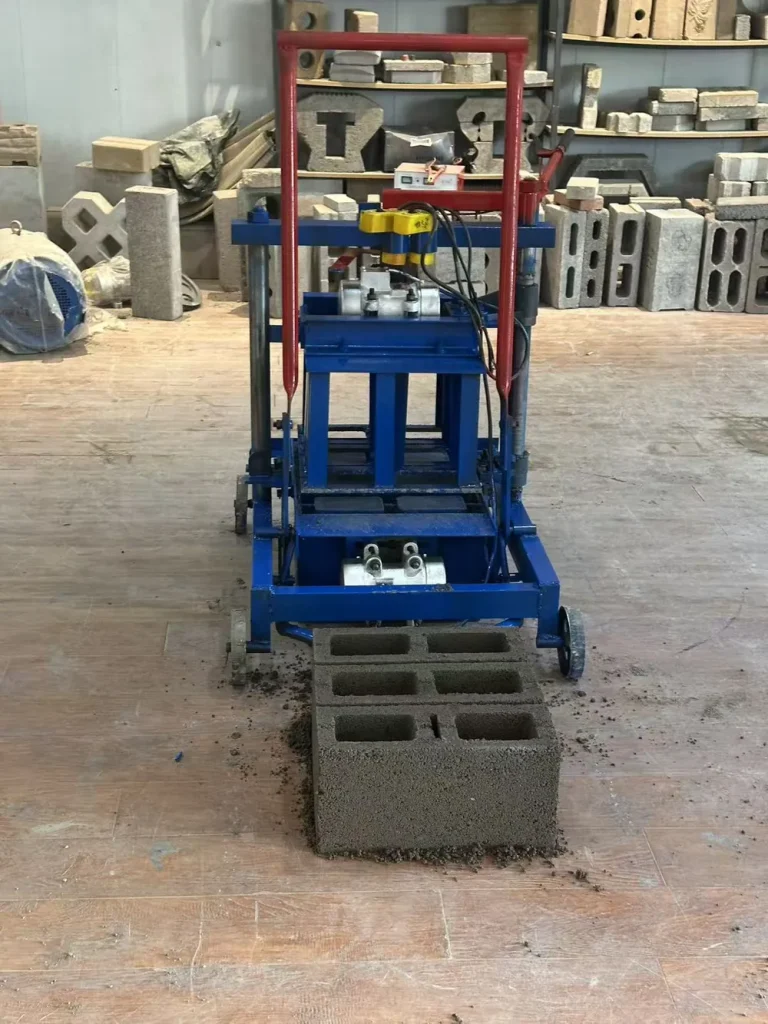
Mobile Egg-Laying Hand Brick Machines
Instead of remaining fixed on a table or stand, these compact machines drop blocks directly onto a concrete slab and move forward down the line.
- Mechanism: Hand-pulled release lever paired with an eccentric mechanical drop system.
- Best For: Hollow concrete blocks and solid units produced on flat outdoor yards.
- Key Benefits: Eliminates the need for wooden carrying pallets, reducing overhead for basic yard operations.
Semi-Manual Hydraulic Brick Making Machines
For teams seeking higher compaction pressure than manual leverage alone can supply, a hybrid setup delivers consistent density while maintaining simple operations. Reviewing our concrete block machines types, operation and ROI guide highlights how small-footprint mechanical systems bridge this gap.
- Mechanism: Hand-pumped or entry-level auxiliary hydraulic cylinders coupled with manual mold opening.
- Best For: High-density structural units requiring verified load-bearing ratings.
- Key Benefits: Drastically cuts operator fatigue while standardizing block density across long shifts.
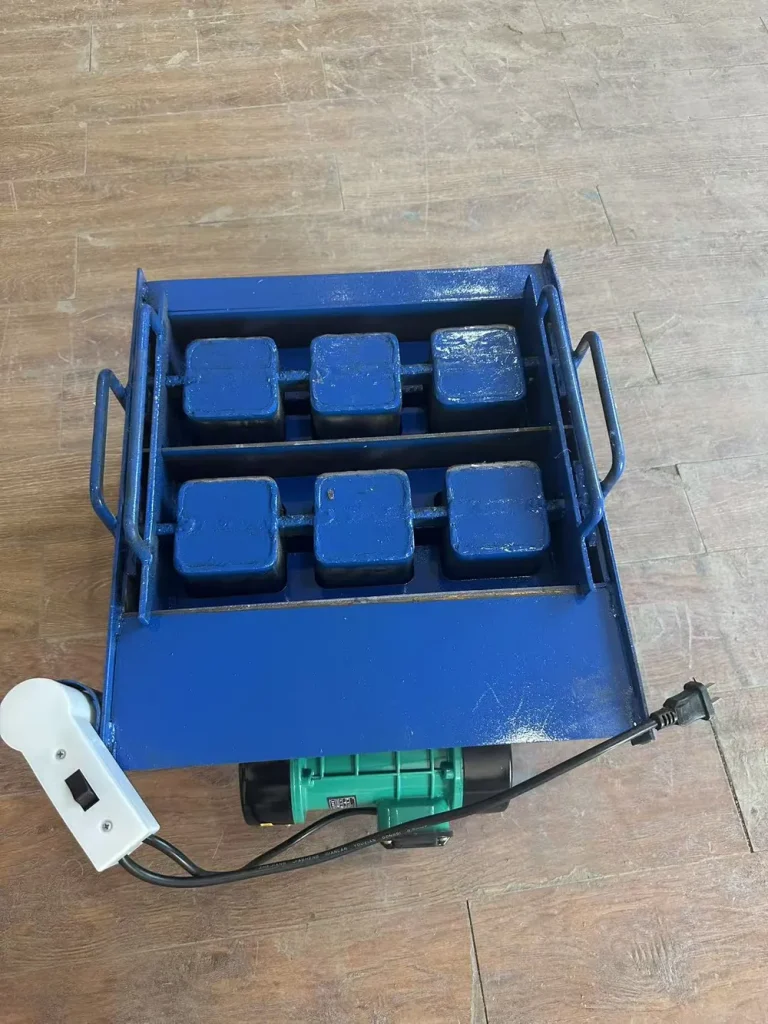
Hand Brick Making Machine Output and Capacity Guide
Understanding the daily throughput of a manual block press helps you plan labor, project timelines, and raw material deliveries effectively. Because these units rely entirely on human effort and mechanical linkages rather than automated hydraulics, real-world output depends heavily on workstation layout and crew consistency.
Average Hourly and Daily Production Capacity
Output varies based on whether your press molds one unit or multiple units per stroke. The table below outlines standard benchmarks for an 8-hour shift under normal operating conditions:
| Machine Configuration | Cycle Time per Stroke | Units per Stroke | Average Hourly Output | Daily Output (8-Hour Shift) | Recommended Crew Size |
|---|---|---|---|---|---|
| Single-Mould Manual Lever Press | 45–60 seconds | 1 unit | 50–70 blocks | 400–550 blocks | 2 operators |
| Dual-Mould / Multi-Cavity Press | 60–80 seconds | 2–3 units | 90–130 blocks | 700–1,000 blocks | 3 operators |
| Foot-Assisted Ejection Press | 40–55 seconds | 1–2 units | 60–90 blocks | 500–700 blocks | 2–3 operators |
If you run specialized tooling, such as an interlock brick making machine, your cycle times remain roughly the same, but you save downstream time because the interlocking profiles eliminate the need for thick mortar joints during construction.
Factors Influencing Manual Brick Output
Several operating variables directly dictate whether your crew hits the upper or lower limits of these benchmarks:
- Operator Fatigue and Rotation: Pulling a mechanical compaction lever requires sustained physical effort. Output drops noticeably in the second half of a shift if workers do not rotate tasks.
- Material Preparation Speed: Mixing the aggregate, cement, and moisture by hand often creates a bottleneck. The press frequently sits idle waiting for the next batch of raw mix.
- Mix Moisture and Consistency: Achieving the right ratio is vital. Using guidelines from our cement brick making machine raw materials guide ensures the soil or concrete blend compacts immediately without sticking to the mold liner plates.
- Demolding and Pallet Handling: If finished blocks must be carried long distances to the curing yard, the press operator must wait for the carrier to return before initiating the next compression stroke.
Tips to Maximize Daily Brick Production Efficiency
To reach the maximum daily output capacity on a manual press, streamline your yard setup using these production habits:
- Establish a 3-Person Team System: Assign one worker exclusively to batching and mixing, one to loading and pulling the lever arm, and one to demolding and stacking.
- Implement Structured Task Rotation: Rotate worker positions every two hours. This balances the physical load, prevents exhaustion, and keeps the machine cycling at a steady pace.
- Stage Raw Materials Near the Hopper: Keep your soil, sand, cement, and water source within two meters of the feeding area to eliminate unnecessary transport steps.
- Keep Mold Walls Cleaned and Oiled: Apply a light coat of used engine oil or diesel release agent to the mold cavity every 50 to 70 cycles. Clean release surfaces speed up ejection and prevent edge chipping.
Hand Brick Making Machine Price Guide (2026)
Investing in a hand brick making machine remains the most cost-effective path for starting a commercial brickyard or tackling decentralized building projects. Because manual units do not rely on three-phase electric grids or hydraulic power packs, their upfront capital requirement is a fraction of automated production lines. We track equipment costs closely to give buyers clear, realistic budgeting benchmarks for 2026.
Estimated Price Ranges for Manual Brick Machines
Manual brick machine pricing depends on build strength, lever design, and the number of blocks compressed per stroke. You can cross-reference these budget tiers against our comprehensive small-scale block making machine guide and price breakdown to evaluate standard vs. enhanced configurations:
- Single-Mould Manual Lever Press: Entry-level mechanical presses designed for standard clay-cement or compressed earth blocks. Ideal for personal builds and micro-enterprises with basic volume demands.
- Dual-Mould / Multi-Cavity Hand Block Machine: Mid-tier mechanical units equipped with reinforced linkage systems that press two to four units per cycle, offering a higher daily output capacity.
- Heavy-Duty Mechanical Foot-Ejection Press: Premium manual setups featuring foot-pedal demoulding assists, hardened wear plates, and heavy tubular frames for continuous jobsite production.
Key Factors Influencing Machine Cost
When you compare seemingly identical manual presses, price variations usually come down to structural engineering and material choices:
- Steel Plate Thickness: Cheap frames flex under high lever pressure. Quality units use heavy-gauge structural steel that withstands repeated mechanical stress without bending.
- Mould Hardening and Machining: Mould boxes lined with heat-treated, wear-resistant steel cost more upfront but last exponentially longer against abrasive aggregate mixtures.
- Linkage and Pivot Bearings: Upgraded pivot bushings and solid-steel lever arms reduce operator fatigue and minimize joint wear over hundreds of thousands of cycles.
- Mould Versatility: Units with interchangeable liner plates for solid pavers, interlocking bricks, and hollow blocks require precision tooling, slightly raising initial equipment costs.
Hidden and Additional Costs: Molds, Shipping, and Maintenance
Purchasing the machine itself is only part of the capital outlay. To calculate your true landing cost and operational budget, account for these critical variables, also highlighted in our concrete block machine price guide, features, and costs analysis:
- Extra Mould Cavities: If you plan to produce both interlocking pavers and standard hollow blocks, budget for additional mould assemblies and tamper plates.
- Freight and Crating: Heavy steel structures require secure crating to prevent frame distortion during international shipping, sea transit, and local offloading.
- Import Duties and Local Taxes: Cross-border shipments carry tariff codes, port handling fees, and customs clearance charges that vary by destination country.
- Maintenance Footprint: Manual units have zero electrical components or hydraulic fluids to replace. Ongoing costs remain low, limited mainly to regular grease lubrication, replacement pivot pins, and eventual mould liner swaps.
Key Factors to Consider When Buying a Hand Brick Machine
Selecting the right hand brick making machine directly impacts your daily output, unit production costs, and machine lifespan. I evaluate four core criteria before procuring or recommending manual block production equipment.
| Selection Factor | Priority Benchmark | Impact on Operation |
|---|---|---|
| Frame & Steel Gauge | Heavy structural steel with reinforced joints | Prevents frame warping under high lever torque |
| Mould Hardening | Wear-resistant steel liners | Extends mould life against abrasive aggregate wear |
| Mechanism Design | High mechanical leverage ratio | Minimizes operator fatigue across full work shifts |
| Mould Flexibility | Interchangeable or modular mould boxes | Allows product diversification with one machine base |
Production Requirements and Project Scope
Your target production volume must dictate the machine configuration you select:
- Small-Scale / Rural Self-Build: A single-mould manual lever press suits low daily targets, requiring only one or two operators to manage batching, pressing, and curing.
- Commercial Startups: Multi-cavity manual units produce multiple standard bricks or pavers per stroke. This setup maximizes labor output, though it requires an organized three-person team to keep pace with raw material mixing and block handling.
- Project Timelines: Calculate realistic capacity based on operator stamina rather than mechanical speed alone. Manual presses yield best results when planned around steady, rotation-based work shifts.
Build Quality, Steel Thickness, and Durability
Manual compression puts intense repetitive stress on mechanical linkages, pivot joints, and mould walls.
- Structural Integrity: Choose frames built from thick channel steel. Lightweight sheet metal bends under continuous lever pressure, causing off-center compression.
- Wear-Resistant Moulds: Abrasive sand, cement, and crushed stone quickly wear down untreated metal. I look for high-strength, wear-resistant steel mould liners to preserve crisp block corners and prevent dimensional distortion over thousands of cycles.
- Reinforced Linkages: Pivot pins, bushings, and lever linkages take the brunt of manual compaction force. Robust welds and greasable pivot points prevent premature mechanical failure.
Mold Versatility and Brick Shape Customization
A versatile hand brick machine allows your operation to adapt as market demand changes:
- Interchangeable vs. Fixed Moulds: Fixed moulds offer rigid, foolproof alignment for dedicated production. Interchangeable systems let you swap between standard solid bricks, hollow concrete blocks, and interlocking soil-cement blocks on a single chassis.
- Dimensional Consistency: Accurate mould dimensions ensure uniform compaction density, clean edges, and interlocking tolerances that fit together seamlessly on-site.
- Demoulding Mechanism: Ensure the release lever or foot pedal operates smoothly without chipping wet block corners during ejection.
Manufacturer Reputation and After-Sales Support
A machine is only as dependable as the factory standing behind it. When sourcing equipment, verify that the supplier uses certified engineering standards and provides readily available replacement wear parts like pins, springs, and mould liners.
If you are sourcing internationally, reviewing a detailed block machine import guide helps clarify crating, freight handling, and export documentation, ensuring your hand brick press arrives intact, on schedule, and ready for immediate field commissioning.
Operation and Maintenance Guide for Hand Brick Machines
A hand brick making machine relies on basic mechanical advantage rather than complex electronics. While this design minimizes operational downtime, maintaining uniform product quality and machine longevity still requires disciplined mixing, clean mould upkeep, and regular mechanical servicing.
Optimal Raw Material Mixing and Curing Methods
The strength of a block pressed in a manual brick press depends heavily on moisture balance and proper curing.
- The Squeeze Test for Moisture: Hand-operated presses work best with semi-dry mixes. Take a handful of mixed aggregate and squeeze it firmly. It should form a solid ball without leaving wet residue on your palms. If the ball shatters when dropped from waist height, the mix is too dry; if it sticks to the mould walls, the mix contains excess water.
- Uniform Blend Ratios: Whether working with a soil-cement mix for an interlocking block machine or sand-cement for standard pavers, dry-mix the components thoroughly before introducing water to prevent weak spots.
- Controlled Curing: Freshly pressed units must never dry in direct sunlight or heavy wind. Stack them on a flat, shaded surface, cover them with plastic sheeting, and spray them lightly with water twice daily for at least 7 to 14 days to achieve maximum compressive strength.
Routine Cleaning and Lubrication Checklist
Keeping your manual equipment clean prevents premature mechanical wear and keeps cycle times fast. Teams planning to scale production often benchmark these upkeep demands against larger units in our breakdown of the best cement block machines rated by output and price.
- Pre-Shift Prep: Coat the inner mould walls with a thin layer of waste oil, diesel mix, or commercial release agent to prevent aggregate adhesion.
- Mid-Day Inspection: Clear stray aggregate from linkage points and sliding tracks to ensure the lever strokes remain smooth.
- Post-Shift Washdown: Scrape and wash out all leftover wet concrete or soil from the mould box and tamper plate before it hardens.
- Daily Greasing: Apply heavy-duty chassis grease to all lever pivot pins, bearings, and foot-pedal linkages.
Troubleshooting Common Manual Press Issues
| Problem | Probable Cause | Corrective Action |
|---|---|---|
| Blocks crumble or crack during ejection | Mix is too dry, or aggregate lacks fine binding particles. | Increase water fraction slightly; adjust sand/clay proportion. |
| Brick faces stick to the mould | Excessive mix moisture or insufficient mould release oil. | Reduce mixing water; reapply release agent to mould liners. |
| Uneven block height or density | Material is not distributed evenly in the mould cavity before pressing. | Level the raw mix manually across all corners prior to pulling the lever. |
| Excessive force required to pull lever | Pivot joints are dry, or aggregate has packed into mechanical joints. | Clean the mechanical linkages and apply grease to all friction points. |