
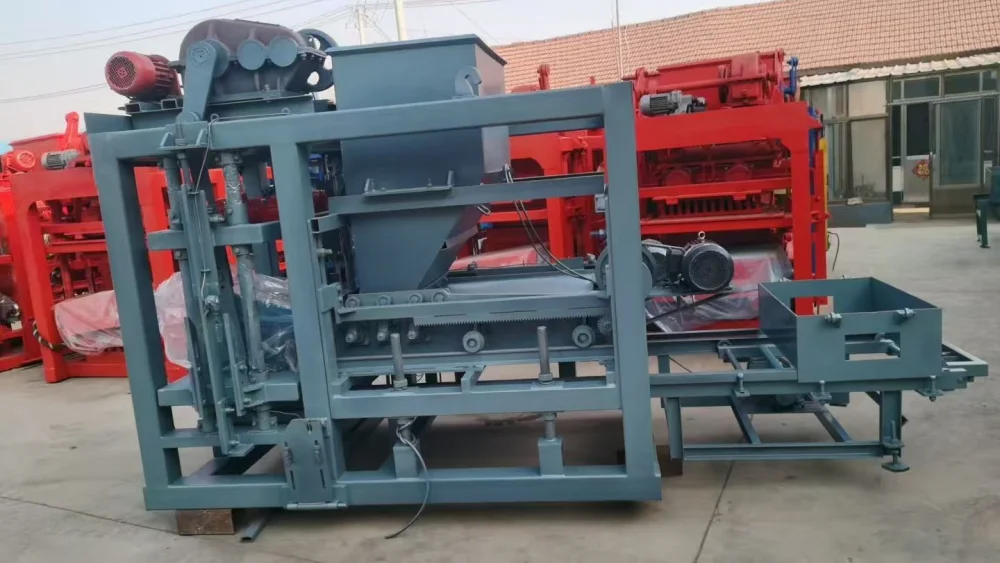
Understanding Maxi Bricks in the South African Construction Industry
The South African construction sector relies heavily on high-yield, cost-effective walling solutions. Investing in a dedicated maxi brick making machine allows builders and commercial block yards to satisfy this surging demand, reducing dependence on third-party suppliers while securing direct project savings.
What Is a Maxi Brick and Why Is It Popular in South Africa?
A maxi brick is an oversized building block engineered for high-speed masonry. With standard dimensions typically measuring 290mm x 140mm x 90mm, it provides significantly more volume than conventional stock bricks.
- Faster Wall Assembly: Requires fewer units per square meter, drastically shortening project timelines.
- Mortar Reduction: Fewer joints directly cut down on mortar consumption during bricklaying.
- Structural Strength: Engineered to deliver robust load-bearing capabilities for residential developments, boundary walls, and commercial warehouses.
Maxi Bricks vs. Standard Bricks: Cost and Efficiency Comparison
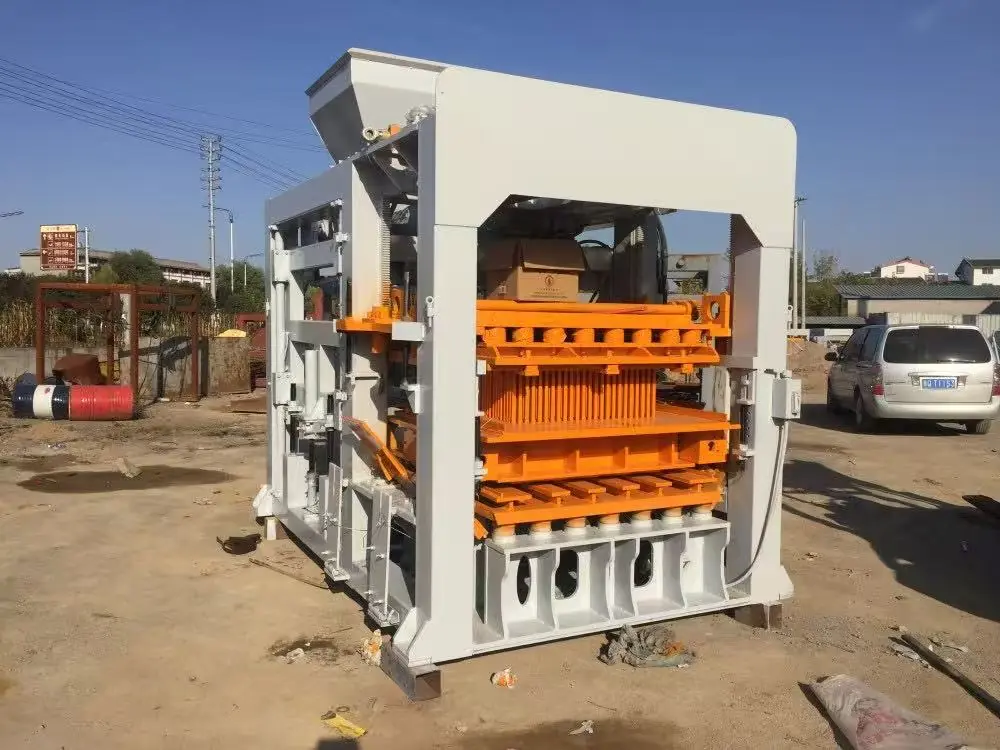
Using a concrete block machine configured with precise brick mould dimensions shifts project economics in favor of the builder.
| Feature | Standard Stock Brick | Maxi Brick |
|---|---|---|
| Typical Dimensions (L x W x H) | 222mm x 106mm x 73mm | 290mm x 140mm x 90mm |
| Units Required per m² | ~50 to 55 bricks | ~33 to 35 bricks |
| Mortar Consumption | High (more bed and perp joints) | Low (reduced joint surface area) |
| Laying Speed | Standard | Up to 30% to 40% faster |
| Structural Application | General masonry, facing | Structural load-bearing and single-skin walls |
By lowering unit-per-square-meter requirements, maxi bricks streamline both site logistics and labor overhead.
Compliance with SANS National Building Standards
Every unit produced must meet strict structural standards to pass municipal inspection and engineer sign-off in South Africa:
- SANS 10400 Standards: Mandates specific compressive strength thresholds (typically starting from 7 MPa to 14 MPa depending on single or multi-story load requirements).
- Compaction Density: Achieving regulatory compliance requires uniform compression, achievable only through calibrated hydraulic brick press systems or high-frequency mechanical vibration.
- Consistent Concrete Mixture: Proper ratios of cement, clean aggregates, and water guarantee that cured blocks resist cracking, moisture penetration, and structural failure.
Types of Maxi Brick Making Machines Available in South Africa
Selecting the right maxi brick making machine depends on your production targets, power availability, and starting capital. Across South African commercial yards and construction sites, machinery generally falls into four distinct categories.
Manual Maxi Brick Making Machines
Manual setups rely on hand-operated mechanical levers and foot pedals to compress the concrete mixture into the mould.
- Best For: Small building projects, rural developments, and startup entrepreneurs with limited startup capital.
- Operation: No electrical or diesel power is required. Operators fill the manual brick mould, tamp the mix manually, and release the bricks using a hand lever.
- Output: Low daily production rate, but maintenance costs remain virtually zero.
Semi-Automatic and Hydraulic Brick Machines
Semi-automatic units combine electric or diesel-driven vibration tables with a hydraulic brick press to compress the concrete under heavy pressure.
- Best For: Growing commercial block yards supplying local builders and hardware stores.
- Operation: Operators manually feed raw material into the hopper, while hydraulic controls manage mould compression and brick ejection onto pallets.
- Quality: The hydraulic compaction ensures that every maxi brick reaches uniform density and meets strict compressive strength requirements.
Fully Automatic Industrial Brick Plants
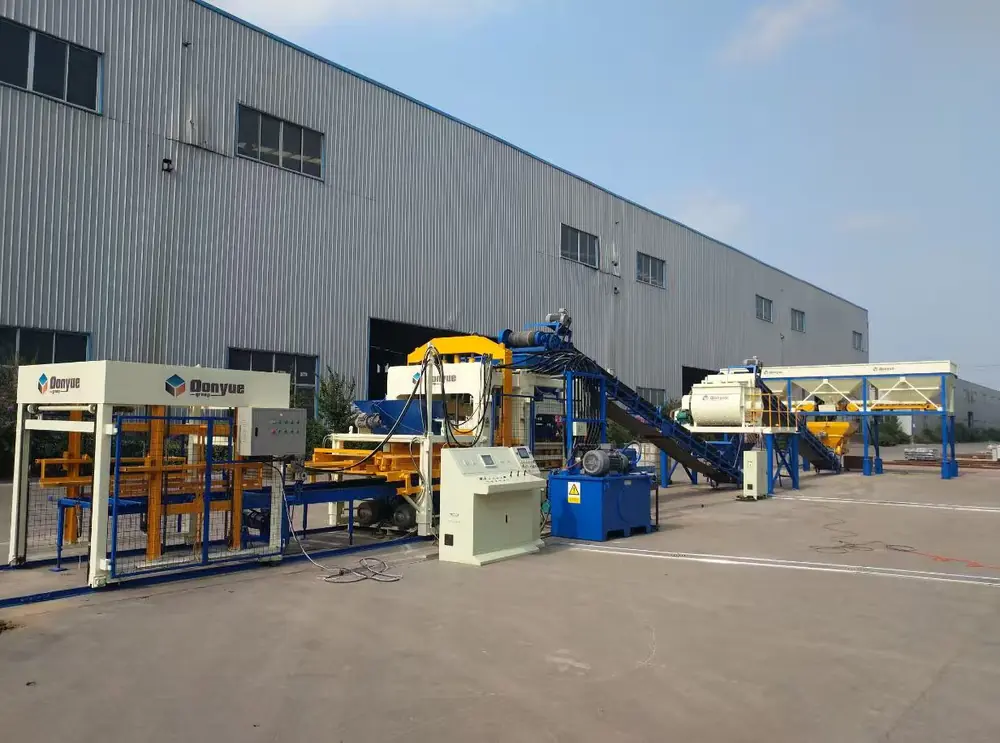
Fully automatic plants run on integrated PLC control systems that handle aggregate batching, pan mixing, mould feeding, pressing, and pallet stacking without continuous manual handling.
- Best For: High-volume commercial producers manufacturing maxi units, stock bricks, and pavers around the clock.
- Efficiency: High-capacity systems like the QT4-15 automatic brick making machine drastically cut labor costs while delivering consistent cycle times and massive daily volumes.
- Investment: When planning an industrial production line, review current brick making machine prices in South Africa to balance your capital outlay against expected output.
Mobile Egg-Layer Brick Making Machines
Mobile brick machines—commonly called egg-layers—move along a level concrete slab, depositing formed bricks directly onto the ground as they travel forward.
- Best For: Operations with large, flat concrete yard spaces seeking to minimize pallet expenses.
- Operation: Instead of dropping bricks onto individual wooden or composite pallets, the machine compresses the bricks and moves ahead to drop the next batch directly on the casting floor.
- Advantages: Eliminates pallet replacement costs and simplifies short-distance material movement across open production slabs.
Key Benefits of Investing in a Maxi Brick Making Machine
Investing in a dedicated maxi brick making machine transforms how we run site operations and yard manufacturing. Instead of relying on unpredictable supply chains and third-party margins, having the right equipment puts direct control over output, schedules, and cash flow straight into our hands.
High Demand in Residential and Commercial Projects
Maxi bricks dominate South African job sites because their larger footprint speeds up wall construction while cutting mortar use. Commercial developments, boundary walls, and housing projects constantly require a stable flow of units.
- Rapid installation: Laying larger units reduces labor hours per square meter.
- Consistent off-take: Local sub-contractors and owner-builders consistently source maxi bricks for standard structural work.
- Market liquidity: Bulk orders remain steady year-round across both urban centers and rural developments.
Lower Production Costs and Higher Profit Margins
Producing our own units eliminates retail markup, excessive logistics fees, and wasted transit time. Evaluating our operations against entry-level investments—such as proven small-scale block making machine options—shows immediate savings on unit costs.
| Operational Factor | Buying from Retail Yards | On-Site / Yard Production |
|---|---|---|
| Transport Expenses | High (delivery charges per load) | Low (raw materials delivered in bulk) |
| Unit Margin | Supplier retains retail profit | We capture full manufacturing margin |
| Material Wastage | Breakage during transit (3–7%) | Minimal handling loss on-site |
| Supply Flexibility | Limited by dealer inventory | Scaled on demand to match project pace |
Versatility to Produce Pavers, Hollow Blocks, and Bricks
A single maxi brick making machine does not have to be a single-purpose tool. By swapping out the precision mould boxes, the equipment easily converts into a paving block machine or a multi-profile masonry plant.
- Interchangeable tooling: Switch between standard maxi units, stock bricks, and pavers within hours.
- Expanded product catalog: Integrate a hollow block making machine setup to supply standard hollow blocks alongside solid masonry units.
- Year-round revenue: Pivot to high-margin paving or boundary blocks whenever residential walling demand slows down.
Reliability and On-Site Supply Control
Running out of bricks halts wet trades and blows project deadlines. In-house production protects our build programs from local stockouts, factory shutdowns, and seasonal transport bottlenecks.
- Quality oversight: We regulate the concrete mixture and curing time directly to ensure consistent compressive strength.
- Zero site downtime: Brick production aligns with day-to-day bricklaying capacity without idle bricklayer teams.
- Inventory buffering: Yard reserves stay stocked, allowing us to absorb last-minute site variations or urgent contractor call-offs without delay.
Essential Raw Materials and the Production Process
Producing durable maxi bricks requires precise aggregate ratios, proper moisture control, and consistent mechanical compaction. Using the right raw inputs ensures your maxi brick making machine delivers clean edges, uniform dimensions, and high load-bearing capacity on every cycle.
Required Materials: Sand, Aggregate, Cement, and Water
The quality of your finished maxi brick depends directly on the cleanliness and grading of your input materials:
- Cement: Standard Portland cement (CEM II 32.5R or 42.5N) acts as the primary binder. Higher grade cement provides faster early strength development, speeding up cycle and turnaround times.
- Aggregates and Sand: Clean plaster sand, river sand, or quarry crusher dust (0 to 6 mm) provides structural bulk. Crusher dust offers excellent interlocking properties, which increases final density.
- Water: Clean, drinkable water free from organic matter and salts. Excess water weakens the concrete mixture, while too little prevents full cement hydration.
For precise batching ratios and aggregate selection rules, check our detailed cement brick making machine raw materials guide to balance material costs with compressive strength.
Mixing and Compaction Techniques
Consistency begins in the mixer. We recommend using a forced-action pan mixer rather than a gravity drum mixer to handle semi-dry concrete mixtures efficiently.
- Dry Mixing: Blend the sand, aggregate, and cement thoroughly for two to three minutes until the color is uniform throughout the batch.
- Moisture Adjustment: Add water gradually until the mix reaches an “earth-moist” consistency. The mix should hold its shape when squeezed by hand without leaking water or crumbling instantly.
- Molding and Compaction: Feed the concrete mixture into the maxi brick mold. A quality concrete block machine applies simultaneous directional vibration and hydraulic downward pressure. This dual compaction drives air pockets out of the mold cavity, creating dense, uniform bricks with clean corners.
Curing Standards for Optimal Brick Strength
Molding the brick is only half the process; concrete gains its design strength through controlled hydration.
- Initial Setting: Allow the freshly stripped green bricks to set undisturbed for 24 hours on curing pallets or a smooth concrete floor to prevent surface cracking.
- Moisture Retention: Keep the bricks continuously damp for a minimum of 7 to 14 days. Cover the stacks with plastic sheeting or spray them with a fine water mist two to three times daily.
- Sun and Wind Protection: Shield fresh batches from harsh direct sunlight and dry winds. Premature drying halts cement hydration, resulting in brittle bricks that fail standard compressive testing.
How to Choose the Right Maxi Brick Machine for Your Building Business
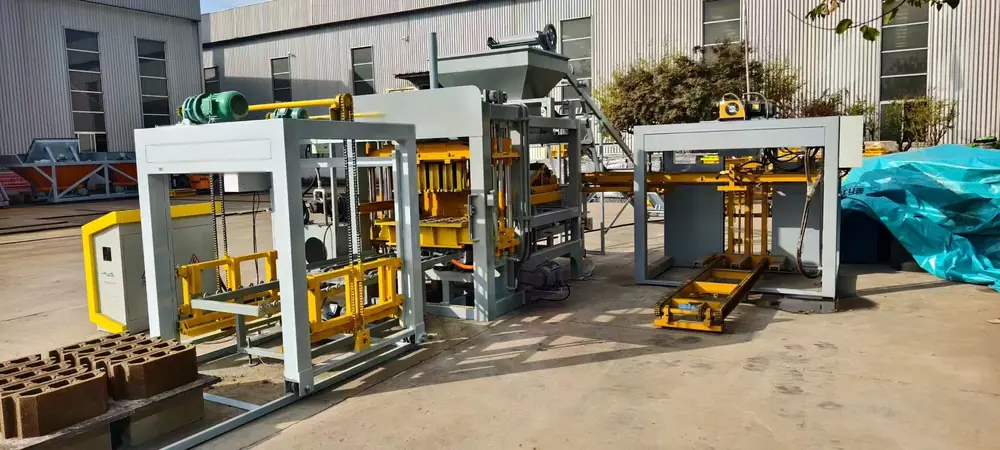
Selecting the right equipment directly determines your profit margin, delivery speed, and operational uptime. When expanding your yard, review our practical how to choose a block making machine guide to align equipment specifications with your market demand.
Evaluating Daily Production Capacity
Match machine output against your confirmed orders and local demand. Under-sizing leads to missed contract deadlines, while over-sizing ties up capital in unutilized capacity.
| Machine Category | Typical Daily Output (8-Hour Shift) | Primary Target Market |
|---|---|---|
| Manual / Hand-Operated | 500 – 1,500 maxi bricks | Small DIY builds, rural construction |
| Semi-Automatic Hydraulic | 3,000 – 8,000 maxi bricks | Mid-tier builders, commercial supply |
| Fully Automatic Plant | 10,000 – 25,000+ maxi bricks | Large contractors, regional block yards |
Power Supply: Electric, Diesel, or Manual Operation
Unstable power grids and remote job sites make energy selection a critical operational factor:
- 3-Phase Electric (380V–400V): Delivers maximum hydraulic compaction and lowest cost-per-brick in urban, connected yards.
- Diesel-Driven Engines: Ideal for rural operations and sites subject to frequent load shedding, ensuring continuous production without utility downtime.
- Manual Mechanical Systems: Requires zero electrical input, suited for entry-level operations where upfront setup costs are tight.
Site Space and Operational Logistics Requirements
A reliable yard requires sufficient room for raw materials, production lines, and curing processes:
- Raw Material Storage: Dedicated bays for sand, crushed aggregate, and bagged or bulk cement close to the mixer.
- Production Footprint: Clear operational space for the machine operator, pallet handling, and hydraulic pack.
- Curing & Stacking Yard: Flat curing slab with water access; account for a minimum 7-day curing cycle footprint.
- Dispatch Access: Adequate driveway turning radius for flatbed delivery trucks and forklifts.
To ensure your machine produces precise dimensions across standard runs, refer to our detailed breakdown on how to choose the right mold for your block making machine.
Availability of Local Spares and After-Sales Support
Machine downtime erodes profitability immediately. Prioritize suppliers that provide accessible wear parts—including mold liners, tamper plates, hydraulic seals, and vibration motors. Verify that technical support, servicing documentation, and replacement parts can be sourced without long cross-border import delays.
Starting and Scaling a Brick Making Venture in South Africa
Setting up a commercial brickyard requires clear planning, reliable machinery, and strict cost controls. When you deploy a maxi brick making machine in the South African market, rapid turnaround and consistent quality are the primary drivers of long-term profitability.
Calculating Initial Machine Costs and Expected ROI
Your upfront capital expenditure depends directly on machine capacity, automation level, and power source. Beyond the base equipment, budgeting must account for delivery, site preparation, wooden or PVC production pallets, and backup components.
Reviewing our block machine Africa prices and import guide gives a clear baseline for equipment acquisition costs and logistics planning.
To determine return on investment (ROI), track these standard operational metrics:
- Direct Material Cost: Cement bags, cubic meters of plaster/river sand, aggregate, and water per batch.
- Labor & Power Overhead: Operator wages, diesel fuel for generators, or municipal 3-phase electricity draw.
- Daily Yield: Total sellable maxi units cured per shift versus breakage rates.
- Payback Window: Most yards running at 70% to 80% capacity achieve full equipment payback within 6 to 12 months under steady local building demand.
| Cost Component | Budget Factor | Impact on Margins |
|---|---|---|
| Maxi Brick Machine | Capital expense | Depreciates over multi-year production cycles |
| Cement & Aggregates | Variable operational cost | Dictates unit production floor price |
| Curing Pallets | Secondary capital expense | Determines daily curing and stacking capacity |
| Transport / Delivery | Variable operational cost | Direct factor in contractor site-drop pricing |
Site Selection and Raw Material Sourcing
A well-situated manufacturing site reduces production downtime and distribution bottlenecks. Keep these layout and sourcing requirements at the forefront:
- Site Footprint and Access: Choose a level yard with broad road access for heavy tipper trucks delivering aggregates and flatbeds hauling finished pallets.
- Curing and Stacking Zones: Ensure sufficient hardstanding ground for wet-brick offloading, spray curing, and direct pallet collection.
- Proximity to Aggregate Pits: Source sand, crusher dust, and stone from local quarries to minimize transport haulage fees.
- Dependable Water and Power Supply: Ensure constant water access for proper concrete batch hydration and dependable power to avoid mixer downtime.
Marketing to Local Builders, Contractors, and Hardware Stores
Selling out your daily production run requires building reliable B2B sales channels right from week one:
- Direct Contractor Supply: Offer volume-tiered pricing directly to residential developers, walling contractors, and civil construction teams.
- Independent Hardware Retailers: Partner with local hardware stores that need reliable weekly maxi brick stock without managing manufacturing yards themselves.
- Sample Testing Verification: Supply compressive test reports from accredited labs to prove your units meet load-bearing standards, giving commercial project managers confidence to buy in bulk.
- Reliable Site Delivery: Offer direct site drop-offs with flatbed crane trucks to secure repeat orders over yards that only offer ex-factory collection.
Frequently Asked Questions (FAQs)
How much does a maxi brick making machine cost in South Africa?
Equipment pricing depends primarily on automation level, cycle speed, and power configuration. When planning your investment, it helps to factor equipment outlay against operational expenses like raw materials; check our breakdown on how much it costs to make a concrete block to calculate full margins.
| Machine Category | Typical Output (8h Shift) | Power Source | Best Suited For |
|---|---|---|---|
| Manual / Hand-Operated | 1,000 – 2,500 bricks | Manual lever | Startups, rural setups |
| Semi-Automatic Hydraulic | 4,000 – 10,000 bricks | Electric / Diesel | Growing commercial block yards |
| Fully Automatic Static Plant | 15,000 – 30,000+ bricks | 3-Phase Electric | Large-scale construction suppliers |
How many maxi bricks can one machine produce per day?
Output is determined by cycle duration and the number of cavities in the mould:
- Entry-Level Manual Units: Deliver between 1,000 and 2,500 maxi bricks per standard 8-hour shift, relying directly on operator speed.
- Semi-Automatic Hydraulic Presses: Achieve consistent cycle times of 15 to 25 seconds, producing 4,000 to 10,000 units daily.
- High-Capacity Industrial Plants: Run automated feeding, pressing, and pallet stacking, capable of yielding upwards of 20,000 maxi bricks per shift without physical fatigue.
Can a single machine produce different types of bricks and pavers?
Yes. Most modern equipment features interchangeable mould boxes. By swapping moulds, our versatile cement brick making machine setups can easily alternate between:
- Maxi bricks (290 mm × 140 mm × 90 mm)
- Standard imperial stock bricks
- Hollow concrete blocks (such as 140 mm and 190 mm)
- Interlocking and bevel pavers
Swapping the mould generally takes between 30 and 60 minutes, allowing you to diversify product offerings based on local demand.
What space is required to operate a maxi brick manufacturing site?
A productive block yard requires dedicated zones for fabrication, curing, raw aggregate holding, and dispatch:
- Production Footprint: 50 m² to 150 m² for the machine, pan mixer, and aggregate skips.
- Curing Area: 400 m² to 1,000 m² of flat ground to allow green bricks to cure under plastic sheeting or sprayers for at least 7 days.
- Raw Material Storage: 150 m² to 300 m² for sand, aggregate piles, and secured cement storage.
- Vehicle Access and Storage: 300 m² or more to store finished stacks and allow 8-ton or 10-ton flatbed delivery trucks to maneuver safely.
A baseline plot of 1,000 m² to 2,000 m² provides the ideal operational flow for a commercial yard.